Standing majestically beside the Rideau Canal, the Château Laurier has welcomed prime ministers, royalty, and celebrities for over a century—but the man who built it never saw its doors open, perishing aboard the RMS Titanic just weeks before the grand opening.
The Fairmont Château Laurier is more than Ottawa’s most iconic hotel; it’s a monument to ambition, tragedy, and the golden age of railway travel. Built by the Grand Trunk Railway between 1908 and 1912, the limestone castle was designed to impress travellers arriving at adjacent Union Station with the grandeur of the nation’s capital. Its architect, Bradford Lee Gilbert, created a French Gothic masterpiece with turrets, copper roofs, and 429 guest rooms that immediately established the standard for Canadian hospitality. For over 110 years, the Château has been where Ottawa’s most important events unfold.
Key Highlights
TL;DR: The Château Laurier opened on June 1, 1912, named after Prime Minister Sir Wilfrid Laurier. Its visionary builder, Grand Trunk Railway president Charles Melville Hays, died on the Titanic in April 1912, just weeks before the hotel’s completion. The French Gothic limestone hotel was designed by Bradford Lee Gilbert and cost $2 million to build. It remains one of Canada’s most prestigious hotels, having hosted royalty, celebrities, and every Canadian prime minister since 1912.
| Quick Facts | Details |
|---|---|
| 📅 Opened | June 1, 1912 |
| 📍 Location | 1 Rideau Street, Ottawa |
| 🎟️ Original Cost | $2 million |
| ⏰ Rooms | 429 (original); 429 (current) |
The Vision of Charles Melville Hays
The story of the Château Laurier begins with one of the most visionary railway executives of the early 20th century: Charles Melville Hays, president of the Grand Trunk Railway. Hays understood that railways were selling more than transportation—they were selling experiences, dreams, and prestige.
In the early 1900s, Hays embarked on an ambitious program to build grand railway hotels across Canada. These château-style properties would attract wealthy travellers, promote tourism, and establish the Grand Trunk Railway as the preferred choice for transcontinental travel. The Ottawa property would be the crown jewel, positioned at the very heart of the nation’s capital.
Hays personally oversaw every detail of the Ottawa hotel’s development. He selected the prime location beside Union Station, approved the French Gothic design, and insisted on the finest materials and finishes. The hotel would be named after Sir Wilfrid Laurier, the recently departed Prime Minister who had championed the project and remained one of Canada’s most beloved political figures.
Construction began in 1908, with workers quarrying Indiana limestone and Nepean sandstone to create the hotel’s distinctive walls. The design included turrets, steep copper roofs, and ornate ironwork—all hallmarks of the château style that would define Canadian grand hotels for generations.
The Titanic Connection
Charles Melville Hays never saw his masterpiece completed. In April 1912, with the hotel nearly finished, Hays travelled to England for business meetings. He booked return passage on the newest and most luxurious ocean liner in the world: the RMS Titanic.
On the night of April 14, 1912, the Titanic struck an iceberg in the North Atlantic. Hays was among the more than 1,500 passengers who perished in the disaster. His body was recovered from the ocean and returned to Montreal, where he was buried with full honours.
The tragedy cast a shadow over the Château Laurier’s grand opening, originally scheduled for late April. Out of respect for Hays and the victims of the Titanic, the opening was postponed until June 1, 1912. When the hotel finally welcomed its first guests, the celebrations were notably muted.
The Titanic connection has given the Château Laurier a unique place in Canadian history. Hays’ vision and drive created the hotel, but he never walked its halls, never saw guests marvelling at its beauty, never experienced the success that his project achieved. The hotel stands as both a monument to his ambition and a memorial to his untimely death.
Early Years and Growing Fame
Despite its tragic origins, the Château Laurier quickly established itself as Canada’s premier hotel. Its location could not have been better—directly across from Parliament Hill, beside the Rideau Canal, and connected to Union Station by an underground tunnel. Important visitors arriving by train could walk directly from their railcar to their suite without ever stepping outside.
The hotel attracted an international clientele from the beginning. Royalty, diplomats, politicians, and celebrities made it their Ottawa home. King George VI and Queen Elizabeth stayed there during the 1939 Royal Tour; Winston Churchill visited during World War II strategy sessions; and virtually every Canadian Prime Minister has maintained a connection to the property.
The Château’s location made it a natural gathering place for political deal-making. The Grill Room became legendary as a venue where policies were debated, alliances formed, and careers made or broken. Journalists, lobbyists, and politicians mingled over meals, trading gossip and shaping the nation’s future.
Broadcasting also found a home at the Château. In the 1920s, the Canadian National Railway—which had absorbed the Grand Trunk Railway—established radio studios in the hotel. These studios broadcast some of Canada’s earliest radio programming, helping pioneer a new medium that would transform communication.
Architectural Significance
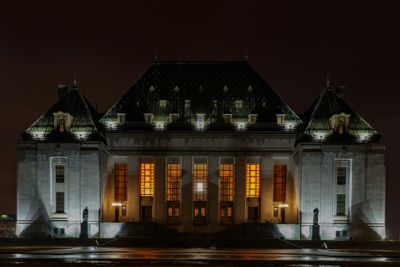
The Château Laurier’s architecture established templates that influenced Canadian hotel design for decades. Bradford Lee Gilbert’s French Gothic design drew inspiration from the châteaux of France’s Loire Valley while adapting the style for a Canadian climate and purpose.
The exterior features buff Indiana limestone, copper roofing that has aged to a distinctive green patina, and decorative elements including turrets, dormers, and ornate metalwork. The building’s silhouette has become inseparable from Ottawa’s skyline, appearing in countless photographs and postcards.
Inside, the hotel featured the finest materials and craftsmanship available in 1912. Marble floors, oak panelling, crystal chandeliers, and custom furnishings created an atmosphere of understated elegance. The dining rooms, ballrooms, and public spaces were designed to impress without overwhelming—grand enough for state occasions, comfortable enough for everyday luxury.
Successive renovations have maintained and updated these spaces while preserving their historic character. The hotel was designated a National Historic Site of Canada in 1980, recognizing its architectural and cultural significance.
The Château Today
More than a century after opening, the Château Laurier continues to operate as one of Canada’s most prestigious hotels. Now managed by Fairmont Hotels and Resorts, it maintains the standards of service and elegance that Charles Melville Hays envisioned.
The hotel has undergone several renovations over the decades, including controversial proposals to add modern additions that sparked intense public debate. Ottawa residents have proven fiercely protective of their castle hotel, successfully opposing designs that threatened to alter its iconic profile.
Today’s guests enjoy modern amenities within historic surroundings. The 429 guest rooms and suites feature contemporary comforts while maintaining period-appropriate décor. The hotel’s restaurants, spa, and event spaces continue to host Ottawa’s most important gatherings.
For many visitors, simply walking through the Château Laurier’s lobby is a highlight of any Ottawa trip. The marble floors, the soaring ceilings, the sense of history—it’s an experience that connects the present to a century of Canadian stories.
Frequently Asked Questions
Why is it called the Château Laurier?
The hotel was named after Sir Wilfrid Laurier, Canada’s Prime Minister from 1896 to 1911. Laurier championed the project and was one of Canada’s most popular political figures. He attended the groundbreaking ceremony but died in 1919.
What is the connection between the Château Laurier and the Titanic?
Charles Melville Hays, the Grand Trunk Railway president who built the hotel, died aboard the Titanic in April 1912. The hotel’s grand opening was postponed from April to June 1, 1912, out of respect for Hays and other Titanic victims.
Is the Château Laurier a National Historic Site?
Yes, the hotel was designated a National Historic Site of Canada in 1980, recognizing its architectural significance and cultural importance.
Can you visit the Château Laurier without being a hotel guest?
Yes, the public areas including the lobby are open to visitors. The hotel also operates restaurants and a spa accessible to non-guests, and offers afternoon tea services.
Who has stayed at the Château Laurier?
Notable guests include King George VI, Queen Elizabeth II, Winston Churchill, Princess Diana, and virtually every Canadian Prime Minister since 1912. Celebrities, diplomats, and dignitaries from around the world have stayed at the hotel.
Final Thoughts
The Château Laurier embodies everything that makes Ottawa unique—the intersection of history and politics, tradition and change, tragedy and triumph. Charles Melville Hays’ vision created a building that has outlasted the railway empire that built it, the original purpose it served, and the era that inspired its design.
Today, the hotel remains exactly what Hays intended: a monument to Canadian ambition and a showcase for the nation’s capital. That its creator never saw his dream realized makes the Château’s enduring success all the more poignant.
When you see the Château Laurier’s silhouette against the Ottawa skyline, you’re seeing more than a building. You’re seeing over a century of Canadian history, from the age of railways to the modern era—and the vision of a man who gave everything to create something extraordinary.
Source: Fairmont Château Laurier; Parks Canada National Historic Sites