Last Updated: December 19, 2025
Seventy-five feet beneath Ottawa Valley farmland lies one of the Cold War’s most fascinating artifacts: a four-storey underground bunker designed to protect Canada’s government from nuclear annihilation.
The Diefenbunker—officially known as Canadian Forces Station Carp—stands as a time capsule from an era when nuclear war seemed not just possible, but inevitable. Built between 1959 and 1961 to house key government officials and maintain constitutional democracy after a Soviet nuclear strike, this massive facility now serves as Canada’s Cold War Museum. From the 378-foot blast tunnel entrance to the Prime Minister’s bunker bedroom, every corridor tells the story of a terrifying chapter in Canadian history that most citizens never knew existed.
Key Highlights
TL;DR: The Diefenbunker is a 100,000-square-foot underground bunker built 1959-1961 to shelter Canadian government during nuclear war. Now an award-winning museum offering guided tours, escape rooms, and even overnight stays. Located 30 minutes west of Ottawa in Carp. Admission around $20, open year-round. Bring warm layers—it’s constantly 10°C underground.
| Quick Facts | Details |
|---|---|
| 📅 Built | 1959-1961 (decommissioned 1994) |
| 📍 Location | 3929 Carp Road, Carp, ON (30 min from Ottawa) |
| 🎟️ Admission | Adults $20, Seniors $18, Youth $16 |
| ⏰ Hours | Daily 11am-4pm (seasonal variations) |
The Cold War Context: Why Build a Bunker?
The Nuclear Threat
To understand the Diefenbunker, you need to grasp the existential terror of the late 1950s and early 1960s. The Cuban Missile Crisis was still ahead, but Cold War tensions had already convinced both superpowers that nuclear war wasn’t a matter of “if” but “when.”
The Geopolitical Reality:
- Soviet ICBMs could reach North America within 30 minutes
- Bomber gap and missile gap dominated military planning
- NATO placed Canada on the front line of North American defence
- No civilian evacuation possible—cities would be destroyed
- Only governmental continuity could be maintained
Canada’s Unique Position:
- DEW Line radar stations made Canada a nuclear tripwire
- NORAD headquarters placed Canada at centre of air defence
- Proximity to US made Canada a likely Soviet target
- Constitutional democracy required succession planning
- Banking system needed to survive for economic recovery
Prime Minister Diefenbaker’s Decision
John Diefenbaker’s Progressive Conservative government made the controversial decision to build a network of Emergency Government Headquarters across Canada. The Carp facility—the largest and most complex—would house the core of government operations.
The Controversy:
- Cost overruns (original $20 million estimate doubled)
- Ethical questions about protecting politicians while civilians died
- Secrecy surrounding true purpose (disguised as army communications centre)
- Debate over whether surviving nuclear war was even possible
- Public discovered true purpose only after decommissioning
The name “Diefenbunker” started as a mocking nickname coined by critics, but it stuck—even Prime Minister Diefenbaker eventually used it himself.

Illustrative image only.
The Facility: Engineering a Post-Apocalyptic Government
Construction Challenges
Building a four-storey bunker 75 feet underground in Canadian Shield bedrock presented extraordinary engineering challenges. The project required innovative solutions that pushed 1950s construction technology to its limits.
Technical Specifications:
- 100,000 square feet across four underground levels
- 32 inches of reinforced concrete walls (some sections thicker)
- 19,000 tons of concrete poured
- Designed to withstand 5-megaton blast five kilometres away
- Shock-mounted interior to absorb blast waves
- Two-foot-thick blast door weighing several tons
Construction Secrecy: Workers knew they were building something military but most didn’t understand the true scope. The official cover story described it as an army communications centre. Local farmers watched trucks haul enormous amounts of concrete into a seemingly small site, never imagining four storeys were going down, not up.
Hidden in Plain Sight: The above-ground portion resembles a modest military facility. Nothing about the exterior hints at the massive structure below. Even the giant air intake towers were disguised as innocuous structures. This camouflage was intentional—the bunker’s survival depended on Soviets not knowing its location.
The Four Levels
Level 1: Entry and Decontamination
The first level, closest to the surface, handled the terrifying transition from nuclear-devastated surface to protected underground refuge.
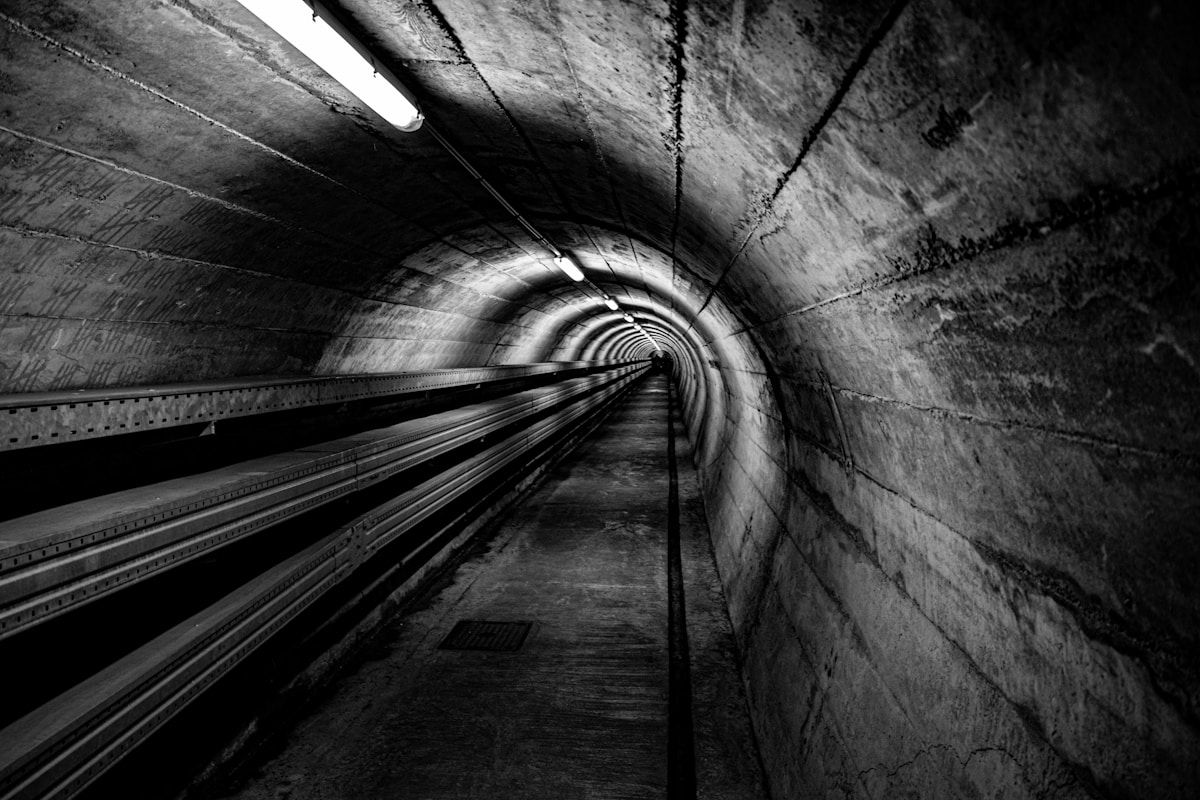
The Blast Tunnel:
- 378 feet long, dog-legged to dissipate blast waves
- Massive steel blast doors at both ends
- Designed to slow personnel exposure during entry
- Now the museum’s dramatic entrance experience
Decontamination Zone:
- Showers for removing radioactive fallout
- Medical screening area
- Gear storage and disposal
- Air lock systems to protect interior
- Geiger counters and monitoring equipment
Vehicle Bay:
- Large enough for trucks and equipment
- Fuel storage for emergency generators
- Maintenance workshops
- Supply receiving area
Level 2: Operations and Communications
The second level housed Canada’s military command and communications infrastructure for World War III.
War Room:
- Strategic planning and coordination centre
- Maps showing North American air defence
- Communication links to NORAD and NATO
- Situation updates and intelligence processing
- The nerve centre of Canada’s war response
Communications Hub:
- Radio equipment for military coordination
- Encrypted communication systems
- Emergency broadcast capabilities
- Links to surviving military units
- Connection to US and UK command structures
Military Offices:
- Canadian Forces operational headquarters
- Intelligence assessment areas
- Planning rooms for post-attack operations
- Staff workstations
Level 3: Government Operations
Level 3 would have housed the skeleton crew of Canada’s democratic government attempting to maintain constitutional order.
Prime Minister’s Suite:
- Modest bedroom and office space
- Communications equipment for national addresses
- The most “luxurious” accommodation in the bunker (still Spartan)
- Window onto the surreal reality of governing from underground
Cabinet Room:
- Meeting space for surviving cabinet ministers
- Decision-making centre for post-war Canada
- Constitutional line of succession determined here
- Maps, strategic information, survival status reports
Bank of Canada Vault:
- Secured area for protecting currency and gold reserves
- Economic continuity planning
- Recovery coordination
- Banking system restart protocols
This vault is one of the bunker’s most thought-provoking spaces—a reminder that beyond mere survival, planners envisioned rebuilding Canada’s economy from this underground refuge.
CBC Broadcast Studio:
- Emergency broadcast equipment
- Pre-recorded messages for survivors
- Instructions for civilian population
- Presidential addresses to the nation
- Equipment to maintain government communication
Walking through the broadcast studio today is eerie. The microphones and recording equipment sit ready to deliver messages of hope—or final instructions—to survivors of nuclear holocaust.
Level 4: Life Support
The deepest level contained all systems necessary to keep 535 people alive for 30 days underground.
Mechanical Systems:
- Diesel generators for independent power
- Fuel storage tanks
- Air filtration systems for removing radioactive particles
- Climate control equipment
- Backup systems for every critical function
Water Treatment:
- Storage tanks for drinking water
- Waste treatment and recycling systems
- Shower and sanitation facilities
- Decontamination water supply
Food Storage:
- Massive stockpiles of canned and dried goods
- Cafeteria and food preparation areas
- 30-day supply for 535 occupants
- Rotating stock to maintain freshness
Medical Facilities:
- Fully equipped surgical suite
- Recovery wards
- Radiation treatment supplies
- Morgue facilities (a grim necessity)
Illustrative image only.
Visiting the Museum Today
Tour Options
Self-Guided Tours
The standard admission includes an excellent audio guide that brings the bunker to life with historical context, personal stories, and technical explanations.
What’s Included:
- Audio guide in multiple languages
- Access to all four levels
- Artifact displays throughout
- Original equipment and furnishings
- Museum exhibits on Cold War history
- Photography encouraged
Duration: Allow 1.5-2.5 hours to fully explore
Best For: Visitors who like to explore at their own pace, history buffs who want to linger, families with children who need breaks
Tip: Start with the introductory video in the screening room to understand context before descending into the bunker.
Guided Tours
Guided tours offer deeper insight and access to areas not always included in self-guided visits.
Standard Guided Tours:
- Led by knowledgeable staff and volunteers
- Many guides remember the Cold War era firsthand
- Additional historical context and stories
- Opportunity to ask questions
- Special access to certain restricted areas
Schedule: Check website for seasonal times (typically weekends and holidays)
Duration: Approximately 2 hours
Best For: First-time visitors, history students, anyone who learns better with narration
Specialty Tours
The Diefenbunker offers unique tours that go beyond standard museum visits.
Behind-the-Scenes Tours:
- Access to normally closed areas
- Mechanical systems up close
- Unrestored sections showing original condition
- Deep dive into engineering and construction
- Limited availability, must book in advance
Ghost Tours (Seasonal):
- Evening tours exploring bunker’s spooky side
- Stories of paranormal experiences
- Atmosphere amplified by darkness and isolation
- Halloween season specialty
- Not recommended for young children
Photography Tours:
- Extended access for serious photographers
- Permission to use tripods and professional equipment
- Golden hour surface shots combined with bunker interior
- Guidance on best shooting locations
- Must book separately
The Escape Room Experience
The Diefenbunker’s escape rooms offer a unique twist: solving puzzles inside an actual Cold War bunker.
Escape the Diefenbunker:
- Multiple themed rooms with varying difficulty
- Cold War espionage scenarios
- Team challenges requiring cooperation
- Professional-quality puzzles in authentic setting
- 60-minute time limit
Booking Details:
- Reserve online in advance (essential)
- Groups of 4-8 recommended
- Age restrictions apply
- Add-on to museum admission or standalone visit
Why It’s Special: Unlike purpose-built escape rooms, you’re solving puzzles in the very spaces once designed for nuclear war operations. The authentic setting creates an atmosphere that manufactured rooms can’t match.
Overnight Stays
Yes, you can spend the night in a nuclear bunker. The Diefenbunker’s overnight program is one of Canada’s most unique accommodation experiences.
Bunker Slumber Party:
- Sleep in the Prime Minister’s suite or other historic areas
- Evening tour and activities
- Breakfast included
- Must bring sleeping bag and pillow
- Bathrooms and shower facilities available
What to Expect:
- Cool temperature (10°C/50°F) requires warm sleeping gear
- Extremely dark at lights-out
- Quiet except for mechanical system hums
- Otherworldly experience sleeping underground
- Limited spaces, books up months in advance
Best For: History enthusiasts, unique experience seekers, adults and older teens who appreciate the significance
Cost: Approximately $150-200 per person (check current rates)
Book Early: This popular program sells out quickly, especially for weekends and school breaks.
Illustrative image only.
Must-See Exhibits and Spaces
The Prime Minister’s Suite
This modest suite humanizes the abstract concept of nuclear war. The Prime Minister—leader of a nation devastated by nuclear weapons—would sleep in this small room and make life-and-death decisions for survivors.
What You’ll See:
- Simple single bed (not luxurious)
- Small desk and office space
- Personal bathroom (one of few private facilities)
- Communications equipment
- Maps and planning materials
Why It Matters: The suite’s modesty demonstrates that even in nuclear war planning, Canadian values prioritized function over comfort. The PM’s quarters, while private, weren’t notably better than others’.
Bank of Canada Vault
The massive vault door and secure storage area represent the post-war economic planning that often gets overlooked in Cold War narratives.
Historical Significance:
- Gold and currency reserves would be protected here
- Economic continuity planning began before conventional warfare ended
- Banking system restart protocols
- International trade considerations
- Reminder that survivors would need functioning economy
The vault raises profound questions: What value does currency have in a nuclear wasteland? Planners clearly believed Canadian society could be rebuilt, not just survived.
CBC Broadcast Studio
Standing in the broadcast studio where messages to nuclear war survivors would have been delivered is deeply moving.
Equipment Preserved:
- Original microphones and recording gear
- Broadcasting equipment from 1960s
- Pre-recorded message scripts
- Emergency broadcast system
- Connection to surviving transmitters
Imagine: The Prime Minister at this microphone, telling scattered survivors across Canada’s radioactive landscape that constitutional government still functioned, that hope remained, that Canada would rebuild. The weight of those messages makes the empty studio profoundly sad.
War Room
The military command centre shows how Canada would have coordinated defence and assessed damage.
Features:
- Strategic maps of North America
- NORAD coordination systems
- Air defence tracking equipment
- Communication systems
- Situation assessment displays
Context: By the time this room activated, nuclear missiles were already falling. The war room’s purpose wasn’t prevention—it was response and survival coordination.
Decontamination Showers
The practical reality of surviving nuclear war hits home in the decontamination area.
The Process:
- Remove contaminated clothing (disposed of)
- Thorough shower to remove radioactive particles
- Geiger counter screening
- New clothing provided
- Medical evaluation
Grim Reality: Anyone entering the bunker post-attack would have been exposed to radiation. Decontamination reduced exposure but couldn’t eliminate it. Everyone entering knew they might already be fatally contaminated.
Planning Your Visit
Getting There
Address: 3929 Carp Road, Carp, Ontario K0A 1L0
From Downtown Ottawa:
- Take Highway 417 West
- Exit at Carp Road (Exit 145)
- Follow Carp Road north approximately 5 kilometres
- Diefenbunker on your right (well signposted)
Drive Time: 30 minutes from downtown Ottawa
Public Transit: Limited. OC Transpo serves Kanata but not Carp directly. Car rental or taxi recommended for transit-dependent visitors.
Parking: Free on-site parking. Large lot accommodates buses and RVs.
When to Visit
Open Year-Round: The museum operates 363 days annually (closed Christmas Day and New Year’s Day).
Summer Hours (May-August):
- Daily 11am-4pm (last entry 3pm)
- Extended hours on special event days
- Warmest weather for enjoying the grounds
Winter Hours (September-April):
- Thursday-Sunday 11am-4pm
- Daily operation during holiday periods
- Check website for current seasonal schedule
Best Times for Smaller Crowds:
- Weekday mornings
- Late fall through early winter (excluding holidays)
- Opening right at 11am
Avoid If Possible:
- Long weekends and holidays (busiest times)
- March Break (school groups)
- Summer weekends (tour groups)
What to Bring
Essential Items:
- Warm layers (bunker is constant 10°C/50°F)
- Comfortable walking shoes with good grip
- Camera (photography encouraged)
- Water bottle (available for purchase if forgotten)
Recommended:
- Notebook for history enthusiasts
- Fully charged phone for photos
- Light sweater even in summer
- Snacks for children (limited food options on site)
Not Necessary:
- Flashlight (bunker fully lit)
- Special equipment (everything provided)
Accessibility
The Diefenbunker’s nature as a 1960s military facility creates accessibility challenges.
Available:
- Elevator access to most levels
- Wheelchair accessible main areas
- Accessible washrooms
- Audio guide for vision-impaired visitors
Limitations:
- Not all areas wheelchair accessible
- Many narrow corridors and stairs
- No elevator to lowest level
- Uneven surfaces in some sections
Recommendation: Contact museum in advance to discuss specific needs. Staff will work to maximize access and explain limitations before you arrive.
Food and Amenities
On-Site:
- Small café with drinks and snacks
- Picnic areas on grounds (seasonal)
- Gift shop with Cold War memorabilia and books
- Washrooms
Nearby Dining:
- Carp Village (5 minutes) has cafés and restaurants
- Stofa Restaurant offers farm-to-table dining
- Ottawa’s ByWard Market (30 minutes)
- Kanata (15 minutes) has all major chains
Combine Your Visit: Make it a day trip with lunch in Carp Village and exploration of Ottawa Valley countryside.
Special Events and Programs
Educational Programs
School Groups:
- Curriculum-linked tours for all grades
- Cold War history education
- Constitutional government lessons
- Engineering and technology focus
- Must book in advance
Summer Camps:
- Week-long programs for kids
- History, science, and adventure combined
- Escape room challenges
- Behind-the-scenes access
- Popular and competitive (register early)
March Break Programs:
- Special activities during school break
- Family-friendly programming
- Drop-in activities
- Themed tours
Seasonal Events
Halloween:
- Ghost tours through bunker
- Spooky atmosphere enhanced by setting
- Adult-focused evening events
- Family-friendly afternoon activities
Heritage Day Weekend:
- Free or reduced admission
- Special programming
- Guest speakers and demonstrations
- Celebration of Canadian history
Doors Open Ottawa:
- Behind-the-scenes access
- Special tours
- Normally closed areas opened
- Free admission (if participating)
Private Events
The Diefenbunker offers one of Ottawa’s most unique event venues.
Available Options:
- Corporate meetings in War Room
- Film and TV production location
- Photography sessions
- Team building escape rooms
- Private evening tours
Why Choose the Bunker:
- Unforgettable, atmospheric venue
- Historic significance
- Built-in conversation piece
- Climate-controlled year-round
- Ample parking
Contact: Inquire directly about availability, capacity, and rates. Events must be booked well in advance.
Combining Your Visit
Nearby Attractions
Carp Village:
- Carp Farmers’ Market (Saturdays, seasonal)
- Historic village architecture
- Local shops and antiques
- Ottawa Valley countryside charm
Kanata (15 minutes):
- Canadian Tire Centre (Senators games)
- Tanger Outlets shopping
- Recreation complex
- Dining and entertainment
Ottawa (30 minutes):
- Parliament Hill
- National Gallery of Canada
- ByWard Market
- Rideau Canal
Suggested Day Trip Itineraries
Cold War Deep Dive (4-5 hours):
- Morning: Arrive at Diefenbunker opening (11am)
- Self-guided or guided tour (2-2.5 hours)
- Lunch at Stofa Restaurant or Carp Village café
- Return for escape room experience (optional)
- Browse gift shop for Cold War books and memorabilia
Family Adventure Day:
- Late morning arrival (avoid youngest children getting restless)
- Self-guided tour with audio guide (kids usually love exploring)
- Picnic lunch on grounds (seasonal)
- Escape room for older kids/teens
- Ice cream in Carp Village
- Return to Ottawa for dinner
History Enthusiast Tour:
- Arrive at opening for smallest crowds
- Guided tour for maximum context
- Lunch break
- Return for self-guided exploration of areas you want to revisit
- Purchase books from gift shop
- Visit Parliament Hill or National Gallery to continue history theme
Frequently Asked Questions
Is the Diefenbunker suitable for children?
Yes, but it depends on the child. History-interested kids aged 8+ usually find it fascinating. Younger children may be overwhelmed by the dark, underground setting. The bunker atmosphere can feel spooky to sensitive kids. School-age children who enjoy learning and exploration typically love it.
How cold is it really inside?
The bunker maintains a constant 10°C (50°F) year-round. While not freezing, it feels significantly cooler than outside, especially in summer. A sweater or light jacket is essential even in July. In winter, you’ll actually warm up as you explore.
Can I take photos?
Yes, photography is encouraged throughout the museum. The atmospheric setting makes for incredible photos. Tripods are allowed during self-guided tours. Flash photography permitted. Professional photographers should inquire about photography tours for better access.
Was the Diefenbunker ever used for its intended purpose?
No, thankfully. While staffed and maintained throughout the Cold War, the bunker never activated for nuclear war. It was used for military communications training and exercises. The closest it came to real use was during the Cuban Missile Crisis in 1962, when readiness was elevated but war was averted.
How many people would have survived inside?
The bunker was designed for 535 occupants for 30 days. This included essential government officials, military command, support staff, and technical personnel. Selection criteria remain classified, but Cabinet ministers, Supreme Court justices, military commanders, and key civil servants had designated spaces.
What happened after the Cold War ended?
The Diefenbunker was decommissioned in 1994 after the Soviet Union’s collapse. It was designated a National Historic Site in 1994. A group of volunteers led by local advocates worked to transform it into a museum. It opened to the public in 1998. Today, it’s operated as a charitable museum preserving Cold War history.
Can you spend the night in other areas besides the Prime Minister’s suite?
Overnight stays can be arranged in various bunker areas depending on group size and program. The Prime Minister’s suite is popular but other historic rooms are also used. Check with museum staff about specific accommodations when booking.
Final Thoughts
The Diefenbunker stands as one of the most thought-provoking museums in Canada. Unlike most historical sites that chronicle past events, the Diefenbunker represents a war that never happened—a catastrophe avoided. Walking through these concrete corridors forces you to confront the terrifying reality that shaped an entire generation: living under the constant threat of nuclear annihilation.
What makes the Diefenbunker especially powerful is its authenticity. This isn’t a recreation or interpretation—it’s the real thing, preserved exactly where history placed it, 75 feet underground. The blast doors are real. The decontamination showers are real. The Prime Minister’s bunker bedroom is real. These spaces were genuinely prepared to host Canada’s government in the aftermath of nuclear war.
Yet despite its grim purpose, the Diefenbunker ultimately tells a hopeful story. The nuclear war never came. The bunker never activated. The Cold War ended not with apocalypse but with the peaceful dissolution of the Soviet Union. Walking back up the blast tunnel into Canadian sunlight, you’re emerging from a nightmare that remained just that—a nightmare, not reality.
For Ottawa visitors seeking something beyond the usual tourist attractions, the Diefenbunker delivers an unforgettable experience. It’s thought-provoking, atmospheric, historically significant, and utterly unique. Whether you’re a history buff, a Cold War era survivor with memories of the period, or simply curious about this bizarre chapter in Canadian history, the bunker rewards a visit.
Descend into history. Emerge grateful that history took a different path.
Source: Diefenbunker Museum archives, Parks Canada National Historic Sites, Library and Archives Canada Cold War documentation - Compiled for Via Ottawa readers.
For more Ottawa historical sites and attractions, explore our Where to Go category or read about Parliament Hill’s history.