The National Gallery of Canada stands as one of North America’s finest art museums, housing treasures that span centuries and continents. Its striking glass and granite building on Sussex Drive has become an Ottawa landmark, but the institution’s history stretches back to Confederation itself, making it as old as Canada.
From its origins in a few rooms of government-owned paintings to its current status as a world-class museum, the National Gallery tells the story of Canadian art and Canada’s place in the global artistic conversation.
Key Highlights
TL;DR: The National Gallery of Canada opened in 1880 and moved to its current Moshe Safdie-designed building in 1988. The collection includes over 75,000 works spanning Canadian, Indigenous, European, American, and Asian art. Highlights include the Canadian and Indigenous Galleries, the Group of Seven collection, and the reconstructed Rideau Street Convent Chapel.
| Quick Facts | Details |
|---|---|
| 📅 Founded | 1880 |
| 📍 Location | 380 Sussex Drive, Ottawa |
| 🎟️ Admission | Varies; free Thursdays 5-8 PM |
| ⏰ Collection | 75,000+ works |
A Brief History
Confederation’s Art Collection
The National Gallery’s origins trace to 1880, when the Marquis of Lorne, then Governor General, established the institution to display works owned by the Canadian government. The founding collection was modest—a few dozen paintings stored in various government buildings.
The early Gallery had no permanent home, moving between temporary locations as it slowly acquired works. Despite limited resources, early directors began building a Canadian collection and acquiring European masterpieces that would form the foundation of today’s holdings.
The Gallery’s mandate was ambitious from the start: to collect, preserve, and display art for the benefit of all Canadians. This democratic vision—that great art should belong to the nation, not just the wealthy—guided the institution’s development.
 Image: Illustrative image only.
Finding a Permanent Home
For over a century, the Gallery occupied various buildings—never quite satisfying its growing collection’s needs. The Victoria Memorial Museum (now the Canadian Museum of Nature) served as home for decades, but was far from ideal.
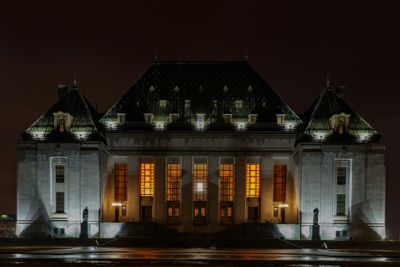
The campaign for a purpose-built gallery took years. Finally, in 1988, the current building opened to widespread acclaim. Designed by Israeli-Canadian architect Moshe Safdie, the building itself became a work of art.
The Sussex Drive location proved inspired—adjacent to the ceremonial route between Parliament Hill and Rideau Hall, the Gallery took its rightful place among Canada’s most important institutions.
The Safdie Building
Moshe Safdie’s design for the National Gallery is a masterpiece of museum architecture:
- Crystal-like glass towers echoing the Parliamentary Library’s form
- Dramatic entrance colonnade with views to Parliament
- Soaring interior spaces filled with natural light
- Intimate galleries balancing grandeur with viewing comfort
- Integration of the historic Rideau Street Convent Chapel
The building respects its surroundings while making a bold modern statement. The pink granite echoes Parliament’s stonework, while glass towers create dialogue with the Gothic spires across the river.
The Collection
Canadian Art
The Gallery’s Canadian collection is unmatched—the definitive survey of Canadian artistic achievement:
- Historical Canadian art from colonial times through the 19th century
- Tom Thomson and the Group of Seven in comprehensive depth
- Emily Carr’s powerful Pacific Northwest works
- Quebec art from religious works to contemporary expression
- Contemporary Canadian artists representing the nation’s diversity
The Canadian Galleries trace the evolution of artistic vision from European-influenced beginnings through the emergence of distinctly Canadian perspectives.
Indigenous Art
Recent years have seen expanded commitment to Indigenous art:
- Historical works from various Indigenous nations
- Contemporary Indigenous artists exploring identity and tradition
- Integration of Indigenous perspectives throughout the Gallery
- Collaboration with Indigenous communities on display and interpretation
- Recognition of Indigenous art as central to Canadian artistic heritage
This emphasis reflects broader efforts to acknowledge Indigenous artistic traditions that long predate European arrival.
European Collection
The European collection spans medieval times to the modern era:
- Old Masters including Rembrandt and Rubens
- Impressionist works by Monet, Degas, and Renoir
- 20th-century European modernism
- British art including Gainsborough and Turner
- Religious art from various European traditions
While smaller than major European galleries, the collection offers excellent examples of key movements and artists.
Contemporary and Modern Art
The Gallery maintains active contemporary collecting:
- American Abstract Expressionism
- Pop Art and subsequent movements
- International contemporary installations
- Photography and new media
- Regular rotation bringing new works to display
Must-See Works
The Rideau Street Convent Chapel
The reconstructed chapel is among the Gallery’s most extraordinary spaces. When the Rideau Street Convent was demolished in 1972, the Gallery rescued and preserved its 1888 chapel—a masterpiece of Victorian Gothic design.
The chapel’s survival required painstaking disassembly, storage, and eventual reconstruction within the new Gallery building. Today, visitors can experience this spiritual space in its full glory, preserved for future generations.
Voice of Fire
Barnett Newman’s monumental painting has sparked controversy since its acquisition but now stands as a beloved icon. The 5.4-metre-tall canvas of vertical red and blue stripes exemplifies Abstract Expressionism’s power to evoke emotional response through pure colour and scale.
Maman
Louise Bourgeois’s giant spider sculpture guards the Gallery entrance. The 9-metre bronze and steel spider is both disturbing and maternal—the artist’s tribute to her mother, a weaver. The sculpture has become an Ottawa landmark and popular photo spot.
 Image: Illustrative image only.
Visiting the Gallery
Practical Information
Location: 380 Sussex Drive, Ottawa
Getting There:
- Walking distance from ByWard Market and downtown hotels
- LRT to Rideau Station, then 10-minute walk
- Bus routes serve nearby stops
- Paid parking available
Hours:
- Check the Gallery website for current hours
- Extended evening hours on select days
- Closed some holidays
Admission:
- Regular admission fees apply
- Free Thursday evenings (5-8 PM)
- Annual memberships available
- Free for children under certain age
Planning Your Visit
The Gallery is large—plan accordingly:
- Allow 2-3 hours for highlights; longer for comprehensive viewing
- Focus on areas of interest rather than trying to see everything
- Use the Gallery’s app or audio guide for context
- Check for special exhibitions requiring timed tickets
- The café offers good dining with water views
Frequently Asked Questions
Q: Is the National Gallery of Canada free? A: Regular admission is charged, but Thursday evenings from 5-8 PM are free. Check for other free admission periods and discounts.
Q: How long does it take to see the gallery? A: A highlights tour takes 2-3 hours. Seeing the entire collection requires multiple visits. Many locals hold memberships for repeated casual visits.
Q: Is the gallery suitable for children? A: Yes. The Gallery offers family programs and children generally enjoy the architecture, spider sculpture, and interactive elements. Some contemporary art may raise questions worth discussing.
Q: Can I take photos in the gallery? A: Photography policies vary by exhibition. Generally, photography is permitted in permanent collection galleries without flash. Check current policies at entry.
Q: What else is near the gallery? A: The Gallery is steps from the Royal Canadian Mint, Notre-Dame Cathedral Basilica, and ByWard Market. The Rideau Canal locks are a short walk away.
Final Thoughts
The National Gallery of Canada embodies the belief that great art belongs to everyone. From its founding as a small collection of government-owned paintings to its current status as a world-class institution, the Gallery has made artistic treasures accessible to all Canadians.
The building itself—Safdie’s inspired design—provides a setting worthy of the collection it houses. Whether you’re viewing Group of Seven landscapes that define Canadian visual identity, contemplating Indigenous artistic traditions, or confronting challenging contemporary works, the Gallery offers experiences unavailable anywhere else.
For Ottawa visitors, the National Gallery is essential. For residents, it’s a treasure that rewards repeated visits. Great art has the power to change how we see the world—and the National Gallery makes that power available to all.
For more Ottawa history, visit Ottawa History or explore What to Do.