
When Queen Victoria selected Ottawa as Canada’s capital on New Year’s Eve 1857, the nation was shocked—how could a remote lumber town possibly surpass the grand cities of Montreal, Toronto, Kingston, and Quebec?
The choice of Ottawa as capital remains one of the most consequential decisions in Canadian history, yet it was far from obvious at the time. The settlement of just 10,000 people—many of them rough-hewn lumber workers—seemed laughably unqualified compared to its sophisticated rivals. But Queen Victoria and her advisors saw what others missed: a location that was defensible, accessible, and diplomatically neutral in the bitter rivalry between English and French Canada. Their decision transformed a backwater lumber town into the stately capital we know today.
Key Highlights
TL;DR: Queen Victoria chose Ottawa as the capital of the Province of Canada on December 31, 1857. The decision shocked many who expected Montreal, Toronto, Kingston, or Quebec City to be selected. Ottawa was chosen for its strategic location away from the American border, its position on the border between Upper and Lower Canada, and its neutrality in English-French tensions. The Parliament Buildings were completed in 1866, and Ottawa became the capital of the new Dominion of Canada in 1867.
| Quick Facts | Details |
|---|---|
| 📅 Decision Date | December 31, 1857 |
| 📍 Population (1857) | Approximately 10,000 |
| 🎟️ Competing Cities | Montreal, Toronto, Kingston, Quebec City |
| ⏰ Parliament Completed | 1866 |
The Capital Problem
Before 1857, the Province of Canada had no permanent capital. The seat of government rotated between cities—Kingston, Montreal, Toronto, and Quebec City—in a system that satisfied no one and pleased everyone’s rivals. Each move was expensive, disruptive, and politically charged.
The arrangement was born of necessity. When Upper and Lower Canada were united in 1841, neither English-speaking nor French-speaking populations would accept the other’s major city as capital. Kingston served briefly, but proved too small. Montreal seemed ideal until rioters burned the Parliament Building in 1849, protesting a bill that compensated those who had rebelled against British rule. After that disaster, no city could achieve consensus.
The rotating system pleased no one. Politicians, civil servants, and their families had to relocate every few years. Government records were shipped back and forth, getting lost or damaged. Foreign diplomats complained about the instability. Business interests in each city lobbied intensively for permanent selection.
By the mid-1850s, the situation had become untenable. The colonial legislature, unable to agree on a solution, finally asked Queen Victoria to decide. They would accept her choice, whatever it might be.
The Contenders
Four cities competed seriously for the honour:
Montreal was the largest and most cosmopolitan city in British North America. Its financial institutions, cultural scene, and international connections made it the obvious choice for many. But the 1849 riot remained fresh in memory, and English Canadians worried about ceding the capital to French-speaking Lower Canada.
Toronto was the rapidly growing commercial centre of English Canada. Its business community and Protestant establishment campaigned vigorously, arguing that the capital should reflect English Canadian values and interests. French Canadians, unsurprisingly, strongly opposed this choice.
Quebec City was the oldest city in Canada and the heart of French Canadian culture. Its historic fortifications and stunning setting made it architecturally impressive. But English Canadians viewed it as too French, too Catholic, and too far from the population centres of Upper Canada.
Kingston had briefly served as capital and offered a compromise location between Upper and Lower Canada. But it was too small for the growing colonial government, and its proximity to the American border raised security concerns.
Ottawa—still often called Bytown in common usage—was barely considered a serious contender by most observers. It was small, remote, and known primarily for its lumber trade and rowdy tavern culture. The city lacked the grand buildings, cultural institutions, and transportation connections of its rivals.
Victoria’s Decision
Queen Victoria announced her decision on December 31, 1857: Ottawa would become the permanent capital of the Province of Canada.
The choice shocked the nation. Newspapers in the rival cities reacted with outrage, mockery, and disbelief. One Toronto paper called Ottawa “a sub-Arctic lumber village.” Montreal’s English press declared the decision incomprehensible. Even Ottawa residents seemed surprised by their good fortune.
But the decision was not as arbitrary as it seemed. British colonial advisors had carefully considered the strategic and political factors:
Military Security: Ottawa was far from the American border, connected to Montreal and Kingston by the Rideau Canal, and defensible in ways that border cities were not. After the War of 1812 and ongoing tensions with the United States, this mattered enormously.
Political Neutrality: Ottawa sat precisely on the border between Upper and Lower Canada, belonging fully to neither. It was not yet identified as English or French, Protestant or Catholic. This neutrality might help heal the divisions tearing colonial politics apart.
Blank Slate: Ottawa’s lack of grand buildings and established institutions could be seen as an advantage. A new capital could be purpose-built, with architecture and urban planning suited to government functions. The city’s character could be shaped from scratch.
Future Potential: Located at the confluence of three rivers, Ottawa had transportation advantages that would grow with the coming railway era. Its abundant hydroelectric potential suggested industrial promise.
Building the Capital
Once the decision was made, Ottawa transformed rapidly. Construction of the Parliament Buildings began in 1859, with architects Thomas Fuller and Chilion Jones designing the Gothic Revival complex that would define the capital’s character.
The project was ambitious, expensive, and beset by difficulties. Costs spiralled far beyond original estimates. Construction delays frustrated politicians. A fire in 1916 would later destroy the original Centre Block, requiring reconstruction.
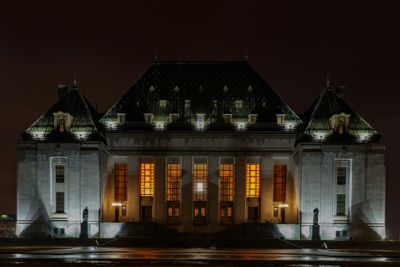
But the result was spectacular. The Parliament Buildings, completed in 1866, created an iconic skyline that announced Ottawa’s importance to every visitor. The Peace Tower (added after the 1916 fire) and the copper-roofed Centre Block became symbols of Canadian democracy recognized around the world.
When Confederation occurred in 1867, Ottawa automatically became capital of the new Dominion of Canada. The Parliament Buildings that had been designed for a colonial legislature now housed the government of an emerging nation. Ottawa’s transformation was complete.
From Lumber Town to Capital City
The Ottawa that became capital in 1857 bore little resemblance to the city we know today. The settlement was rough, muddy, and dominated by the lumber trade. Taverns and boarding houses catered to workers; refinement was rare. One visiting journalist described it as “a place where civilization stops.”
Becoming the capital changed everything. Government buildings required government workers, who required housing, shops, schools, and churches. The rough lumber town gradually gave way to a respectable civil service city. Grand residences rose along Sandy Hill and other neighbourhoods. Cultural institutions—libraries, museums, galleries—followed.
By the early 20th century, Ottawa had fully transformed into a capital worthy of the nation. Sir Wilfrid Laurier’s government commissioned the first major urban beautification plans. The Ottawa Improvement Commission (predecessor to the National Capital Commission) began shaping the green spaces, parkways, and ceremonial landscapes that define the capital today.
Frequently Asked Questions
Why didn’t Queen Victoria choose Montreal or Toronto?
Montreal was rejected partly due to the 1849 Parliament burning and concerns about French Canadian dominance. Toronto was opposed by French Canadians who saw it as too English. Ottawa’s neutrality between the two communities made it a compromise choice.
Was Ottawa called Bytown when it was chosen as capital?
The settlement was officially renamed Ottawa in 1855, two years before Queen Victoria’s decision. However, many people still used the name Bytown informally for years afterward.
What would have happened if a different city was chosen?
Canadian history would have unfolded very differently. Ottawa’s character was entirely shaped by its role as capital. Without that function, it likely would have remained a regional lumber town. Meanwhile, whichever city was chosen would have developed the government infrastructure, cultural institutions, and prestige that Ottawa now possesses.
Did everyone in Ottawa want to become the capital?
Most residents welcomed the decision, seeing the economic opportunities it would bring. However, some lumber interests worried that government would change the town’s character—which it certainly did.
How did Ottawa change after becoming capital?
The city transformed from a rough lumber town into a respectable civil service centre. Grand government buildings, improved infrastructure, cultural institutions, and planned beautification programs gradually created the stately capital we know today.
Final Thoughts
Queen Victoria’s choice of Ottawa was controversial in 1857, but history has vindicated the decision. The remote lumber town became a dignified national capital, strategically located, politically neutral, and blessed with natural beauty that urban planners have enhanced over generations.
Had any of the rival cities won the competition, Canada would be a different country today. The English-French tensions that nearly tore the young nation apart might have exploded sooner and more violently if the capital was seen as belonging to one community over the other. Ottawa’s neutrality helped hold Canada together during its most fragile years.
Today, when you walk past the Parliament Buildings or along the Rideau Canal, you’re experiencing the legacy of a decision made by a queen who never saw the city she chose. Victoria’s gamble on an unlikely capital paid off—and Ottawa has been grateful ever since.
Source: Library and Archives Canada; City of Ottawa Archives