
Last Updated: January 26, 2026
Ottawa signage photo spots shine when you plan for light, angles, and movement, and this guide gives you the exact stops and pacing to make that happen.
Ottawa signage photo guide searches often lead to generic viewpoints, but the city is far more interesting when you chase text and letters instead of skylines alone. Ottawa has a rich mix of lettered landmarks, historic plaques, and bold signage that photograph well in every season, from the glowing “OTTAWA” letters in the Market to the carved inscriptions on Parliament Hill. This guide stays focused on text-based landmarks rather than generic viewpoints, so you can build a set that reads unmistakably Ottawa. Each stop includes where to stand, when the light works best, and practical notes for parking, OC Transpo, and accessibility so you can move efficiently and keep your shoot moving.
Key Highlights
TL;DR: The ByWard Market “OTTAWA” sign and the Château Laurier marquee deliver the most dependable downtown shots, while Nepean Point and Major’s Hill Park give the widest skyline context. Weekday golden hour is your safest bet.
| Quick Facts | Details |
|---|---|
| 🏛️ Total Spots | 12 Ottawa signage stops + 1 Gatineau add-on |
| 📅 Date | Year-round |
| 📍 Location | ByWard Market + downtown core + Lansdowne |
| ⏰ Time | Golden hour into blue hour |
| 🚗 Parking | Paid street meters and nearby garages |
| 💰 Cost | Free to shoot; parking typically $2-4 CAD/hr |
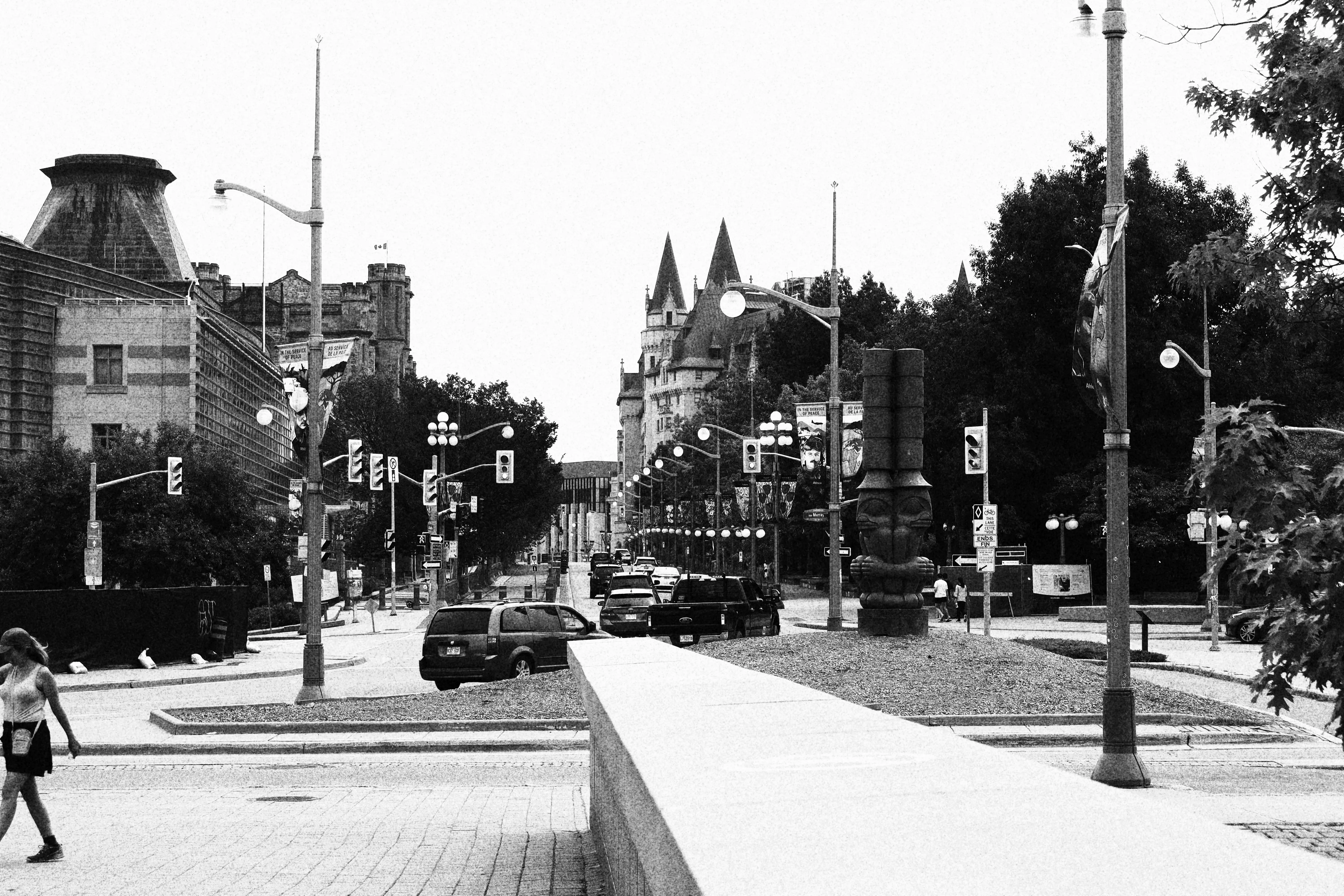 Caption: The best lettering shots cluster inside the downtown core and Lower Town loop.
ByWard Market and Lower Town: Ottawa’s Boldest Lettering
 Caption: ByWard Market delivers Ottawa’s most recognisable text-based landmarks.
Lower Town and the ByWard Market are the most reliable cluster for Ottawa signage photography because the lettering is large, the lighting is consistent, and the textures are unmistakably local. You can move from neon letters to heritage signage in a few minutes, which makes it easy to build a varied set without changing neighbourhoods. The area is busy, but the activity gives you a sense of energy that makes the typography feel alive rather than static. If you only have one afternoon, this is the core loop to prioritise.
The main advantage here is visual density. The Market has bright letters, painted murals, cobblestones, and a constant flow of people, which gives you easy background movement. The tradeoff is that you need to be intentional about timing and angles. Weekday late afternoon is the safest window, because the crowd is smaller, the lighting is softer, and the signage begins to glow without the full harshness of night. If you arrive too late, the area feels crowded and the clean lines of the signs get lost.
Because the Market sits on a mix of older stone and newer plaza surfaces, you also get strong foreground textures to anchor a frame. Use the cobblestones or the edge of the plaza as a natural leading line, and allow the sign to sit slightly off-centre so the background tells a story. Think of the Market as a place to shoot a short series rather than a single shot. You can get a wide establishing frame, a mid-range portrait, and a detail crop without walking more than a few blocks.
ByWard Market “OTTAWA” Sign: The Classic Lettered Landmark
The ByWard Market “OTTAWA” sign is the city’s most recognisable lettered landmark and the easiest place to anchor an Ottawa signage photo set. The 3D letters sit in York Street Plaza between William Street and Sussex Drive, near the York and William intersection, and the installation has become a permanent downtown photo stop managed in partnership with the ByWard Market District Authority and the City of Ottawa. The letters read cleanly both as a full-width shot and as a tight composition through a single letter, which is why it works for everything from portrait sessions to travel content.
Golden hour into blue hour is the sweet spot. The letters stay readable before the surrounding light drops, and the Market starts to glow without the harsh contrast of full night. In winter, that best window often sits between about 4 and 6 pm, which is short but dramatic. Stand 10 to 15 metres back on York Street for the full sign, then move closer to frame through the “O” or “A” for a layered shot that captures the Market stalls or the Château Laurier behind it. If you want a cleaner background, angle slightly toward the plaza edge so the letter face fills more of the frame and the background falls into softer blur. Another option is to stand across Sussex Drive to pull in more of the canal and nearby heritage buildings without losing the lettering.
Street parking is paid in the core, with common rates in the $2-4 CAD range, and meter availability drops quickly on weekend evenings. Many downtown meters flip to free after 9 pm, but check the posted signage because time rules vary by block. There is also a two-hour limit on some nearby curb spaces, which is worth noting if you plan to shoot longer sessions. Rideau Station on the O-Train Line 1 is the closest rail stop, and buses along Rideau Street and Sussex Drive make this an easy walk from the transit spine. The sidewalks are smooth and accessible, and the plaza is flat, but festival weekends pack the space tight and make long exposures difficult. If you are shooting a portrait set, plan to work quickly and step aside between takes to keep the flow moving.
Local reactions underline why this stop is so consistent. “The huge ‘OTTAWA’ sign… attracted all visitors… to take selfies” is a common summary from downtown guides, and a typical local take is, “York Street’s illuminated ‘Ottawa’ sign… perfect for colourful photos.” A newer local note captures the timing: “The OTTAWA sign in ByWard is pure Insta-gold at golden hour, best backdrop ever for Ottawa vibes.” All three echo the same point: the letters are an easy win, but timing and positioning decide whether the shot feels crowded or clean.
If you want a deeper local context, the ByWard Market guide and the ByWard Market history feature provide more background and can help you plan a longer day in the area. The sign is public space, so avoid climbing the letters or blocking the pedestrian lane, and keep setups compact when the area is busy. If you need a quiet moment, arrive just before the Market ramps up in the late afternoon.
ByWard Market Text Murals: Colour and Typography
The Market alleys are packed with text-heavy murals and storefront signage that bring a street-art feel into a signage-focused shoot. You will see lettering woven into painted walls and window signs, including bold text like “OTTAWA LOVES” and other Market-specific phrases. The textures are a big part of the look, so frame wide enough to include brick, metal, and the layered paint of the wall itself, not just the text. It is this layering that makes the lettering feel like part of the Market rather than a pasted-on graphic.
Blue hour is a strong choice here because it gives you readable lettering while the background picks up the glow of nearby lights. The best compositions are usually from alley corners off George or York Streets, or along the Sussex Drive walls between George and York if you want a longer line of text. Keep your background clean by stepping around delivery zones or bins, and angle your camera slightly lower to reduce clutter. If you want depth, place a small amount of foreground texture along the lower edge of the frame, such as cobblestones or a doorway edge, so the lettering sits inside a natural border. This approach keeps the mural from feeling flat. Paid street parking and nearby garages fill quickly in the Market core, so Rideau Station is the easiest transit anchor if you want to avoid circling for a meter.
The cobblestones and uneven brick surfaces can be tricky for wheels and can get slick in winter. Summer brings the most colour, but it also brings the most foot traffic. Winter gives you lower foot traffic and clean colour contrast against snow, but you will need to watch for ice and salt spray. A local quote captures the feel: “Street art murals… treasure trove.” That is an honest summary of the range you can find in a short walk.
Because the murals are public art, you are free to photograph them, but keep your session short when the alley is crowded. Murals also change over time, so treat them as a moment rather than a fixed checklist. If you are already exploring the Ottawa nightlife guide, these alleys are an easy add-on after dinner. If you want a quieter window, midweek mornings give you more time to work without interruptions, and you can catch the walls before crowds arrive.
Bytown Museum Sign: Small Detail, Big Context
The Bytown Museum sign is smaller than the Market letters, but it delivers a strong heritage feel when you pair it with the Rideau Canal locks. It is an ideal stop when you want a quieter, more intimate signage shot that still reads clearly as downtown Ottawa. The museum signage sits close to 1 Canal Lane, just off Sussex Drive in Lower Town, and the area is walkable from the Market and the canal pathway.
Late afternoon light gives you a warm glow on the sign and a softer contrast in the background. For composition, shoot from the canal side and keep the locks or Château Laurier in the background to add depth. A straight-on shot works for a clear, documentary feel, while a slight side angle gives you a more cinematic frame and reduces foot traffic in the background. If the path is busy, wait for the lock area to clear and use the sign as the anchor in the foreground. A simple compositional trick here is to keep the sign slightly lower in the frame so the lock gates and canal activity fill the upper third.
Access is generally easy from the canal path, but there are a few steps near the museum entrance. The ramp access is nearby, so if you are working with wheels or a stroller, approach from the canal side and keep the path to your right. Paid meters line Sussex Drive and the Rideau Centre garage is a reliable fallback if you want to park once, while Rideau Station is the closest O-Train stop. Winter makes the area quiet and gives you clean frames with fewer people, but the stone edges can be slick. Bring traction and avoid standing too close to the canal edge when the skateway is open.
This is a good stop to pair with the Bytown Museum feature if you want more historical context or a longer stop nearby. The signage is understated, so use it for detail shots rather than your main hero image, and let the locks supply the context behind it. If you want stronger contrast on the lettering, expose slightly for the sign and let the background fall into a softer blur rather than trying to keep everything evenly lit.
Château Laurier Marquee: Elegant Neon and Heritage Texture
The Fairmont Château Laurier signage is one of Ottawa’s most atmospheric night shots. The neon script and classic serif lettering feel cinematic against the chateau-style architecture, especially when you include the canal locks or the roofline in the frame. This is a classic portrait spot and a strong choice for anyone who wants Ottawa to feel elegant and historic rather than purely urban. The marquee sits at 1 Rideau Street near the Mackenzie Avenue intersection in the ByWard Market edge of Lower Town, which makes it easy to reach on foot from the Market core.
Blue hour offers the most balanced exposure. Start from the Rideau Canal locks on the south side and frame the sign with the waterline, then move closer for tighter details that keep the letters sharp. A second strong angle is from the Mackenzie Avenue side, where you can place the street lamps in the foreground and let the letters sit higher in the frame. If you want fewer pedestrians, arrive before the dinner rush, then return after dark for the glow. A common reaction to this view is, “Castle-like… top angles from the locks,” which fits the photo-friendly perspective from the canal. Another local note is even more direct: “Chateau Laurier marquee glows like magic in December snow, frame it with the canal locks for epic shots.” It is a good reminder that winter can be the most photogenic season here.
Parking in the core is paid, and valet rates are typically premium at the hotel, often $50+ CAD for short stays. The Rideau Centre garage is the easiest fallback if you want to park once and walk, and Rideau Station on the O-Train Line 1 is the closest transit stop, but check current rates and time limits before you leave your car. The surrounding sidewalks are flat and accessible, but the entrance area can be busy with arrivals and events. Keep your setup lightweight and avoid blocking foot traffic. As with any hotel exterior, be respectful of guests and staff, and avoid large tripod setups in high-traffic zones. If you plan to shoot inside, ask staff about any restrictions first.
If you want to build a cohesive series, shoot this immediately after the ByWard sign because the lighting window is similar and the walk is short. This stop pairs well with the canal plaques or the Market letters, which is why it works inside the Lower Town loop. For deeper context, the Château Laurier history guide adds the story behind the marquee and is a useful link for readers who want the full background.
Parliament Hill and Sparks Street: Official Lettering and Street Energy
 Caption: Official lettering and street-level signage give this area a strong Ottawa identity.
This pair of stops gives you two complementary styles. Parliament Hill provides official, historic lettering and plaques, while Sparks Street gives you street-level signage and a living downtown feel. Together they create a balanced set that feels both formal and everyday Ottawa, which is a useful combination if you are building a full series for a portfolio or a local project. The walk between them is short, so you can shift from ceremonial to casual in a single loop without changing parking.
Parliament Hill Plaques and Peace Tower Lettering
Parliament Hill is not a single sign but a collection of carved inscriptions, plaques, and formal lettering that provide a distinctly Ottawa feel. The Peace Tower inscription, commemorative plaques, and carved stone details all work well for tight portrait frames or close-up detail shots. If you want your images to feel official and historic, this is one of the strongest stops in the city. The main entry area is along Wellington Street near the Wellington and Elgin corner in the Parliamentary Precinct, and the best lettering details are near the gates and the main lawn.
Morning light is the safest choice because shadows are longer and crowds are lighter. A wide frame from the lawn gives you the full context, while a tight frame on the carved lettering offers a clean graphic detail that still reads as Ottawa. Use a lower angle so the lettering fills the mid-frame while the tower rises behind it. If the lawn is busy, shift to the edges near the paths and use the plaques as a foreground anchor. The plaques are bilingual, which can add a subtle graphic rhythm if you include both English and French text in the same frame.
The precinct has security zones and clear boundaries, so stay on the public paths and avoid obstructing walkways. A local review sums up the mood: “Peace Tower Carillon… nice place for photos! Inaugurated on Canada Day.” It captures the ceremonial tone you feel when you shoot here. For transport, Parliament Station on the O-Train Confederation Line drops you close to the main entrance, and routes 1, 6, and 7 run through the core along Wellington. Free street parking is rare near the Hill, so plan on a paid garage or a short walk from a meter.
In winter, the stonework looks crisp but the surface can be icy, so traction is important. The light is lower, which can be dramatic, but it also means you need to manage contrast and glare on the plaques. Drones are restricted in the area, and security will ask you to move if your setup blocks visitor flow. A common pitfall is setting tripods too close to the main gates during peak hours, so keep to the edges of the lawn if you need longer exposures. If you want more historical context for the location, link it with the Parliament Hill guide or the deeper Parliament Hill history.
Sparks Street Signage: Street-Level Ottawa Energy
Sparks Street offers a different kind of signage photo. The pedestrian mall runs between Elgin Street and Bronson Avenue in Centretown, one block south of Parliament Hill, and the street-level mix of storefront signs, seasonal installations, and window lettering creates a sense of urban rhythm. The best way to shoot here is to look for clusters of signs and capture them together so your image feels layered and lived-in rather than isolated.
The light here is best just before dusk when the street starts to glow but you still have enough ambient light to keep text readable. Try a wider lens and step back to include multiple storefronts, then tighten in on the signage you want as a second frame. Parliament Station and Lyon Station on O-Train Line 1 bookend the core access, and paid garages around Queen, Metcalfe, and Elgin make driving feasible if you want to park once.
The pedestrian mall is flat and easy to navigate, but the brick surface can be slick in winter, so tread carefully if you are moving fast between setups. A frequent local observation is that murals and installations change with seasonal events, so keep your eyes open for pop-up signage during festivals. One review-style summary captures the best approach here: “Sparks Street murals pop against the pedestrian mall, quiet mornings beat tourist chaos.” That is the exact mood you should aim for. A common pitfall is setting up near restaurant patios or delivery zones, where foot traffic can disrupt long exposures.
If you want to connect this area to a broader historical walk, pair it with the nearby Parliament Hill guide or the downtown history angle in Parliament Hill history. Both make the signage feel rooted in the capital rather than just decorative.
Rideau Canal Corridor: UNESCO Text and Waterline Context
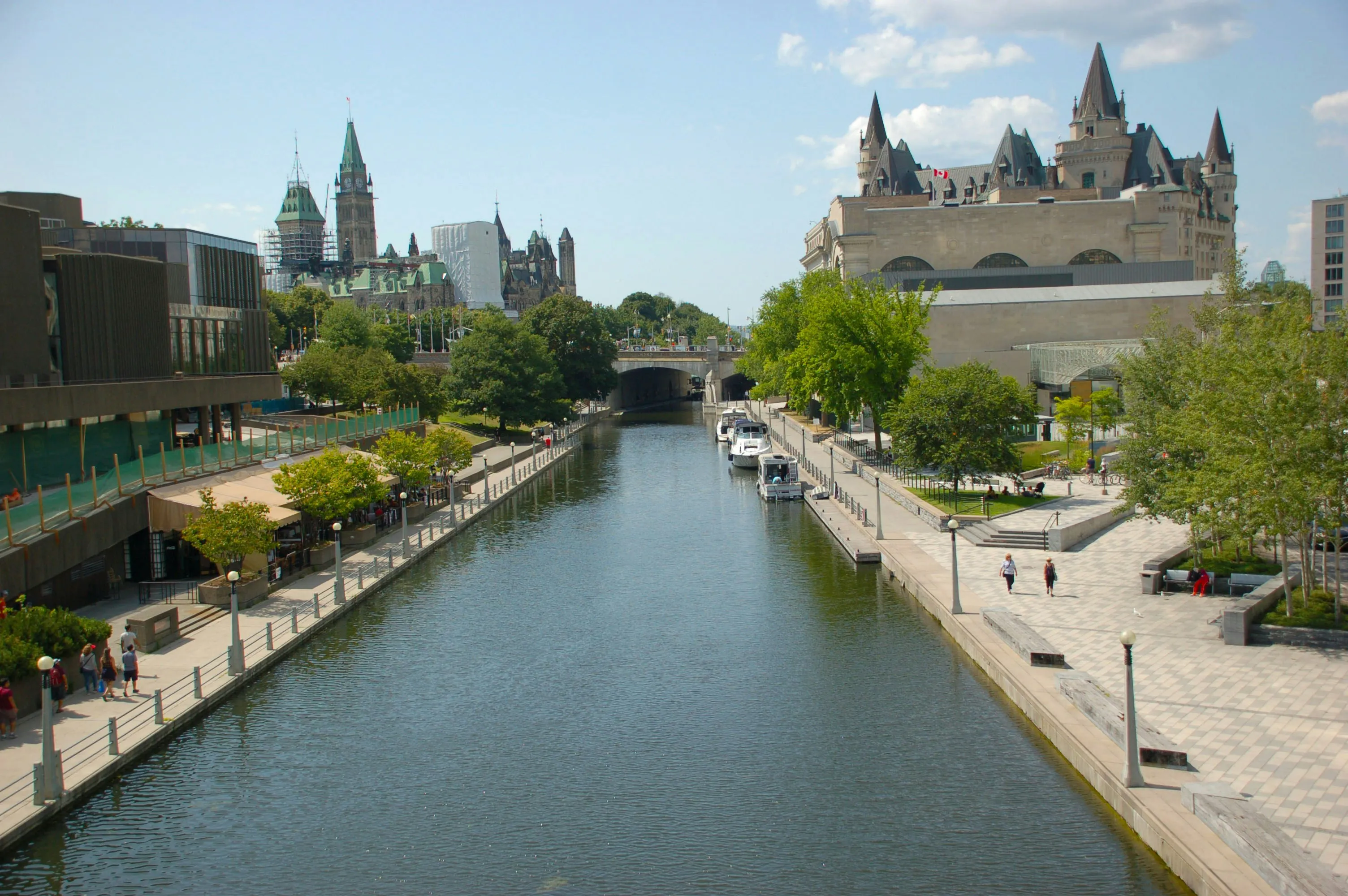 Caption: The canal corridor pairs engraved plaques with movement and reflections.
The Rideau Canal corridor gives you a different texture than the Market or Parliament. Here the text is quieter and more formal, and the waterline provides movement that keeps the frame alive. This is the best place to combine signage with seasonal activity, because the canal feels completely different in winter and summer, and both seasons photograph well. The corridor also gives you a sense of scale, which helps signage feel grounded rather than floating.
Rideau Canal UNESCO Plaques: Historic Text with Motion
The Rideau Canal UNESCO World Heritage plaques add formal engraved text to one of Ottawa’s most iconic corridors. These plaques are most photogenic when you pair the lettering with action in the background, such as skaters in winter or boats moving through the locks in summer. The text is subtle, so the key is to position yourself so the letters stay readable while the canal provides context. The plaques sit near the locks at Rideau Street and Sapper Island, which keeps them close to the core.
Early morning light works best because reflections are softer and there are fewer people in the frame. Shoot low and slightly off to the side so the plaque sits in the foreground and the locks or skateway create the backdrop. A local perspective captures the winter feel: “Locks from beside Chateau Laurier… magical winter.” That is the look you want if you are shooting on a clear, cold morning.
Access is flat and easy along the canal pathways, and the area is close to Rideau Station and uOttawa Station. Paid parking in the Rideau Centre garage or nearby meters along Rideau Street is the simplest option if you are driving. Weekday mornings are the calmest, while weekend skating crowds can fill the corridor. A small composition tip here is to align the plaque with the curve of the lock walls so the eye travels from the text into the waterline, which makes the engraved lettering feel anchored rather than floating.
If you are photographing in winter, keep your lens cloth handy because ice spray and snow can soften the lettering quickly. In summer, the plaques can be a bit reflective, so angle slightly away from direct sunlight to keep the engraving readable. The canal is managed by Parks Canada, so avoid climbing railings or blocking paths, and keep a safe distance from the ice edge when the skateway is open.
Corktown Bridge Plaque: Lettering with a Graphic Colour Pop
The Corktown Bridge brings a bold colour palette into your signage photos, and the etched lettering on the bridge adds a clean graphic element. It is a reliable stop when you want crisp lines and a more modern look, especially in winter when the red and yellow tones pop against snow. The bridge spans the Rideau River between Somerset Street East and Nicholas Street in Old Ottawa East.
The best angle is from below the bridge, where the lettering sits against the painted steel. You can also shoot from the top and include the canal below if you want a wider contextual frame. Morning light tends to keep the colours clean and the shadows soft. The bridge is flat and accessible, with minimal obstructions, and it is usually less crowded than the Market. On-street parking is usually easiest along Somerset Street East or Nicholas Street, and Lees Station or uOttawa Station are the closest O-Train stops if you are coming by transit.
There is a steep embankment near the water, so keep your footing secure if you step off the main path. If you want to photograph the plaque with a misty background, early morning is the best bet, but the surface can be wet. This is a good stop for clean, graphic frames where the lettering is bold and the background is simple. A small safety detail here is to yield to cyclists and joggers, because this crossing is part of a popular trail connection.
Major’s Hill Park and Nepean Point: Skyline Signage
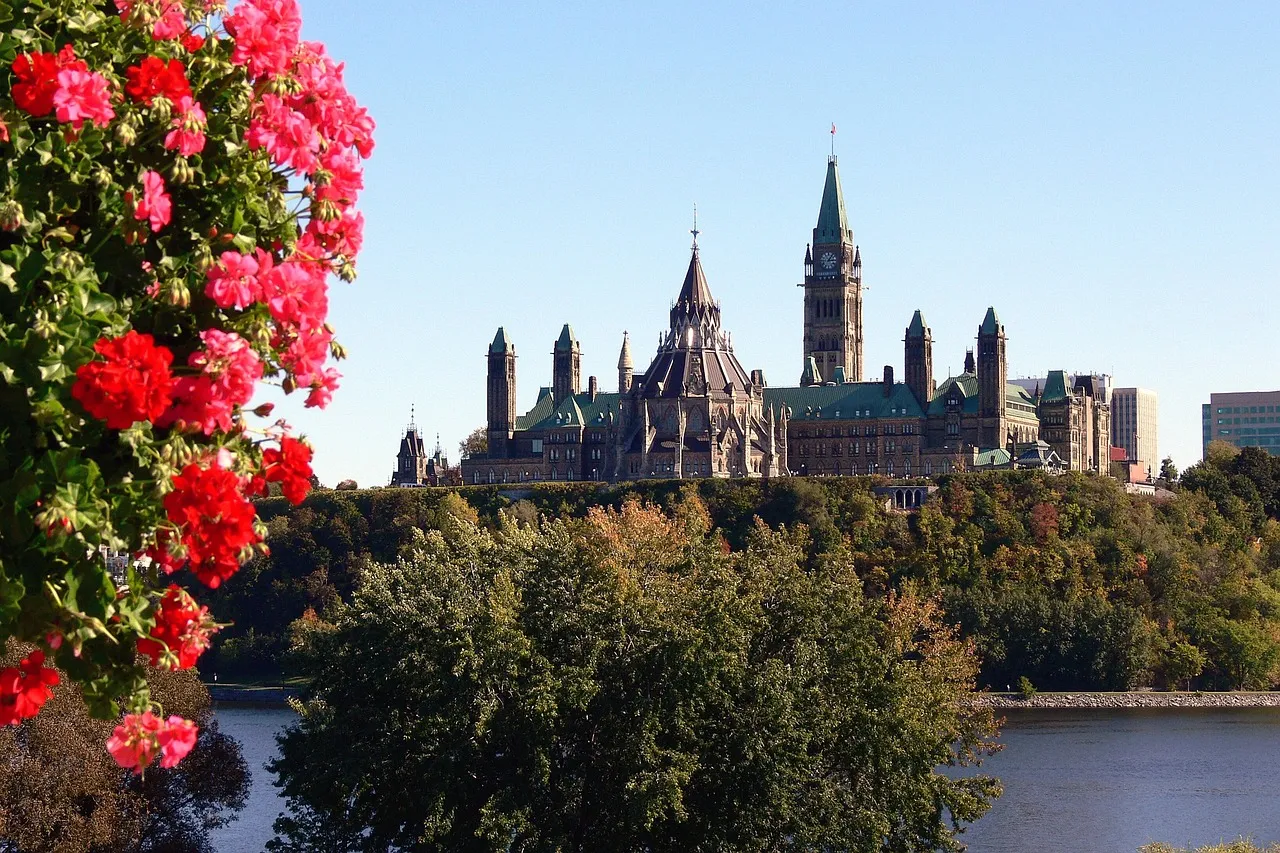 Caption: These overlook signs trade neon for skyline context and open light.
If you want signage that feels quieter and more expansive, this pair of stops delivers. Major’s Hill Park and Nepean Point are both about context: you are not just photographing text, you are placing it against the Ottawa skyline, the river, and the historic core. These spots are best for wide frames and slower pacing, which is why they work well later in the day after you have hit the busier Market locations.
Major’s Hill Park Signage: A Calm Frame with Skyline Context
Major’s Hill Park has carved park entry signage and lettering that pairs naturally with wide skyline views of Parliament Hill and the Château Laurier. It is one of the best places to combine readable text with a classic Ottawa skyline, and it feels quieter than the Market even on busy days. The signage reads well when you place it low in the frame and let the skyline take the upper half. The main entrances sit along Mackenzie Avenue near the Rideau Canal and 55 Rideau Street in Lower Town, which keeps the location close to the Lower Town loop.
The best approach here is a wide composition that places the signage in the foreground and lets the skyline fill the upper half of the frame. Sunrise and late afternoon give you softer light on the stone and a cleaner background. During tulip season the park is busy, but the lighting is beautiful and the signage still reads well. A short local reaction captures this seasonal draw: “Tulip Festival stunning.” It is a reminder that this is both a photo stop and a seasonal favourite.
The park is accessible via paved paths and is an easy walk from the ByWard Market. Paid street parking and nearby garages around Rideau Street are the easiest driving options, while Rideau Station gives you a short walk to the park edges. Because the terrain is mostly grass and gentle slopes, it is best to wear shoes with traction in winter. When you frame here, look for natural foreground textures such as stone edges, benches, or low shrubs that can frame the sign without obscuring the skyline. The wind can be stronger on the hill, so use a faster shutter speed if you are shooting handheld.
If you are already following the ByWard Market guide, this is the most logical signage stop to add without extra travel time. The park also pairs well with seasonal content like the Canada Day guide when the area is filled with flags and festival activity. For a winter sequence, pair this with Winterlude so you can keep the seasonal story consistent.
Nepean Point Overlook Signage: Wide City Context
Nepean Point includes subtle signage and plaques that frame some of the best skyline perspectives in Ottawa. The signage itself is not large, but it reads well when you shoot from a slightly lower angle and include the National Gallery or Parliament in the background. This spot is best for wide-angle context and dramatic open-sky frames. The summit sits above Sussex Drive near Laurier Avenue East in Sandy Hill, and the approach involves a short climb.
Sunset is ideal here, especially when the light hits the river and the skyline starts to glow. The walk up is short but steep in places, so it is not the easiest option for people with mobility limits. From the Market core, the uphill walk is roughly 15 minutes, depending on your pace. The payoff is a quieter, more contemplative feel, and you can take longer to experiment with angles without feeling rushed. The signage reads better if you include a clean edge of sky behind it rather than trees or cluttered backgrounds.
Because Nepean Point sits above the river, the wind can be intense. If you plan to shoot with longer exposures, use a stable stance or bring a small travel tripod, but be mindful of crowd flow. Street parking along Sussex Drive is limited, and Rideau Station is the easiest transit anchor for the uphill walk, with frequent buses along Sussex for a closer drop-off. Bugs can be heavy in summer, so plan for repellent and a lens cloth. In winter, the low sun can create strong contrast, so shoot slightly off-axis to reduce glare on plaques. The main pitfall here is letting the skyline dominate and shrinking the text, so step closer than you think and keep the sign readable in the foreground. This is a strong place to pair with the secret viewpoints in Ottawa or the Parliament Hill guide if you want to build a longer skyline-focused route. If you want a quieter follow-up to Nepean Point, head to Gatineau Park for more open-sky signage away from the city core.
Lansdowne and the Glebe: Modern Signage with Market Vibes
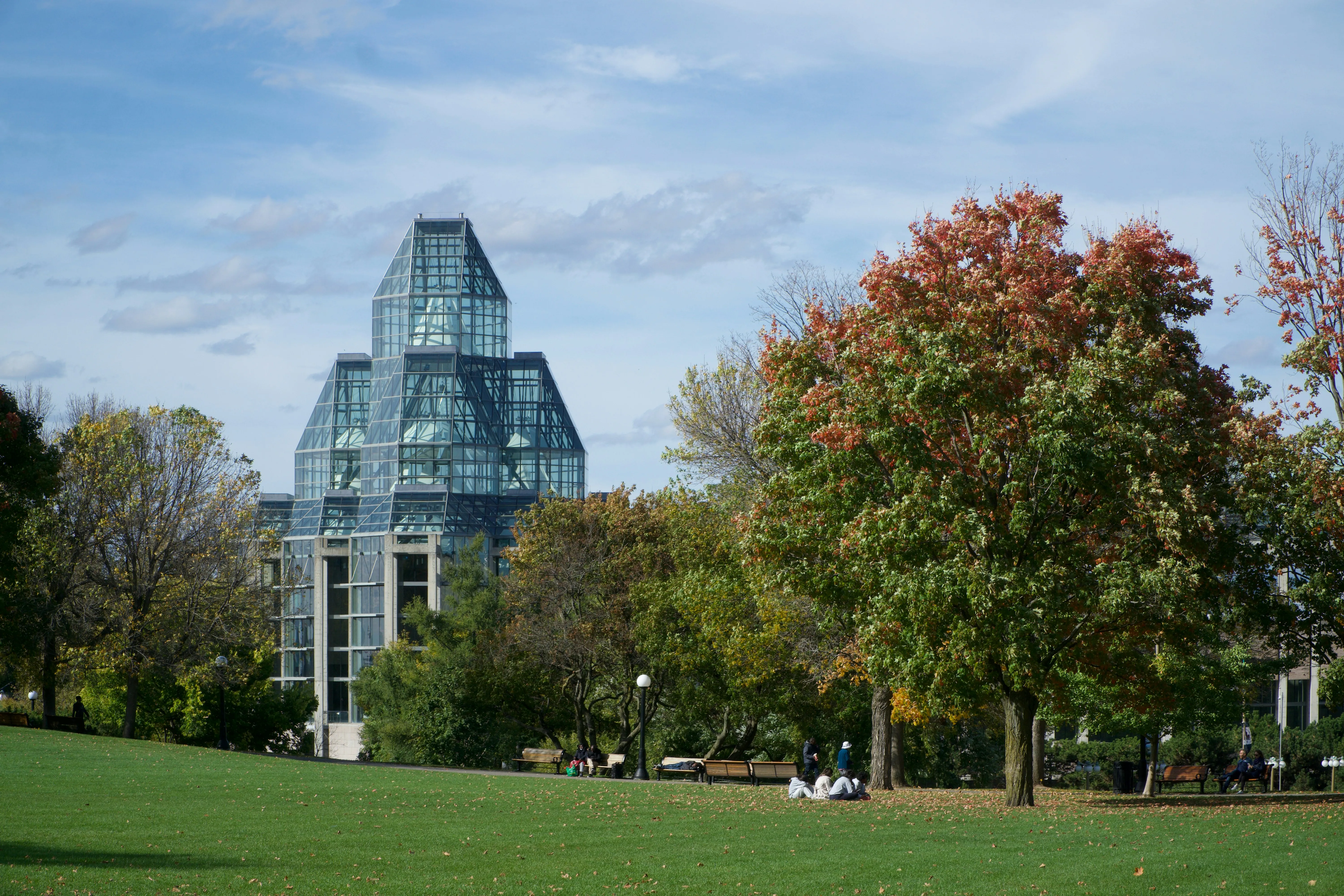 Caption: Lansdowne blends modern lettering with historic market architecture.
Lansdowne adds a modern, polished signage look to a guide that otherwise leans historic. The lettering here feels contemporary and clean, and the surrounding plaza and pavilion architecture provide a different background texture than the downtown core. If you want variety in your set, this is the best area to break up the heavy stone and historic signage with brighter, newer lines.
Lansdowne Park Signage: Clean Letters and Event Energy
The Lansdowne sign is a clean, modern piece of lettering that works well for lifestyle content and group shots. The letters sit near Aberdeen Square at Lansdowne Park, close to Exhibition Way and Lansdowne Park Drive at 1015 Bank Street in the Glebe, and the space often has a lively backdrop during markets or events. If you want a contemporary Ottawa frame that feels polished rather than historic, this is one of your best options.
Late afternoon light is the easiest to work with because it softens the metal surfaces without flattening the lettering. After dark, the area still reads clearly, but you will have more people in the background. Parking is easier here than downtown, with a paid underground garage on site and street parking in the Glebe that fills quickly. Transit access along Bank Street is reliable, with frequent buses that make it simple to travel from downtown. A common pitfall is arriving during a ticketed event when the sign is partially blocked, so check the Lansdowne event schedule if you need a clean frame.
A common local comment is, “Black & white Lansdowne sign… Instagram favourites.” It is a good reminder that the sign works best for simple, clean compositions rather than busy street scenes. Composition tips here are straightforward: keep the letters level, use the Aberdeen Pavilion dome for architectural depth, and avoid the busiest moments when people crowd the frame. If you want a quieter background, arrive before the market opens or during midweek afternoons. During winter markets or holiday events, the sign can pick up festive lighting, which adds colour without the harsher glow of neon.
If you want more context, pair this stop with the Lansdowne guide or the Glebe neighbourhood guide. The Glebe adds a streetscape contrast that makes the modern lettering feel more grounded in the neighbourhood.
Aberdeen Pavilion Marquee: Heritage Lettering Indoors
The Aberdeen Pavilion, often called the “Cattle Castle,” offers a historic marquee feel when the building is open for events. The interior lettering and signage read beautifully in warm indoor light, and the dome structure adds a strong architectural frame for signage-focused photos. This is a good counterpoint to the modern Lansdowne letters because it gives you heritage texture inside the same plaza. The marquee sits along Aberdeen Way at 1015 Bank Street, which keeps it close to the outdoor signage without a long walk.
This is best captured during markets or winter events when the pavilion is open and lit. Use a wide lens to include the dome, then move in for a detail shot that features the lettering itself. Accessibility depends on event layout, but the pavilion generally has ramp access and clear walkways. Because this is an event space, check for ticketed access and be respectful of crowd flow. A common pitfall is arriving when the pavilion is closed, so treat this as an optional add-on rather than a guaranteed stop.
From a composition standpoint, the lettering works best when you keep it slightly off-centre and allow the dome to arc above it. That gives a balanced frame and avoids cutting the text. The pavilion can be busy, so plan short intervals between shots rather than long tripod setups. If you want a quieter look, look for the edges of the hall or time your visit between event rushes.
Gatineau Park Add-On: Pink Lake Trailhead Signage
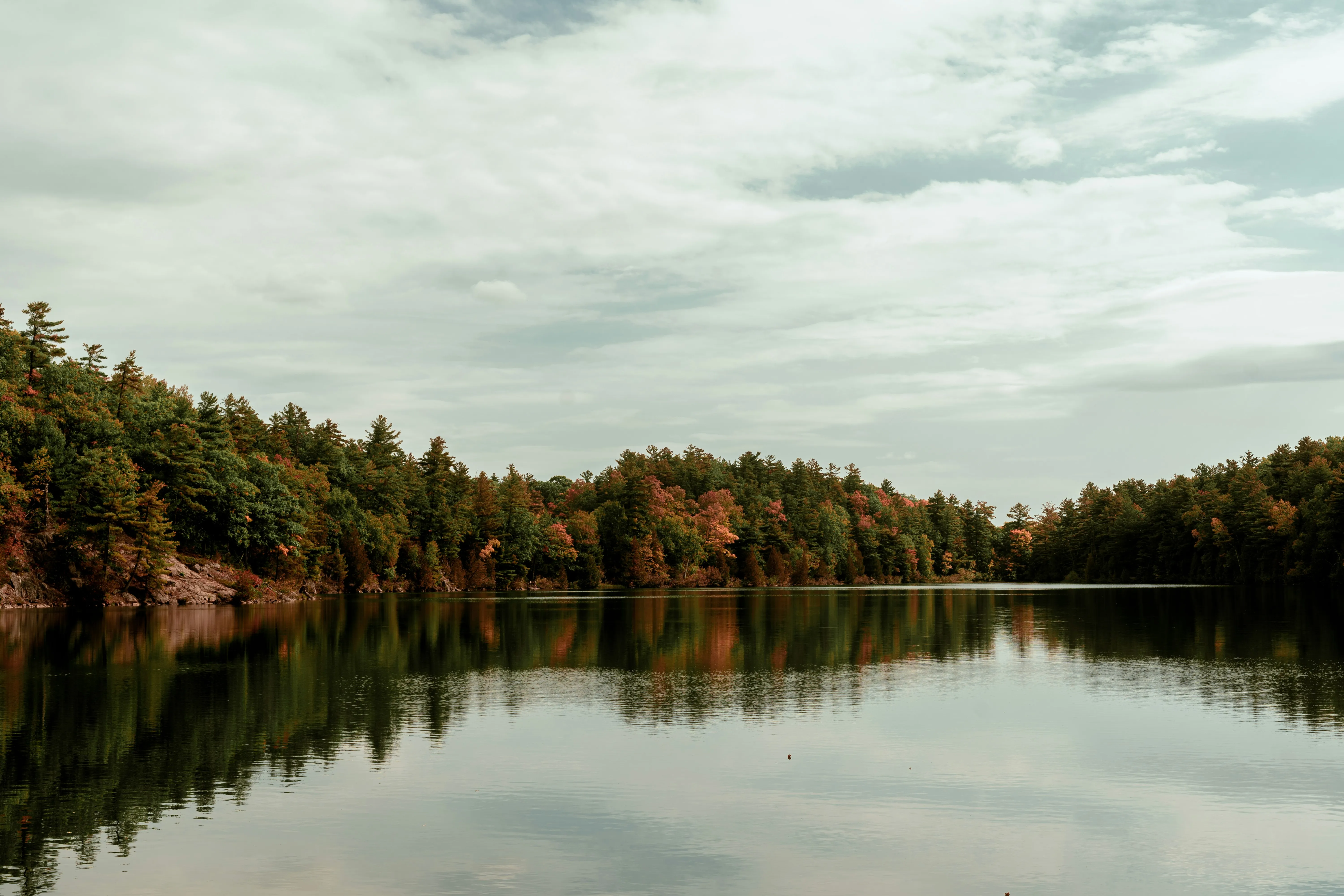 Caption: Pink Lake signage is a quiet, natural contrast to downtown lettering.
Pink Lake in Gatineau Park is a cross-river add-on that brings a natural signage look into this guide. The trailhead signage is simple, but it pairs well with the forested setting and gives you a different texture than the urban core. This is a good option if you want one Ottawa-area signage stop that feels calm and outdoors-focused rather than city-based. The trailhead sits on Pink Lake Road in Gatineau Park, just off the parkway network across the river from Ottawa.
Midday light is best here because the forest canopy softens contrast and the colours of the lake are more saturated. The trailhead signage sits near the parking area, so it is easy to access without a long hike. The stop works well in fall when the leaves add colour around the sign, but summer can bring heavier crowds. One local note you may hear is, “Pink Lake trailhead sign with autumn leaves? Stunning. But watch the crowds in summer.” It is a good reminder to plan for timing if you want a quieter frame.
There is no direct OC Transpo route to the trailhead, so plan to drive and check the current parking rules with the NCC before you go. The path is moderate and the area is generally accessible at the trailhead, but it is still a forested trail, so bring footwear with traction. The sign itself includes information about the lake, so avoid blocking it for long periods if other visitors are reading. Pink Lake is a sensitive ecosystem, so stay on the paths and avoid swimming. The most common pitfall is arriving late in the day when the lot is full, so aim for earlier daylight if you want a clean frame and a guaranteed space. If you are already planning a day across the river, connect this with the Gatineau Park guide for a fuller route. This stop works best as a quiet addition rather than a primary city shoot.
Planning Your Ottawa Signage Photo Route
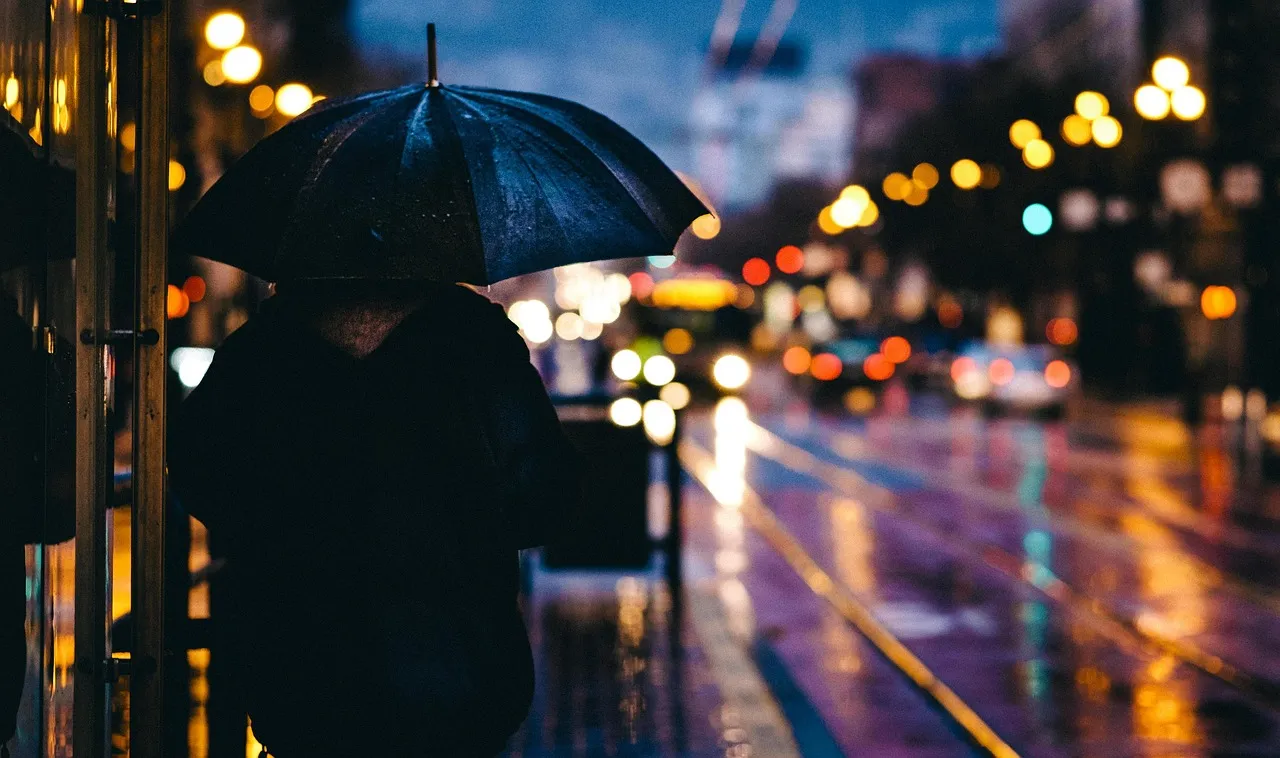 Caption: A short loop lets you hit the most photogenic letters in under an hour.
Why Signage Photography Works in Ottawa
Ottawa signage photographs well because the city mixes older materials with modern light. Brass plaques and carved stone lettering react strongly to low winter sun, which creates deep shadows that make the text pop. In warmer months, the same plaques reflect softer daylight and blend naturally into a skyline or garden setting. The ByWard Market letters glow against a brick-and-stone context that feels unmistakably Ottawa, while Parliament Hill provides darker stone textures that give engraved text more contrast.
Street textures are a big part of the look. Cobblestones in ByWard, gritty pavement on Sparks Street, and the lock stones along the Rideau Canal add tactile foregrounds that make lettering feel grounded rather than floating. The city is also dense enough that you can move from neon to plaque to modern letters in a short loop, which makes it easy to build variety into a single shoot without losing the visual theme. Wet streets after rain amplify reflections on metal and glass, and snow acts like a soft bounce card that lifts shadow detail on plaques and carved lettering.
Seasonality matters too. Winter light is lower and warmer in the afternoon, which is ideal for stone and brass signage, but it also brings ice and glare. Summer offers longer evenings and easier movement, but crowds can be heavier around the Market and Parliament. The best strategy is to plan the core loop for weekday golden hour, then return for a shorter night session if you want the lit signage effect. If you want a winter-specific add-on, connect the route to the winter activities in Ottawa guide and the Rideau Canal skating guide so the visuals stay consistent with the season.
Safety and etiquette for public signage shots
- Keep tripods tight to your body line in busy areas and be ready to fold them if crowds build.
- Do not climb letters, plaques, or railings, even for a better angle.
- Stay on public paths around Parliament Hill and the canal locks, and avoid security zones.
- Give space to vendors, tour groups, and people reading plaques so signage remains usable for everyone.
- In winter, expect ice around stone steps and canal edges and move slowly between setups.
Extra local quotes from photographers and visitors
- “Pink Lake trailhead sign with autumn leaves? Stunning. But watch the crowds in summer.”
- “Sparks Street murals pop against the pedestrian mall, quiet mornings beat tourist chaos.”
- “Chateau Laurier marquee glows like magic in December snow, frame it with the canal locks for epic shots.”
Short Photo Route: ByWard Core Loop (45 Minutes)
A fast signage loop in the core starts at the ByWard Market “OTTAWA” sign in York Street Plaza, moves to the nearby text murals off George Street, then heads to the Chateau Laurier marquee via the Rideau Canal locks. From there, climb the short hill to Major’s Hill Park for skyline context. The loop is roughly 1 km and takes about 45 minutes at a relaxed pace, which makes it ideal for golden hour when light changes quickly. If you want more time at each stop, do the loop clockwise and return after dark to repeat your favourite spot under different lighting.
If you have a second hour, add a Parliament Hill stop before returning to the Market. That gives you a formal lettering contrast without a long detour. For a longer evening, finish on Sparks Street so you catch the pedestrian lighting and store signage once the street starts to glow. The key is to keep the distances short so you are not walking between spots while the light changes.
Comparison: Ottawa Signage Photo Spots at a Glance
| Category | Best Spots | Why It Works | Tradeoffs |
|---|---|---|---|
| Portraits | ByWard “OTTAWA” sign, Chateau Laurier | Strong lettering and flattering light | Crowds, limited space |
| Night Shots | ByWard “OTTAWA” sign, Lansdowne Park | Reliable lighting and clean lines | Extra noise during events |
| Wide Context | Nepean Point, Major’s Hill Park | Skyline plus readable signage | Windy and longer walk |
Local Tips and Warnings
- Shoot midweek afternoons if you want fewer crowds in the Market. One local summary is blunt: “too packed for setups” on peak weekends.
- Winter golden hour is short, so plan for a 4-6 pm window and move quickly between stops.
- Downtown stone steps and brick alleys ice over, so bring traction or cleats and avoid sprinting between shots.
- Keep your setup compact. Public installations are fine to photograph, but do not climb on letters or block entrances.
- Around Parliament Hill, stay on public paths and avoid drone use, which can trigger security issues.
- If you are photographing murals, expect them to change. Some pieces rotate seasonally, so treat the lettering as a moment rather than a permanent scene.
- For long exposures in the Market, step back from the main pedestrian lane and keep your tripod legs tight to avoid creating a tripping hazard.
FAQ
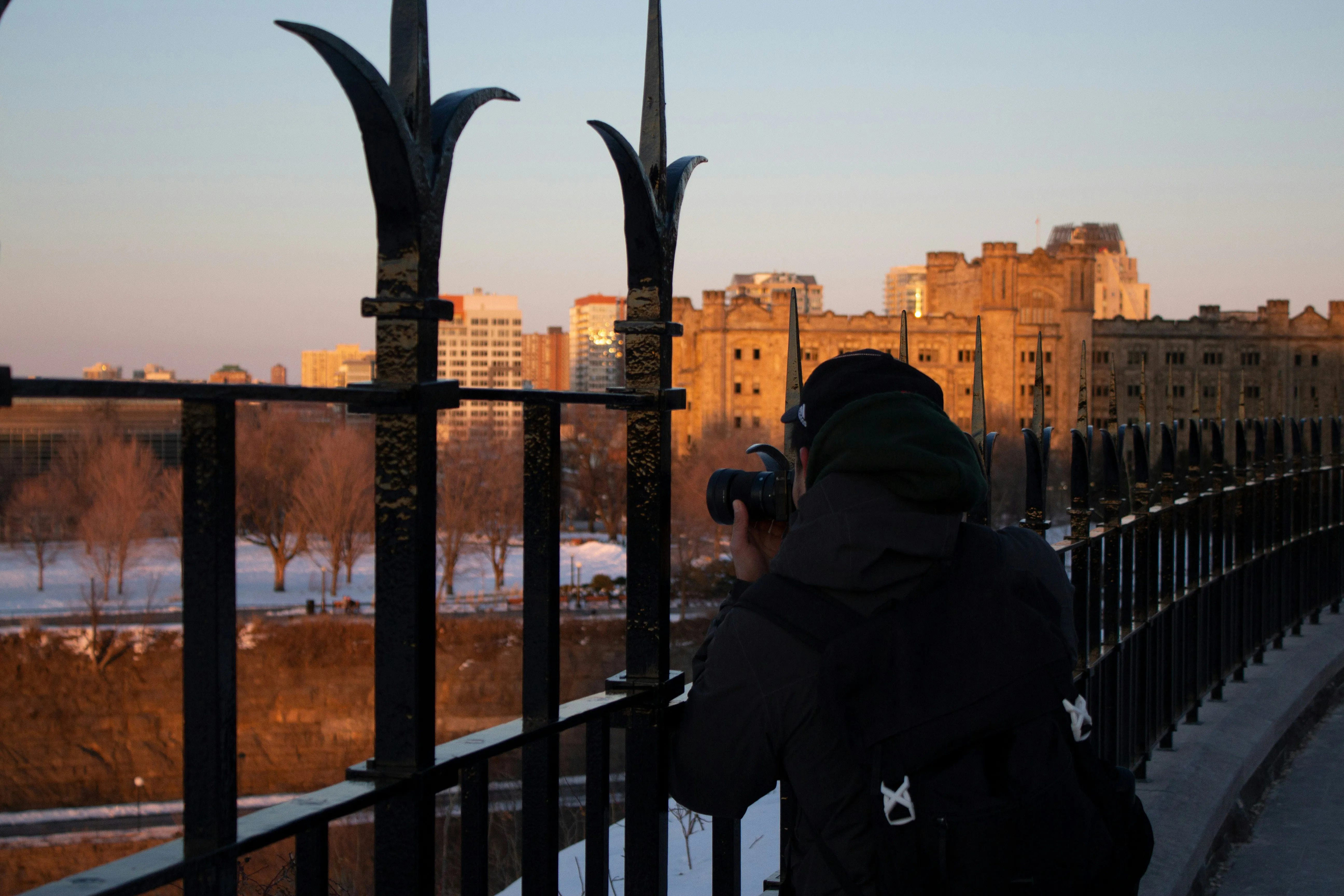 Caption: Quick answers for planning a signage-focused shoot.
Q: Where is the Ottawa “OTTAWA” sign located?
The most photographed Ottawa sign is in York Street Plaza in the ByWard Market, near York and William Streets. It is a pedestrian plaza with wide sidewalks, and it is a short walk from Rideau Station and the Market core.
Q: What time is best for Ottawa signage photos?
Golden hour and blue hour are the easiest times to shoot signage because the light is softer and LED or neon elements show clearly. In winter, that window comes early, so plan for late afternoon and keep your route compact.
Q: Are Ottawa signage photo spots accessible?
Most downtown signage spots, including the ByWard Market sign and Chateau Laurier area, are accessible with smooth sidewalks and ramps. Nepean Point is the steepest location and can be challenging for wheels or strollers.
Q: Can I use a tripod at Ottawa signage landmarks?
Tripods are generally fine in public spaces if you are not blocking pedestrian flow. Around Parliament Hill and busy downtown areas, keep setups small and be prepared to move if staff or security ask.
Q: Are there any rules about photographing signs in Ottawa?
Public signage is fine to photograph, but avoid climbing installations or obstructing businesses. Interior spaces like hotel lobbies can have their own rules, so ask permission before setting up indoors.
Q: Which Ottawa signage spots work best for portraits?
The ByWard Market “OTTAWA” sign and the Chateau Laurier marquee give the most flattering portrait backgrounds because the lettering is large, legible, and framed by warm light.
Q: Which spots work best for night shots?
The ByWard Market “OTTAWA” sign and Lansdowne Park signage are the most reliable after dark because they have consistent lighting and a clear line of sight.
Q: What is the easiest signage loop without a car?
The ByWard Market “OTTAWA” sign, Market murals, Chateau Laurier, and Major’s Hill Park can be done as a 1 km walk from Rideau Station in under an hour.
Q: What should I bring for a winter signage shoot?
Bring traction or cleats for icy surfaces, gloves that let you operate a camera, and a lens cloth for salt or snow spray. Winter light is low and fast, so focus on two or three nearby spots rather than a long loop.
Q: Are signage photos safe to do at night in Ottawa?
Downtown Ottawa is generally safe, but stick to well-lit areas and avoid isolated alleys if you are shooting solo. If you plan long exposures, bring a friend and stay in busier spots like the Market or Lansdowne.
Q: What are the most distinctive signage spots beyond the Market?
Nepean Point offers a quieter, wide-angle skyline context with subtle signage, while the Rideau Canal UNESCO plaques add historic text paired with skaters or lock views. These balance the busier downtown signage stops.
Final Thoughts
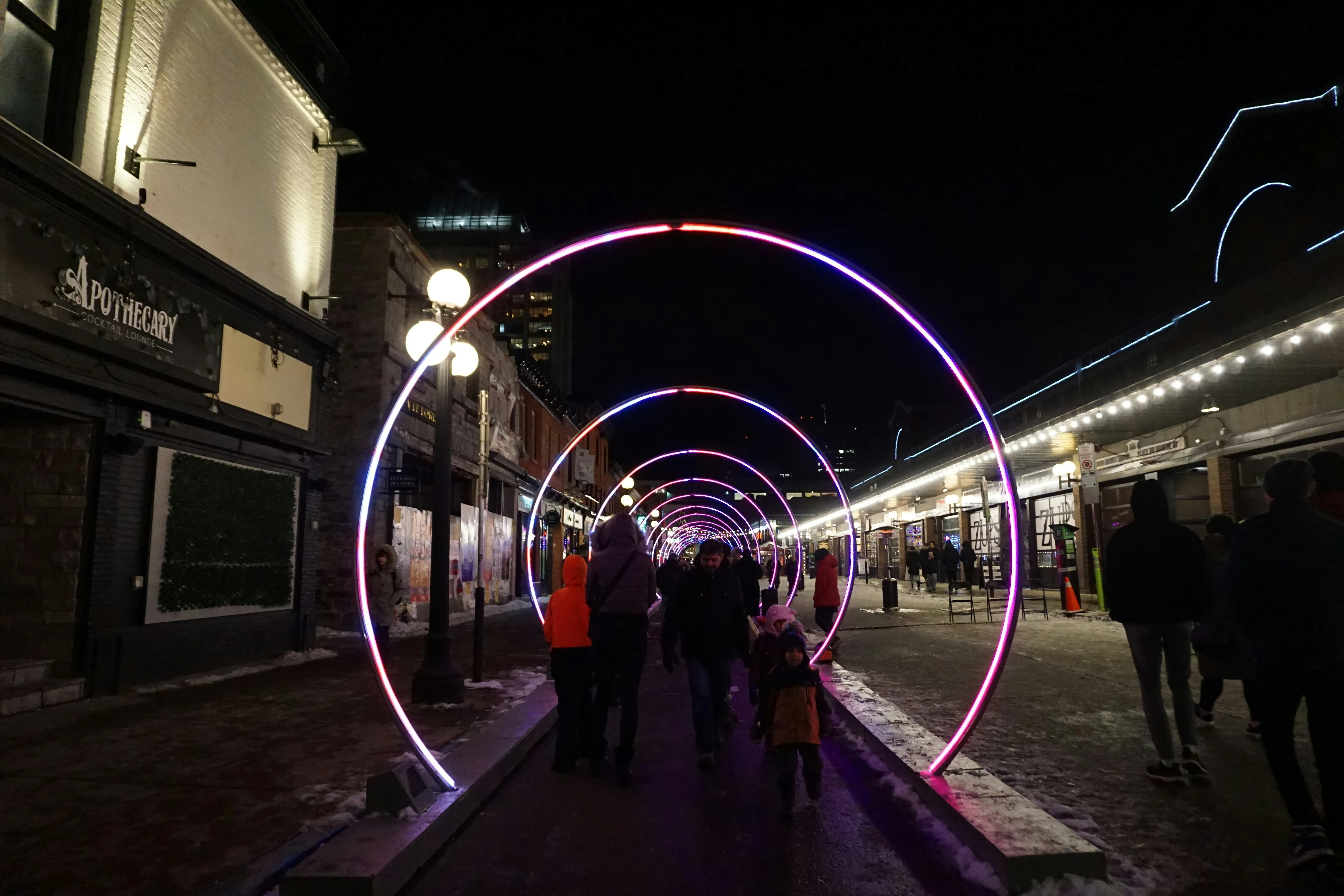 Caption: A signage-focused route can fit into one afternoon with room for golden hour.
Ottawa’s best signage photo spots are compact enough to cover in a single afternoon, but each one brings a different texture and mood. The ByWard Market sign and Chateau Laurier deliver the most iconic frames, while Nepean Point and Major’s Hill Park add skyline context that feels uniquely Ottawa. Plan around the light, keep your loop tight, and save time for a second pass at your favourite letters once the city starts to glow.
Sources: City of Ottawa, ByWard Market District Authority, NCC, Parliament of Canada, Parks Canada, Fairmont Château Laurier, TripAdvisor, Reddit r/ottawa.