Ottawa Winter Commuting & Road Safety Guide 2026
Last Updated: January 19, 2026
Surviving an Ottawa winter isn’t just about a warm coat—it’s about mastering the art of the commute. From navigating the Queensway in a whiteout to understanding the unwritten rules of the O-Train during a storm, this guide keeps you moving safely.
We’ve all been there: staring at a weather app predicting 25cm of snow, wondering if the O-Train will run or if the 417 will be a parking lot. Ottawa winters are beautiful, but they demand respect and preparation. Whether you’re behind the wheel, on the bus, or braving the sidewalks, knowing the rules and tricks of the trade can mean the difference between arriving on time and waiting for a tow truck.
Key Highlights
TL;DR: Winter tires are optional in Ontario but mandatory in Quebec (if you cross the river). OC Transpo switches to a “Severe Storm Schedule” on bad days—check the app. Always keep a shovel and sand in your trunk.
| Quick Facts | Details |
|---|---|
| ❄️ Parking Ban | Nov 15 - Apr 1 (1AM-7AM if 7cm+ snow) |
| 🛞 Tires | Quebec: Mandatory Dec 1 - Mar 15 |
| 🚌 Transit | Watch for “R1” replacement buses |
| ⚠️ Hazard | Black ice on bridges/overpasses |
Winter Driving Rules: Ontario vs. Quebec
One of the unique challenges of Ottawa is its proximity to Gatineau. The rules change the moment you cross a bridge.
Winter Tires: The Law vs. Common Sense
- Ontario (Ottawa): Winter tires are not mandatory by law, but they are highly recommended. Most insurance companies offer a discount (usually 5%) for using them. However, driving on all-seasons in Ottawa is widely considered negligent by locals.
- Quebec (Gatineau): Winter tires are MANDATORY from December 1 to March 15. If you live in Ottawa but drive into Gatineau for work or play, you must comply with Quebec law or face a fine of up to $300. Your tires must have the “mountain snowflake” symbol.
Top Winter Tire Picks for Ottawa
Ottawa’s climate involves deep snow and icy slush. Locals swear by:
- Nokian Hakkapeliitta: The gold standard for deep snow and ice. Expensive but worth it.
- Bridgestone Blizzak: Excellent on ice, thanks to their microscopic bite particles.
- Michelin X-Ice Snow: Great longevity and highway performance.
The Overnight Parking Ban
The City of Ottawa enforces an overnight parking ban to allow plows to clear the streets.
- When: Between November 15 and April 1.
- Trigger: It is usually announced when 7cm or more of snow is forecast.
- Time: 1:00 AM to 7:00 AM.
- Exemptions: If you have an on-street parking permit, you might be exempt, but check the specific snow event status.
- Alerts: Sign up for email alerts on the City of Ottawa website or follow them on social media.
Pro Tip: During a ban, parking is often free at select City garages (like Gloucester or City Hall). Check ottawa.ca for the “snow parking” map.
Mastering OC Transpo in the Snow
Public transit can be a lifeline or a frustration during a storm. Knowing how the system reacts to weather helps you manage expectations.
The R1 Service: The O-Train Backup
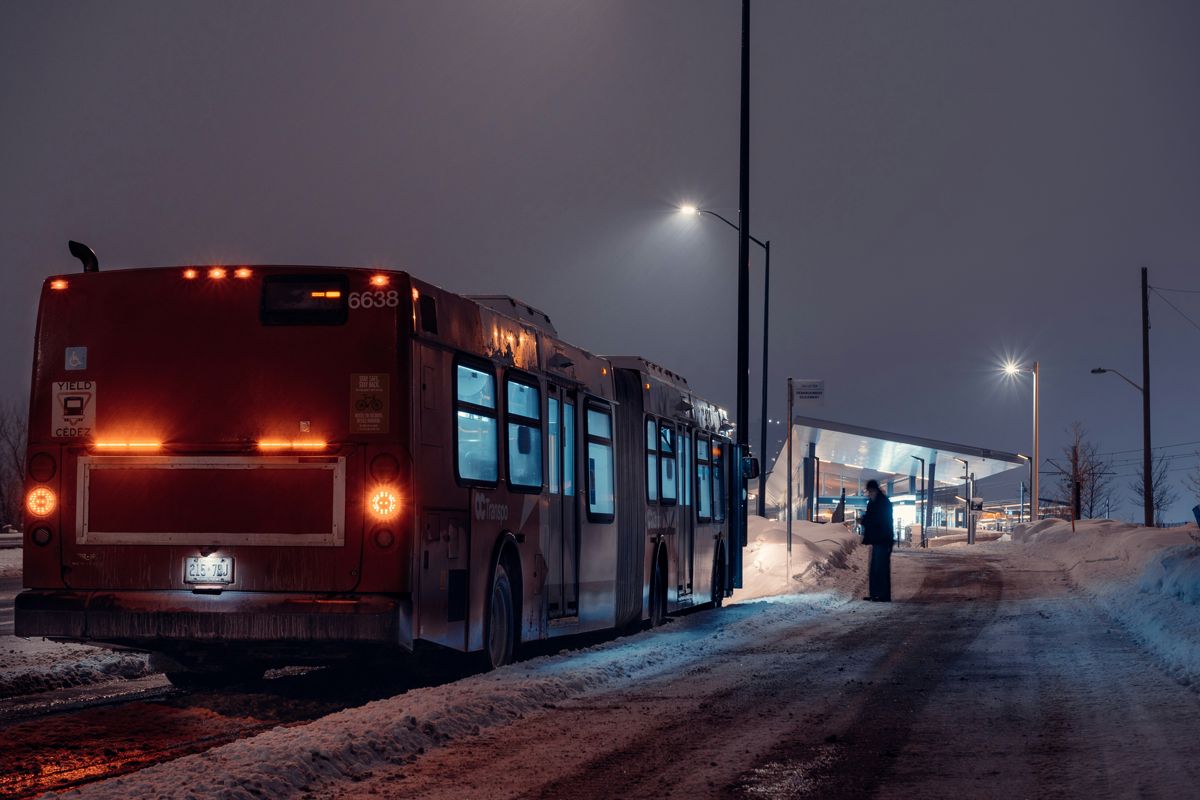
When the O-Train Line 1 (Confederation Line) faces issues—which can happen during freezing rain or heavy snow accumulation—R1 buses are deployed.
- The Route: These buses run parallel to the train route, stopping near all stations from Tunney’s Pasture to Blair.
- The Sign: Look for the yellow “R1” bus stops outside the stations. They are distinct from regular stops.
- The Reality: R1 service is slower than the train because it deals with the same traffic and snowy roads as cars. Plan for an extra 30-45 minutes.
Tracking Your Ride: Ghost Buses & GPS
In snow, schedules are theoretical. GPS is reality.
- The “Ghost Bus”: Sometimes a bus appears on the schedule but vanishes. This usually means it’s stuck in traffic or cancelled.
- The Solution: Use apps like Transit or BusBuddy. Look for the pulsing icon—that means real-time GPS tracking. If the icon is grey or static, it’s just a scheduled estimate (and likely wrong).
- Text 560560: If you don’t have data, text your 4-digit stop number to 560560. It provides real-time arrival estimates.
Severe Storm Schedule
On days with extreme weather (typically 30cm+ storms), OC Transpo may implement a Severe Storm Schedule.
- What it means: Reduced frequency on many routes to improve reliability. Articulated (long) buses might be pulled from hilly routes because they jackknife easily.
- Saturday Service: Often, the severe storm schedule mimics a Saturday service level on weekdays. Check the alerts page before you leave.
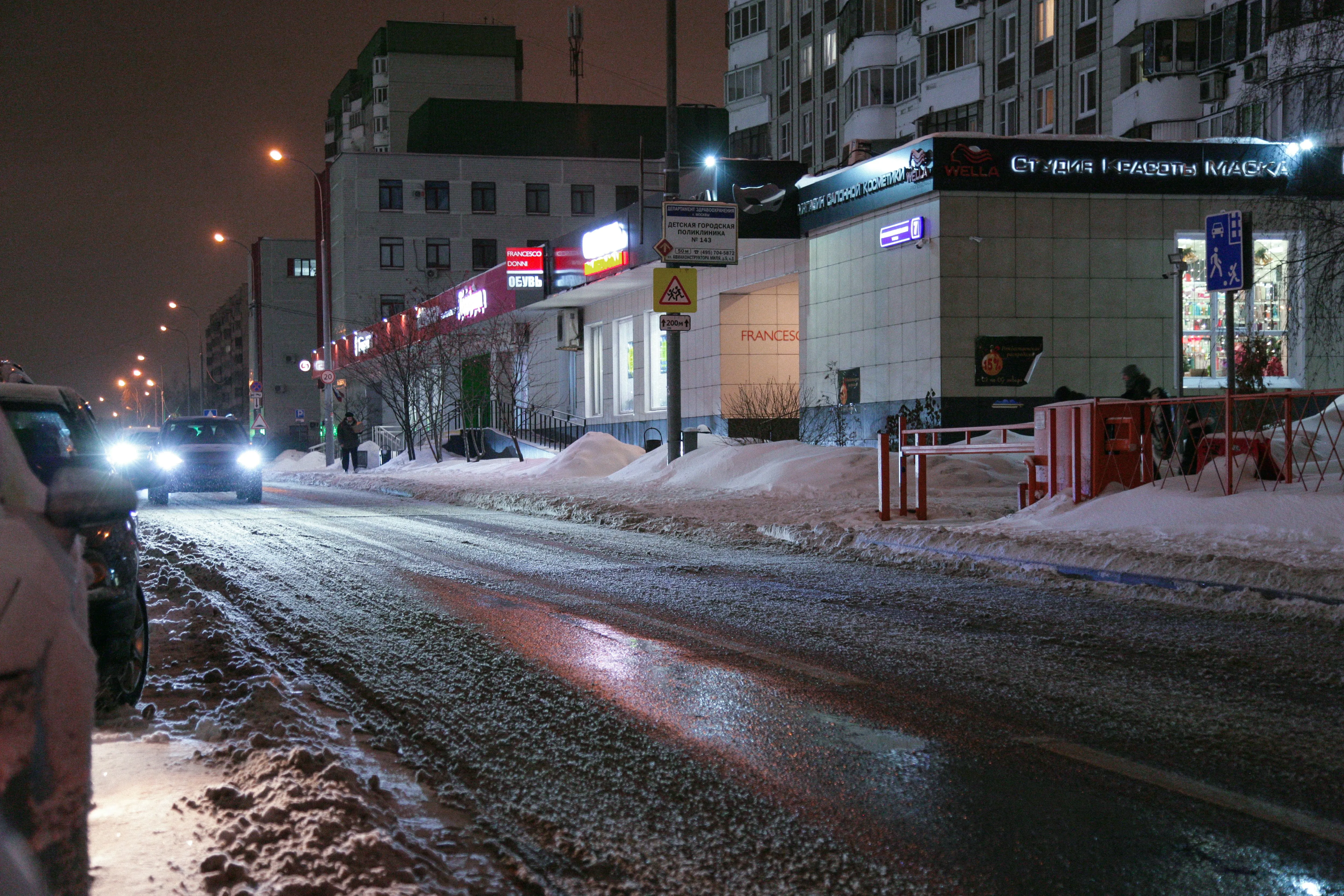 Image: Patience is the most important tool for winter driving on Bank Street.
The Ultimate Ottawa Emergency Car Kit
If you slide into a ditch on a rural road like Moodie Drive or get stuck on the 417 during a whiteout, you need to be self-sufficient until help arrives. In -25°C weather, a dead engine means the cabin freezes in minutes.
The “Must-Have” Checklist
Every trunk in Ottawa should contain these items. Do not rely on just a snow brush.
- Snow brush & scraper: A sturdy one (not the cheap plastic ones that snap). Look for a telescopic brush with a pivoting head to clear the roof of your SUV.
- Shovel: A compact, collapsible shovel. Metal blades are better for chopping ice than plastic ones.
- Traction aid: Kitty litter (non-clumping), sand, or dedicated traction mats. Floor mats can work in a pinch, but they often shoot out under the tire.
- Windshield fluid: Rated for -40°C. Keep an extra jug. Running out on the 417 when slush is spraying means driving blind.
- Warmth: A candle in a deep can (coffee tin) and matches. It provides surprising heat and light. Pack a heavy wool blanket or sleeping bag.
- Visibility: Road flares or a reflective triangle. If your battery dies, your hazard lights die too.
- Jumper Cables: Or better yet, a portable lithium jump starter pack (keep it charged!).
- First Aid Kit: Bandages, antiseptic, and any personal medication.
- Food & Water: Energy bars and a bottle of water (leave some headspace for freezing expansion).
What to Do If You Get Stuck
- Stay with your vehicle: Unless you can see a building nearby, do not walk into a storm. Disorientation happens quickly.
- Run the engine sparingly: 10 minutes every hour to save gas.
- Clear the exhaust: Ensure snow isn’t blocking the tailpipe to prevent carbon monoxide poisoning. crack a window slightly.
- Call for help: Dial *CAA or 511 for provincial road assistance. If it’s an emergency (injury or danger), call 911.
Defensive Driving on the Queensway (Hwy 417)
The 417 is Ottawa’s main artery, and in winter, it demands focus. It’s not just about driving slowly; it’s about driving smart.
The Science of Skids
When you hit a patch of black ice near the Nicholas off-ramp, panic is your enemy.
- Front-Wheel Skid (Understeer): You turn the wheel, but the car goes straight. Do not brake. Ease off the gas and straighten the wheel slightly until the tires grip again. Then, steer gently.
- Rear-Wheel Skid (Oversteer): The back of the car slides out. Steer into the skid. If the back slides left, turn left. Avoid slamming the brakes, which can lock the wheels (if you don’t have ABS) or confuse the stability control.
The “Ottawa Pothole” Season
Winter freeze-thaw cycles create craters that can swallow a Honda Civic.
- The Hazard: Potholes often hide filled with water or slush, looking like harmless puddles.
- The Strategy: Leave extra space behind the car in front of you. If they swerve, you know something is coming.
- The Hit: If you must hit a pothole, release the brakes before impact. Braking compresses the suspension, leaving no travel to absorb the blow. Rolling over it damages the rim less than sliding over it with locked wheels.
Black Ice Danger Zones
- Bridges & Overpasses: The Kichi Zibi Mikan (formerly SJAM) along the river, the Merivale Road overpass, and the windy ramps at the 417/174 split are notorious. Cold air circulates underneath them, freezing the surface while the rest of the road is wet.
- Intersections: The stopping zones at busy intersections (like Bank & Hunt Club) get polished by thousands of spinning tires, turning snow into invisible ice.
The “Move Over” Law
If you see tow trucks, police, or ambulances with flashing lights on the shoulder, you legally MUST slow down and move over a lane if safe. Fines in Ontario start at $490.
Local Wisdom: “If the plow is doing 40 km/h, you do 40 km/h. Don’t try to pass a phalanx of plows on the highway. The snow spray will blind you, and the wing blade is closer than it looks.” — Ottawa Driving Instructor
Cyclists and Pedestrians: Braving the Cold
Winter doesn’t stop active transportation in Ottawa, but it changes the gear.
Winter Cycling Network
The city maintains a network of plowed paths (mostly in the core). These priority routes are cleared to bare pavement (or packed snow) fairly quickly.
- Key Routes: The O-Train pathway, the Rideau River Eastern Pathway (parts of it), and the segregated lanes on O’Connor and Main Street.
- Gear: Studded tires (like Schwalbe Marathon Winters) are highly recommended for icy patches. Poggies (handlebar mitts) are essential for keeping hands warm.
- The “Salty” Reality: Ottawa uses a lot of salt. Rinse your bike frequently or use a “beater” bike for winter to save your expensive drivetrain from corrosion.
Sidewalk Safety
- Sidewalks: The City’s standard is to clear sidewalks on high-priority roads within 16 hours of the end of a storm. Residential streets take longer.
- Penguin Walk: Pedestrians should wear boots with good grip (or add-on cleats like Yaktrax) to avoid slips. When it’s icy, walk like a penguin: lean forward slightly, keep your weight on your front leg, and take short, flat steps.
FAQ: Winter Safety
Q: Can I idle my car to warm it up? Ottawa has an idling bylaw (3 minutes max per hour), but it does not apply when the temperature is below -5°C (including wind chill) or above 27°C. So yes, on freezing mornings, you can warm up your car without a ticket.
Q: What if I see a pothole? Winter freeze-thaw cycles create massive potholes. Report them to the City by calling 3-1-1 or using the online reporting tool.
Q: Do all-season tires work in Ottawa? Technically legal in Ontario, but practically dangerous. Below 7°C, the rubber in all-season tires hardens and loses grip. In Ottawa’s -20°C weather, they are like hockey pucks on ice.
The Pedestrian Survival Guide: Walking in a Winter Wonderland
Commuting isn’t always about four wheels. For thousands of Ottawans, the “commute” involves walking to the bus stop or traversing downtown.
The “Penguin Walk”
It sounds silly, but it works. When the sidewalks are icy (and they will be, despite the City’s best efforts):
- Centre of Gravity: Keep your weight directly over your front leg.
- Flat Feet: Place your whole foot down at once, not heel-to-toe.
- Short Steps: Shuffle. Do not stride.
- Hands Out: Keep your hands out of your pockets to maintain balance (and catch yourself if you fall).
Footwear: The “Fashion vs. Function” Debate
- The Sorel: The classic Ottawa boot. Heavy, clunky, but impervious to slush.
- The Blundstone: Stylish, but often lacks grip on pure ice unless you get the winter-specific soles.
- Add-Ons: Buy a pair of Yaktrax or MICROspikes. These slip-on cleats fit over your boots and provide crampon-like grip. They are a game-changer for walking dog or getting to the mailbox.
Navigating Snowbanks
- The “Windrow” Problem: Plows leave a ridge of snow (windrow) at intersections. This can be 3 feet high and frozen solid.
- Strategy: Do not try to hurdle it. Look for the “goat paths” (narrow trails worn by previous walkers). Be hyper-visible to cars turning right; they often can’t see you behind the snowbank.
The Psychology of the Winter Commute
Surviving an Ottawa winter commute is 50% preparation and 50% mindset.
The “Acceptance” Phase
The moment you see “Snowfall Warning: 25-40cm,” your brain goes through stages of grief.
- Denial: “Maybe it will miss us.” (It won’t).
- Anger: “Why do I live here?” (We all ask this).
- Acceptance: “I will leave 45 minutes early. I will listen to a long podcast. I will not rage at the driver going 30km/h.”
Coping Mechanisms
- Audiobooks & Podcasts: Turn your car into a university on wheels. A 2-hour commute feels shorter if you’re engrossed in a story.
- Local Radio: CBC Radio One (91.5 FM) or CFRA (580 AM) are essential for real-time traffic updates. The hosts become your companions in misery.
- The “Coffee Ritual”: Invest in a truly excellent travel mug (Yeti or Contigo) that keeps coffee hot for 4 hours. That first sip while stuck on the 417 is medicinal.
Winterizing Your Home for the Commute
Your commute starts before you leave the driveway.
The Block Heater
- What it is: A small heater that keeps your engine coolant warm.
- When to use: When it drops below -15°C.
- Why: It makes starting easier and warms up the cabin faster.
- The Timer: Buy a timer for your outdoor outlet. Set it to turn on 2 hours before you leave. You don’t need it running all night (waste of electricity).
Drivway Strategies
- The Service: Hiring a plow service (like Kodiak or similar) is not laziness; it’s buying time. Waking up to a clear driveway at 6:00 AM is a luxury that reduces commute stress significantly.
- The “Plow Marker”: Put those orange sticks at the edge of your driveway before the ground freezes. It helps the plow driver (and you) know where the lawn begins.
Advanced Car Prep: Rust Proofing
Ottawa uses road salt. A lot of it. It eats cars.
- Oil Spray: Krown or Rust Check. Get it done annually. It’s messy, it drips, but it works.
- Undercoating: A rubberized coating. Good for noise reduction, but can trap moisture if chipped.
- The Car Wash: Wash your car frequently in winter, especially the undercarriage, to rinse off the salt.
Understanding Ottawa Snow: A Field Guide
Not all snow is created equal. The type of precipitation dictates how you should drive.
1. The “Greasy” Slush (0°C to -5°C)
- The Look: Wet, heavy, brown/grey.
- The Hazard: Hydroplaning. Your tires can’t displace the water fast enough.
- The Strategy: Avoid lane changes. The slush builds up between lanes (the “slush ridge”). Crossing it at speed can pull your steering wheel.
2. The Hardpack (-10°C to -20°C)
- The Look: White, polished, almost looks like pavement but quieter.
- The Hazard: It’s essentially ice. Stopping distance increases by 300%.
- The Strategy: Brake early. If you have ABS, press hard and steer. If not, threshold brake.
3. The Dry Powder (-20°C and below)
- The Look: Fluffy, swirls in the wind.
- The Hazard: Visibility. The “snow dust” from the car in front of you creates a whiteout.
- The Strategy: Turn on your full headlights (not just auto). Increase following distance so you aren’t driving in their cloud.
Final Summary
Winter commuting in Ottawa is a team sport. We all share the road, the bus, and the sidewalk. By preparing your vehicle, planning your transit route, and driving with patience, you contribute to a safer season for everyone. Keep your tank half full, your phone charged, and your snow brush handy.
Sources: City of Ottawa, Ministry of Transportation Ontario, OC Transpo.