Last Updated: December 22, 2025
A 202-kilometre waterway built nearly two centuries ago remains the beating heart of Canada’s capital, transforming from military defence route to the world’s largest skating rink and earning UNESCO World Heritage status along the way.
The Rideau Canal isn’t just a picturesque waterway cutting through Ottawa—it’s a living monument to 19th-century engineering ambition, colonial-era geopolitics, and the indomitable human spirit that carved a navigable route through the Canadian wilderness. Built between 1826 and 1832 under the leadership of Lieutenant Colonel John By, this 202-kilometre canal system represents one of the most remarkable construction achievements of the pre-industrial age. Today, as skaters glide along its frozen surface in winter and pleasure boats drift through its 47 locks in summer, the Rideau Canal stands as Ottawa’s most defining landmark and a testament to the workers who gave their lives to create it.
Key Highlights
TL;DR: The Rideau Canal is a 202 km waterway built 1826-1832 as a military defence route, featuring 47 locks and 24 lockstations. Named a UNESCO World Heritage Site in 2007, it now serves as the world’s largest skating rink in winter and a beloved recreational waterway in summer.
| Quick Facts | Details |
|---|---|
| 📅 Construction Period | 1826-1832 (6 years) |
| 📍 Route | Ottawa to Kingston, Ontario (202 km) |
| 🏛️ UNESCO Status | World Heritage Site since 2007 |
| ⏰ Winter Season | January-March (Skateway: 7.8 km) |
| 📅 Engineering Specs | 47 locks, 24 lockstations, 16 lakes |
Why the Rideau Canal Was Built: War of 1812 and the American Threat
The Rideau Canal’s origin story is rooted not in commerce or convenience, but in military necessity and colonial paranoia. Following the War of 1812, British military planners faced a sobering reality: the St. Lawrence River, the primary supply route connecting Montreal to the Great Lakes, ran dangerously close to the American border for much of its length. Any future conflict could see this vital artery severed by American forces within days.
The Duke of Wellington, famous for defeating Napoleon at Waterloo, recognized this vulnerability and advocated for an alternative water route that would remain entirely within British territory. The proposed canal would connect the Ottawa River at Bytown (now Ottawa) with Lake Ontario at Kingston, creating a secure supply line that could move troops, equipment, and provisions without exposure to American attack.
In 1826, the British government committed to the project, appropriating an initial budget of £169,000—a figure that would eventually balloon to £822,804 by the canal’s completion. To put this in perspective, the final cost represented roughly 1% of Britain’s entire annual budget at the time. The stakes were high, the challenges formidable, and the man chosen to lead the project would need to be exceptional.
Colonel John By: The Visionary Engineer Who Built a City
Lieutenant Colonel John By of the Royal Engineers arrived in Canada in 1826 with an impossible task: construct a navigable waterway through 202 kilometres of uncharted wilderness, rocky terrain, and treacherous swampland in a region where winter temperatures could plummet to -40°C. By was 44 years old, a veteran of the Napoleonic Wars, and possessed both the engineering expertise and military discipline the project demanded.
By’s vision extended far beyond simply connecting two bodies of water. He recognized that the canal required more than locks and dams—it needed a support infrastructure including settlements, supply depots, and workshops. At the canal’s northern terminus, he established Bytown, laying out streets and establishing the administrative centre that would eventually become Canada’s capital city. The parallel between By’s name and the settlement is no coincidence; the town was explicitly named in his honour, though he modestly tried to discourage the practice.
The Colonel made critical engineering decisions that would define the canal’s character. Rather than following the conventional approach of building many small locks, By opted for fewer, larger locks that could accommodate bigger vessels. The locks measured 134 feet long and 33 feet wide, dimensions that seemed extravagant to his critics in London but proved prescient as boat sizes increased over subsequent decades.
By also chose to preserve the natural lake system wherever possible, minimizing excavation by utilizing existing waterways like the Rideau Lakes and connecting them with strategic cuts and lock systems. This decision reduced construction costs and time while creating a more scenic and varied waterway. His engineering philosophy balanced pragmatism with ambition—he built to last, using massive limestone blocks and oak timber that would endure for centuries.
Construction Challenges and the Human Cost
The construction of the Rideau Canal ranks among the most ambitious engineering projects of the pre-industrial age, executed without modern machinery, antibiotics, or accurate topographical maps. The workforce consisted of thousands of laborers—French-Canadian voyageurs, Irish immigrants fleeing famine, Scottish stonemasons, and local Indigenous peoples who provided crucial knowledge of the terrain.
Work proceeded year-round in conditions that ranged from brutal to deadly. Summer brought swarms of mosquitoes and black flies that tormented workers in the swamps and wetlands. The insects weren’t merely an annoyance—they carried malaria, which claimed hundreds of lives during the construction period. Winter offered no respite, with workers continuing excavation and stonework in temperatures that froze tool handles and made limestone brittle.
The most dangerous work occurred at sites requiring extensive blasting. Workers drilled holes into solid rock using hand tools, packed them with black powder, and hoped the charges would detonate as planned. Premature explosions, rock slides, and accidents claimed lives regularly. At Jones Falls, where workers constructed the largest dam on the canal system, the scale of excavation and blasting operations made it particularly hazardous.
Swamp fever (malaria) proved to be the deadliest enemy. The Rideau region’s wetlands provided ideal breeding grounds for mosquitoes, and the disease spread rapidly through the crowded worker camps. Medical understanding of disease transmission was primitive—doctors didn’t yet connect mosquitoes with malaria and instead blamed “bad air” from the swamps. Treatment options were limited to quinine when available, rest, and hope.
Historical records suggest that somewhere between 500 and 1,000 workers died during the canal’s construction, though the exact number remains uncertain. Many deaths went unrecorded, particularly among transient laborers and Indigenous workers. The Irish workers, many arriving directly from poverty and famine in Ireland, were particularly vulnerable to disease and harsh conditions. Their contribution is commemorated at several sites along the canal, including the Irish cemetery near Newboro where victims of a typhoid outbreak were buried.
Despite these challenges, the canal opened on schedule in 1832, a testament to John By’s organizational abilities and the determination of thousands of workers. By himself never received the recognition he deserved from British authorities, who criticized him for cost overruns despite the project’s success. He returned to England in 1832, facing court-martial proceedings over expenses (he was eventually exonerated), and died in 1836 at age 54, his health broken by the Canadian winters and the stress of the massive undertaking.
Engineering Marvels: Locks, Dams, and Innovative Solutions
The Rideau Canal’s engineering features remain impressive nearly two centuries after construction. The system includes 47 locks arranged in 24 lockstations, each a masterwork of stone construction and hydraulic engineering. Unlike many canals that follow a single valley, the Rideau traverses a complex landscape of rivers, lakes, and highlands, requiring solutions to unique challenges at each location.
The Ottawa Locks, located where the canal enters the Ottawa River, form a dramatic staircase of eight consecutive locks dropping 24.4 metres. This concentration of locks at the canal’s northern terminus showcases By’s strategic thinking—by placing the most complex lock system near the administrative centre at Bytown, he ensured easier access for maintenance and supervision. The locks here operate essentially unchanged from their original design, with massive oak gates swinging on iron hinges and water controlled by manually operated sluices.
Jones Falls represents perhaps the canal’s greatest engineering achievement. Here, By’s team constructed a 60-foot-high arched dam using massive stone blocks quarried on-site. At the time of completion, it was the highest dam of its type in North America. The dam creates a reservoir that maintains water levels for the lock system while the surrounding lockstation features four locks stepping down 18.9 metres. The engineering principles employed at Jones Falls—arch dam construction, careful water management, and integration with the natural landscape—were advanced for the era and influenced subsequent canal projects.
The Poonamalie Lock near Smiths Falls demonstrates another innovation. Unlike most Rideau locks built of limestone, Poonamalie is constructed entirely of wood—massive timbers forming a watertight chamber. While most wooden locks have been replaced over the years, Poonamalie has been repeatedly reconstructed using the original design, serving as a working example of 19th-century timber engineering.
By’s decision to use hand-operated locks rather than developing mechanical systems proved wise. The manual operations—turning windlasses to open sluice valves, pushing massive wooden gates by hand—required no complex machinery to fail or rust. This simplicity has allowed the locks to remain operational with minimal modifications for nearly 200 years. Modern lockstations still employ the same basic procedures By’s workers used in 1832, though Parks Canada staff have replaced the original laborers.
The canal’s water management system reveals sophisticated planning. By utilized the natural watershed, damming rivers to create reservoirs that maintain navigable depths throughout the system. The Rideau River, Cataraqui River, and numerous smaller streams were integrated into a network that moves water from higher elevations to lower, using gravity and careful engineering rather than pumps or mechanical systems.
The Canal’s Evolving Role Through History
The Rideau Canal opened in May 1832, ready to fulfill its military purpose—and then never served that purpose even once. No American invasion materialized, no British troops traversed its length in military formation, and the feared conflict with the United States gradually gave way to peaceful coexistence. The canal’s strategic importance evaporated almost as soon as the last lock was completed.
Instead, the Rideau found its purpose in commerce and settlement. Steamboats began operating regular routes between Ottawa and Kingston, carrying passengers, mail, and freight. Agricultural products from the interior—timber, grain, cheese, and livestock—moved down the canal to Kingston for export. The lockstations became focal points for settlement, with villages growing around Jones Falls, Merrickville, Smiths Falls, and other key locations.
The timber trade dominated the canal’s early commercial use. Ottawa and the Ottawa Valley became the centre of Canada’s lumber industry in the mid-19th century, and while log drives on the Ottawa River moved most timber, finished lumber travelled the Rideau in barges and steamboats. Mills at various lockstations processed timber, using the canal’s water to power saws and machinery.
By the late 19th century, railways began competing with canal transportation. Trains moved faster, operated year-round, and didn’t require the time-consuming process of navigating through dozens of locks. Commercial traffic on the Rideau gradually declined, with railways capturing most freight and passenger business. By the early 20th century, the canal’s commercial role had largely ended.
The Canadian government acquired the canal from British military authorities in 1856, recognizing its value to the developing nation. Maintenance and operation became a federal responsibility, with the Department of Railways and Canals overseeing the waterway. This transition from military to civilian control reflected the canal’s changing identity—no longer a strategic asset, it became a piece of infrastructure serving a growing country.
The 20th century brought a new role: recreation. As automobiles made leisure travel accessible, tourists discovered the canal’s scenic beauty. Pleasure boating grew steadily, with boats ranging from canoes to cabin cruisers navigating the historic waterway. The canal’s old stone locks, hand-operated by uniformed staff, became tourist attractions in themselves. Villages along the canal developed summer cottage communities, marinas, and tourist amenities.
UNESCO World Heritage Status: Global Recognition in 2007
On June 28, 2007, UNESCO inscribed the Rideau Canal on the World Heritage List, recognizing it as a site of outstanding universal value. The designation represented a culmination of advocacy efforts and historical research demonstrating the canal’s significance not just to Canada, but to global heritage.
UNESCO’s recognition cited several factors that made the Rideau exceptional. First, it remains the best-preserved example of a slack water canal—a waterway that uses lakes and rivers for much of its route rather than relying entirely on excavated channels. Second, its locks, dams, and other structures demonstrate early 19th-century engineering at its finest, with many original features still functioning. Third, the canal represents a crucial period in North American history when British and American territorial ambitions shaped infrastructure development.
The World Heritage designation placed the Rideau Canal in prestigious company, alongside sites like the Great Wall of China, the Pyramids of Giza, and the Grand Canyon. For Canada, it joined other national treasures including Dinosaur Provincial Park, the Historic District of Old Quebec, and the Canadian Rocky Mountain Parks.
Parks Canada, which manages the canal, committed to enhanced preservation and interpretation following the UNESCO designation. New interpretive centres opened at key lockstations, explaining the canal’s history and engineering to visitors. Conservation efforts intensified, with careful maintenance of historic structures balanced against the need to keep the canal operational. The designation also brought increased tourism, with visitors specifically seeking out World Heritage Sites.
The UNESCO status formalized what Canadians had long recognized: the Rideau Canal represents a unique achievement deserving protection and celebration. It validated efforts to maintain traditional lock operations rather than modernizing with electric motors and automated gates. It emphasized the canal’s role in Canada’s national story, from John By’s vision to Ottawa’s emergence as the capital city.
The Rideau Canal Today: Summer Boating and Winter Skating
Modern use of the Rideau Canal splits into two distinct seasons, each offering unique experiences that draw hundreds of thousands of visitors annually. The summer boating season and winter skateway have transformed the canal from historic artifact into living, active recreation space.
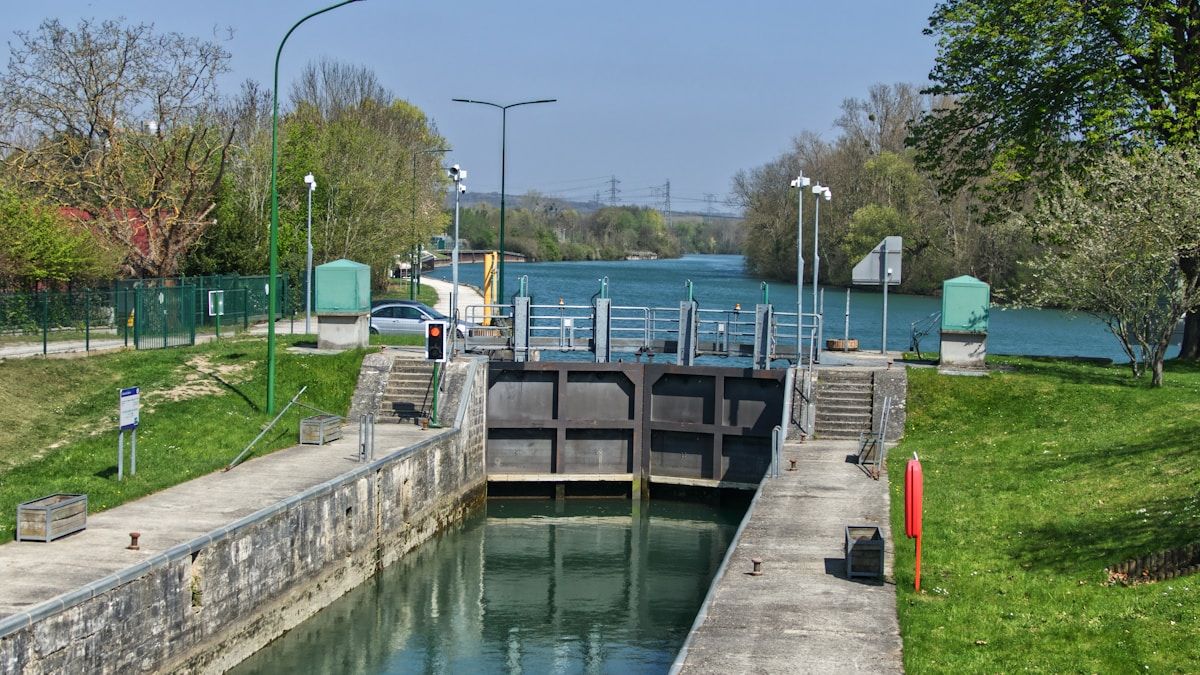
From mid-May through mid-October, the canal operates as a navigable waterway. Parks Canada lockstation staff manually operate the historic locks, raising and lowering boats through the system exactly as workers did in the 1830s. Modern pleasure boats—sailboats, motorboats, kayaks, and canoes—travel routes once navigated by timber barges and steamships. The journey from Ottawa to Kingston takes several days, with boaters passing through all 47 locks and experiencing the canal’s full 202-kilometre length.
The lockstations themselves have become destinations. Merrickville, designated one of Canada’s most beautiful villages, attracts visitors to its preserved 19th-century architecture and artisan shops clustered around the historic locks. Jones Falls offers camping and hiking along with its spectacular dam. Smiths Falls features a canal museum housed in an old mill building. Each lockstation tells part of the canal’s story while providing modern amenities for boaters and tourists.
Winter transforms the canal’s Ottawa section into the Rideau Canal Skateway, recognized by Guinness World Records as the largest naturally frozen skating rink on Earth. The 7.8-kilometre skateway stretches from the Ottawa Locks past Carleton University, providing a unique urban winter experience. On cold winter days, tens of thousands of people lace up skates and glide along the ice, stopping at warming huts and vendors selling Beavertails (the iconic Canadian fried pastry) and hot chocolate.
The skateway opened in 1971, evolving from informal skating on the canal to a managed National Capital Commission operation. Ice thickness, snow clearing, and safety measures require constant attention from NCC crews. Climate change has presented challenges—warmer winters mean shorter skating seasons and periods when ice conditions prevent opening. The 2022-2023 and 2023-2024 seasons saw significantly reduced skating days, raising questions about the skateway’s long-term viability as global temperatures rise.
Summer or winter, the canal remains central to Ottawa’s identity. It appears on countless postcards, tourist brochures, and promotional materials. The Parliament Buildings overlooking the Ottawa Locks create an iconic Canadian image. The canal divides downtown Ottawa geographically while uniting it culturally, a gathering place for celebrations, festivals, and daily recreation.
Key Landmarks Along the Canal
The Rideau Canal’s 202-kilometre length encompasses diverse landscapes and historic sites, each contributing to the waterway’s character and story.
Ottawa Locks (Bytown Locks): The eight sequential locks at the canal’s northern terminus remain Ottawa’s most photographed location. Situated directly below Parliament Hill, these locks connect the canal to the Ottawa River while providing dramatic views of the city. The Bytown Museum, housed in the original Commissariat Building, sits beside the locks and chronicles John By’s era and the canal’s construction. The locks’ stonework, hand-operated gates, and traditional procedures offer visitors a glimpse of 19th-century engineering.
Hogs Back Falls: This natural waterfall on the Rideau River became part of the canal system through By’s engineering. A dam and lock control water flow, while the falls themselves create a scenic backdrop popular with photographers. The Hogs Back area includes parks and walking trails, making it a favourite recreational spot for Ottawa residents.
Long Island Locks: Located south of Ottawa near Manotick, these locks feature a traditional lockmaster’s house and showcase rural canal operations. The setting, with pastoral farmland surrounding the lockstation, evokes the canal’s 19th-century agricultural era.
Burritts Rapids: This lockstation preserves an entire 19th-century canal village, with the lockmaster’s house, blockhouse, swing bridge, and period buildings creating a living museum atmosphere. Burritts Rapids demonstrates how canal communities functioned, with the waterway serving as the economic and social centre.
Merrickville: The canal’s best-preserved lockstation village has transformed into a thriving arts community while maintaining historic character. Three locks step down through the village, with the impressive stone blockhouse overlooking the waterway. Merrickville’s designation as one of Canada’s most beautiful villages recognizes both its canal heritage and successful heritage conservation efforts.
Jones Falls: The engineering showpiece of the canal system, Jones Falls features the massive stone arch dam and four locks in a wilderness setting. Parks Canada operates a campground here, allowing visitors to experience the canal’s natural environment. The lockstation’s isolated location—accessible only by boat or backcountry roads—preserves its 19th-century atmosphere better than more accessible sites.
Newboro: This lockstation sits at the summit level of the canal, where the waterway reaches its highest elevation. Newboro’s single lock connects Upper Rideau Lake with the canal’s navigable channel, while the village retains a quiet, historic character that attracts cottagers and boaters seeking respite from busier lockstations.
Smiths Falls: A larger community that grew around the canal, Smiths Falls offers both historic lockstations and industrial heritage. The Rideau Canal Museum, housed in a former mill, presents comprehensive exhibits on canal history, engineering, and operation. Three separate lockstations serve different sections of the canal through Smiths Falls, each with distinct character.
Chaffeys Lock: One of the canal’s most photographed locations, Chaffeys Lock connects Opinicon Lake with the Rideau waterway. The historic lockmaster’s house and scenic setting attract artists, photographers, and boaters. A swing bridge carries traffic over the narrow channel, operated by lockstation staff when boats need passage.
Kingston Mills: The four locks at Kingston Mills mark the southern end of the Rideau’s descent from the highland lakes to Lake Ontario’s level. Located just north of Kingston, this lockstation features a museum and interpretive centre explaining the canal’s role in Kingston’s development and Canada’s military history.
How to Experience the Rideau Canal in 2025
Visitors to Ottawa and the Rideau region have numerous options for engaging with the canal’s history and recreation in 2025, from quick visits to multi-day expeditions.
Walking and Cycling: The Rideau Canal Western Pathway parallels the Ottawa skateway section, offering 7.8 kilometres of paved pathway popular with walkers, joggers, and cyclists year-round. The path connects major city attractions including the National Arts Centre, Lansdowne Park, and Carleton University. In summer, it provides scenic urban recreation; in winter, it becomes a viewing area for skateway activity.
For longer cycling trips, the 300-kilometre Rideau Canal Pathway extends from Ottawa to Kingston, though not all sections run directly along the water. Cyclists can ride the entire route over several days, stopping at lockstations and heritage sites. The pathway connects with other regional trails, enabling extended touring through eastern Ontario.
Boating: Renting a houseboat or canal cruiser provides the quintessential Rideau experience. Several marinas offer multi-day rentals, allowing visitors to navigate the historic waterway at a leisurely pace. Lockage fees (daily or seasonal passes available) grant access to the entire system. Most visitors spend 4-7 days travelling Ottawa to Kingston, though shorter trips exploring specific sections are possible.
Canoes and kayaks offer a more intimate canal experience. The calm water, short portages at lockstations, and numerous access points make the Rideau ideal for paddlers of all skill levels. Backcountry camping at several lockstations provides affordable accommodation for budget-conscious adventurers.
Guided Tours: Parks Canada operates interpretive programs at major lockstations throughout summer. Costumed staff demonstrate lock operations, explain engineering principles, and share stories of the canal’s construction and operation. Special events mark heritage dates, with some lockstations hosting period reenactments and historical demonstrations.
Cruise operators in Ottawa and Kingston offer narrated boat tours covering sections of the canal. These 1-3 hour excursions provide canal history, lock passage experiences, and city perspectives from the water. Dinner cruises and themed tours operate on summer weekends.
Winter skating: The Rideau Canal Skateway typically opens in late January or early February, conditions permitting. The NCC maintains the ice, clearing snow and monitoring thickness to ensure safety. Multiple access points along the 7.8-kilometre route allow skaters to join at convenient locations. Skate rentals operate at several locations for visitors without equipment. The skateway is free, making it one of Ottawa’s most accessible winter attractions.
Plan visits for weekday mornings to avoid weekend crowds. Download the NCC’s Skateway app for real-time ice conditions, weather updates, and opening status. Remember that Ottawa winters are genuinely cold—dress in layers, wear warm gloves, and take breaks in heated rest areas.
Lockstation Visits: Each of the 24 lockstations along the canal offers distinct character and attractions. History enthusiasts will appreciate sites like Jones Falls, Merrickville, and the Ottawa Locks for their heritage value and interpretive programs. Nature lovers might prefer isolated lockstations like Newboro or Chaffeys Lock, where wilderness settings and wildlife viewing opportunities abound.
Parks Canada’s website provides detailed information on each lockstation, including operating hours, facilities, accessibility, and special features. Many lockstations offer picnicking, swimming, and hiking in addition to canal-specific attractions. Visiting multiple lockstations over several days provides the most comprehensive canal experience.
FAQ
Q: How long does it take to boat the entire Rideau Canal from Ottawa to Kingston?
Most boaters complete the full 202-kilometre journey in 4-7 days, depending on pace and stops. The canal includes 47 locks requiring manual operation, with each lockage taking 20-30 minutes. Boaters typically travel 6-8 hours daily, allowing time for sightseeing, meals, and overnight stops at lockstations or marinas. Experienced boaters can complete the trip faster, while those prioritizing leisure and exploration may extend their journey to two weeks.
Q: Is the Rideau Canal Skateway open every winter?
The skateway depends on sustained cold temperatures to create safe ice thickness of at least 30 centimeters. In recent years, climate change has reduced the skating season significantly. The 2022-2023 season saw very limited opening days, while 2023-2024 was even worse. Historically, the skateway operated 50-60 days per winter, but current conditions make the season unpredictable. Check the NCC website or Skateway app for real-time opening status before planning a visit.
Q: Can you visit the Rideau Canal lockstations year-round?
The locks operate for navigation from mid-May through mid-October, with Parks Canada staff present during this season. Most lockstations remain physically accessible year-round for walking, photography, and exploring, but facilities like washrooms and visitor centres close during winter months. The Ottawa Locks area stays active year-round due to the skateway and urban location. For the full experience with operating locks and interpretive programs, visit during the navigation season.
Q: Why is the Rideau Canal a UNESCO World Heritage Site?
UNESCO recognized the Rideau in 2007 for being the best-preserved slack water canal from the early 19th-century canal-building era. Its original locks, dams, and engineering features remain operational with minimal changes, demonstrating exceptional preservation of historic technology. The canal also represents significant historical themes including colonial military strategy, engineering innovation, and the development of North American infrastructure. It’s one of only 20 UNESCO World Heritage Sites in Canada.
Q: Did the Rideau Canal ever serve its intended military purpose?
No. Despite being built as a military supply route to protect against potential American invasion, the canal never saw military use. The feared conflict with the United States never materialized, and relations between Britain and America gradually improved throughout the 19th century. The canal immediately transitioned to commercial and civilian use, carrying passengers and freight rather than troops and military supplies. Its “failure” as a military asset became its success as a commercial and recreational waterway.
Q: How much did the Rideau Canal cost to build?
The final cost reached £822,804 in 1832 currency, roughly equivalent to $100-150 million CAD in today’s money when accounting for inflation and economic changes. The initial budget was £169,000, but challenging terrain, harsh weather, disease, and the ambitious scale of construction drove costs far higher. British authorities criticized Colonel John By for the overruns, though modern analysis recognizes the final cost as reasonable given the engineering challenges and the canal’s enduring quality.
Q: Are the original 1832 locks still in use?
Many of the original locks remain operational with the same basic structure and mechanisms installed in 1826-1832. The massive limestone blocks, oak gates, and hand-operated systems have been maintained, repaired, and occasionally rebuilt, but the fundamental engineering is unchanged. Some locks have required significant restoration—gates are replaced as wood deteriorates, metal hardware is renewed, and masonry is repointed—but Parks Canada maintains the locks’ traditional operation and appearance. It’s remarkable that 193-year-old engineering still functions daily during navigation season.
Q: What’s the best time of year to visit the Rideau Canal?
This depends on your interests. For boating and lock operations, visit June through September when weather is warmest and all facilities operate. July and August are busiest with tourists and boaters. For skating, plan for late January through early March, though ice conditions vary yearly. May and early October offer beautiful spring and fall colours with fewer crowds. Photography enthusiasts often prefer shoulder seasons for dramatic lighting and seasonal changes. Each season provides distinct experiences—summer’s active waterway, fall’s colorful trees, winter’s skating, and spring’s awakening.
Final Thoughts
The Rideau Canal stands as one of Canada’s most significant heritage landmarks, a waterway where history, engineering, and recreation converge in remarkable harmony. From Lieutenant Colonel John By’s vision to the thousands of workers who carved locks through solid rock, from the commercial vessels that sustained 19th-century communities to the pleasure boats and skaters who enliven it today, the canal’s story is fundamentally Canadian—ambitious, resilient, and evolving.
UNESCO’s World Heritage designation recognized what Ottawa residents have always known: this waterway is extraordinary. It represents an age when human determination and ingenuity overcame formidable obstacles without modern machinery or technology. It demonstrates that infrastructure built with quality and foresight can serve communities for centuries, adapting to new purposes while maintaining historic character.
As climate change threatens the iconic skateway and development pressures increase along the canal corridor, preservation becomes increasingly important. The Rideau Canal’s value extends beyond tourism revenue or recreational amenity—it’s a tangible connection to Canada’s past, a lesson in engineering excellence, and a reminder that the best infrastructure serves multiple generations.
Whether you experience the canal by gliding on winter ice, navigating summer locks, or simply walking its pathways and absorbing its history, you’re engaging with a living monument that has shaped Ottawa’s identity and Canada’s story for nearly two centuries. Colonel John By built better than he knew—his military canal became a peacetime treasure, and his construction camp became a national capital. The Rideau Canal endures as his legacy and our inheritance.
Source: Parks Canada - Rideau Canal National Historic Site, UNESCO World Heritage Centre, Rideau Canal Museum, Library and Archives Canada - Colonel By Collection, National Capital Commission