Last Updated: January 30, 2026
VR adventures in Ottawa hit a sweet spot right now: big, cinematic group experiences downtown, free-roam arenas on the east end, and family-friendly VR rides that turn a mall or arcade visit into a full night out. This guide breaks down every major VR venue and the most popular VR rides, with practical advice on prices, session lengths, booking, age limits, and the little local tips that make a visit smoother.
If you are planning a full indoor adventure day, pair this guide with arcades in Ottawa, escape rooms in Ottawa, and indoor activities for a complete itinerary. For family-friendly plans, the family activities guide and things to do in Ottawa are helpful for building a full-day loop.
Key Highlights
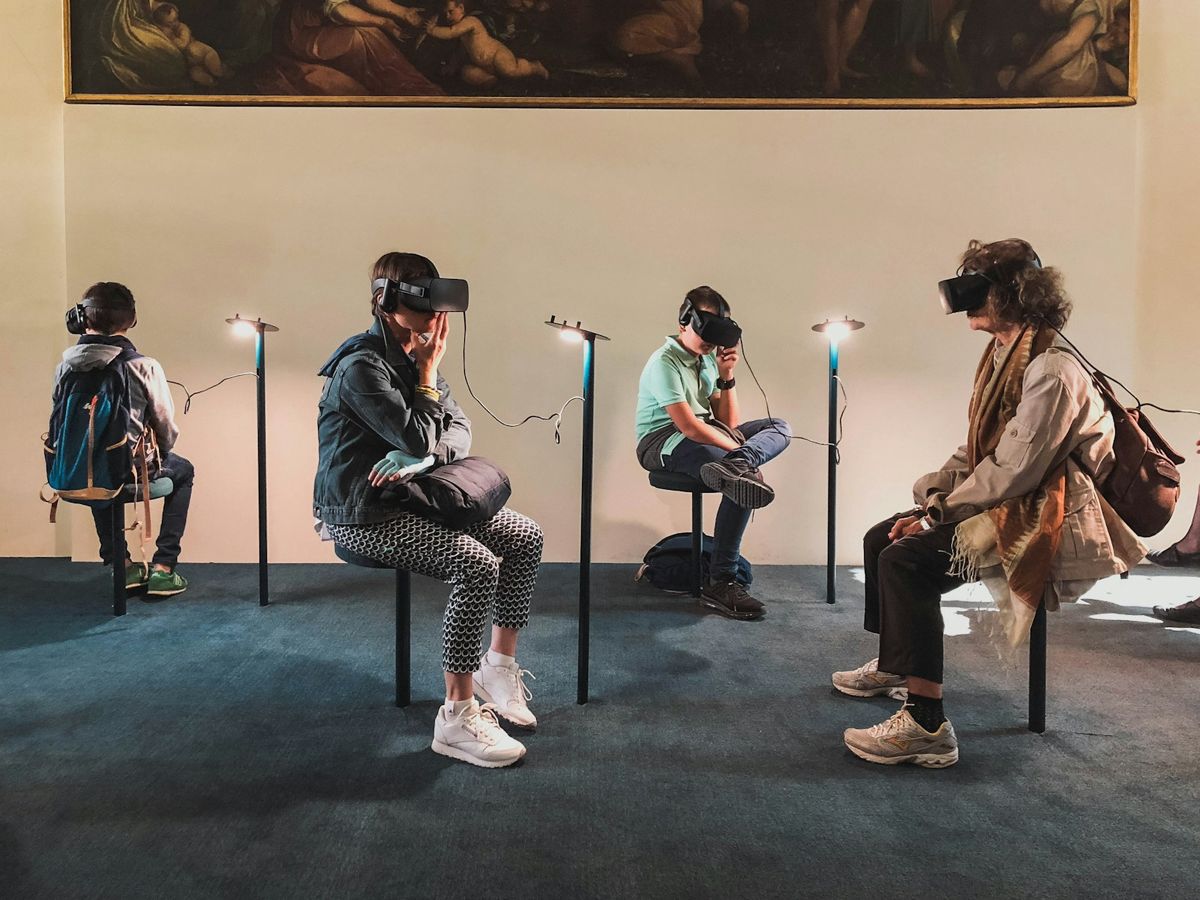
 Caption: Ottawa’s VR scene mixes premium cinematic experiences with walk-in family rides.
TL;DR: Ottawa has five strong VR stops in 2026: Sandbox VR in ByWard Market for premium full-body co-op, Zero Latency for free-roam arena play, VR Adventures Zone for budget-friendly variety, Crazy Bear for late-night arcade energy, and Funhaven for family-ready VR rides. Funhaven alone adds multiple standout VR experiences, so you can build a full night without leaving one venue.
| Quick Facts | Details |
|---|---|
| Premium pick | Sandbox VR Ottawa (ByWard Market) |
| Best free-roam arena | Zero Latency Ottawa (Lancaster Rd) |
| Best value | VR Adventures Zone (Merivale Mall) |
| Best family stop | Funhaven VR Games & Rides (Baxter Rd) |
| Late-night arcade option | Crazy Bear (Merivale Rd) |
Ottawa’s VR Scene in 2026: What to Expect
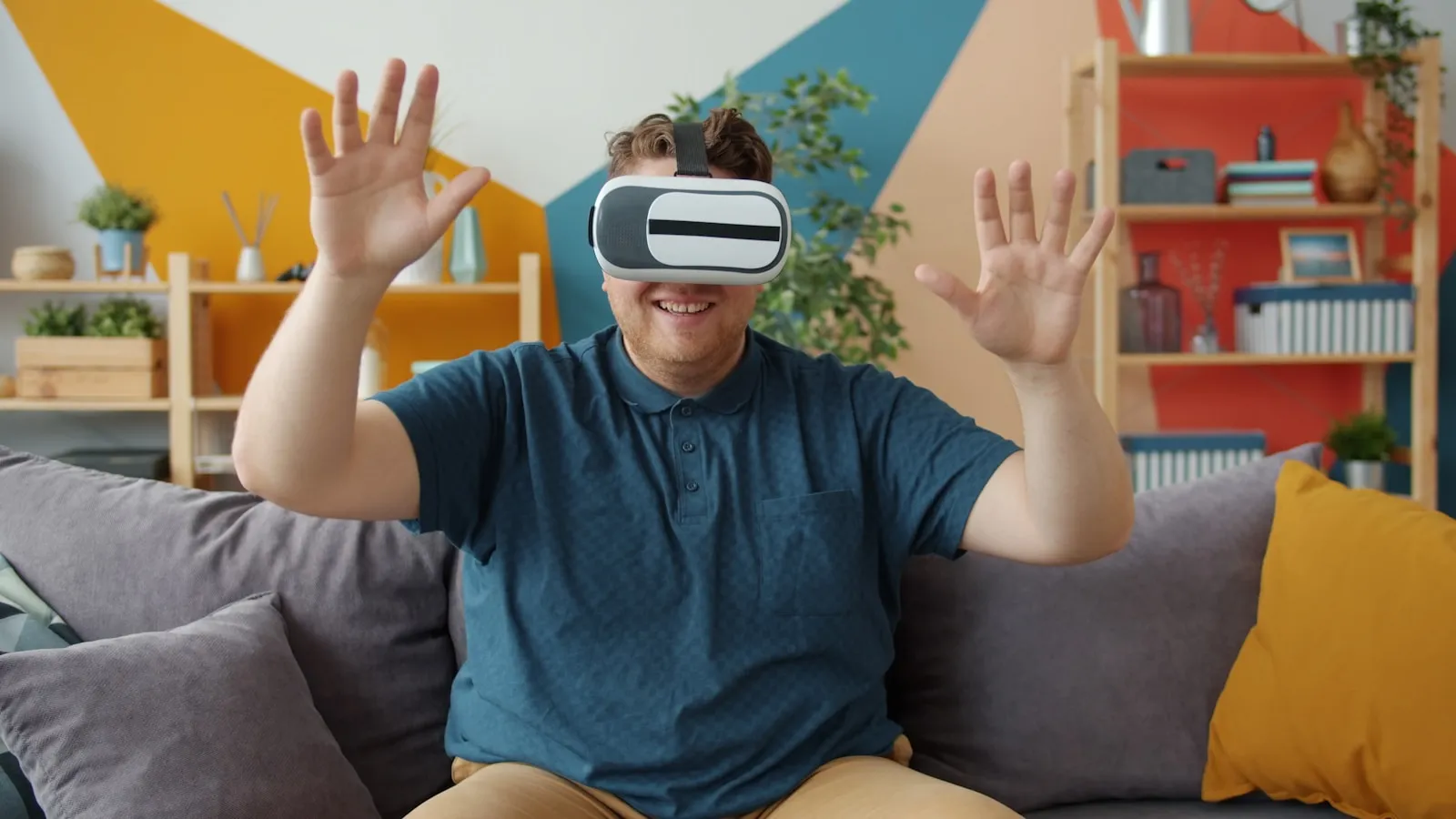 Caption: Ottawa’s VR venues range from full-body co-op to short, high-intensity rides.
Ottawa’s VR landscape has matured into two clear lanes. The first is full-body, book-a-session experiences like Sandbox VR and Zero Latency, where your group books a private time slot and plays together in a shared world. The second is walk-in VR rides and arcade-style stations, where you can add a VR experience to a bigger night out at places like Funhaven or Crazy Bear. The upside is that you can choose a premium 30–45 minute session or a quick 5–10 minute thrill without committing to a full booking.
In practical terms, expect higher prices and stricter booking for the premium venues, and shorter experiences with more flexibility at arcade-style locations. If you want a cinematic, shared, full-body experience, budget for the premium tier. If you want to test VR with kids, or add it to a longer arcade night, the ride-based options are the best fit.
Ottawa is also a city where winter weather drives indoor plans, which is why VR has become a reliable fallback when skating or outdoor plans fall through. The premium venues are especially good for couples or groups who want a night that feels bigger than a typical arcade visit, while the family centres are built for flexible drop-ins and shorter waits. The main trade-off is depth versus variety: a single Sandbox or Zero Latency session is a full event, while Funhaven and Crazy Bear let you stack several short rides without locking your whole evening into one booking.
One common misconception is that home VR is basically the same. Ottawa’s location-based venues use full-body tracking, multi-sensor gear, and shared arenas that are difficult to replicate at home. The gear is heavier and more immersive, the rooms are larger, and the social dynamic is different because you can hear and see your friends in a shared game world. If your group wants that “we all did this together” feeling, a location-based session is still in a different league.
Finally, think about energy levels. Free-roam arenas require more movement, which is why they are a better fit for people who want a workout-style experience. Ride-based VR is shorter and less demanding, which is why families use it as a flexible add-on rather than the whole night.
Another useful lens is occasion. For date nights and birthdays, downtown Sandbox VR feels like an event on its own. For school outings or larger friend groups, Zero Latency’s free-roam format gives everyone a shared goal. For quick drop-ins, Merivale and Baxter Road venues are easier because you do not need to commit to a long booking window.
When comparing venues, prioritize how much structure you want. Sandbox and Zero Latency feel like booked appointments with a clear start and finish. VR Adventures Zone and Funhaven let you build your own pacing, which is often better for groups with different attention spans or comfort levels.
Ottawa’s pricing tiers also line up with that structure. Premium sessions usually cost $45–$65 per person but give you a longer, more immersive experience with full-body tracking or free-roam movement. Arcade-style rides sit closer to $8–$30 and trade long narratives for variety. If your group is unsure, the safest choice is to start with a shorter ride and upgrade later if everyone loves it.
First-time playbook:
- Start with a 5–10 minute ride to see how everyone reacts.
- If the group feels good, book a longer session next time.
- Choose co-op games for mixed-skill groups.
- Plan short breaks between rides to reduce motion fatigue.
- Keep a flexible schedule so you can extend the night if everyone wants another round.
Most groups do best with one main venue rather than hopping across the city in a single night. VR is surprisingly physical, so squeezing in too many sessions can leave people tired. If you want variety, stack rides in one venue instead of booking multiple locations.
If your group prefers puzzles, look for escape-style VR at VR Adventures Zone. Those experiences are slower-paced and focus on teamwork rather than reflexes, which can be more comfortable for mixed ages or people who are not into shooters.
If you are comparing VR to other indoor options like bowling or escape rooms, VR sits in the middle: more active and immersive than an escape room, but less structured than a full sports activity. That balance is why it has become a popular winter choice for Ottawa residents who want something different without planning a full day trip.
Plan for at least one short break between sessions for comfort.
How a Typical Ottawa VR Visit Flows
Even when the advertised play time is 30–45 minutes, the total visit usually lands closer to 60–90 minutes. Most venues start with waivers, a gear fitting, and a brief calibration. Premium venues like Sandbox and Zero Latency run like appointments: you check in, get fitted, complete a quick practice round, then the staff starts the timed experience. Arcade-style venues are looser. You can decide on the spot, pay for a shorter ride, and jump back into a queue without feeling locked into a single long window. If you are planning a night out, that flow matters because it changes whether you can stack activities or whether VR becomes the main event.
Another difference is how social the pre-session moments feel. Premium venues usually gather your full group, give a short briefing, and then send everyone into the same experience at the same time. Arcade-style venues feel more like a casual arcade: some people play a ride, others watch or grab snacks, then you rotate. That makes premium sessions better for groups that want to feel like a team, while arcade-style venues suit families or mixed groups that want flexible pacing.
Why Prices Vary So Much
The price ladder in Ottawa is mostly about space and staffing. Free-roam arenas require a large open floor, multiple tracking stations, and staff dedicated to safety and calibration, which is why Zero Latency and Sandbox sit in the $45–$65 range per person. Short rides at Funhaven or pod games at VR Adventures Zone cycle faster and require less setup per session, which is why you can pay $8–$12 for a ride or $25–$40 for a flexible time block. The trade-off is depth: premium sessions give you longer narratives, while arcade-style options offer more variety.
The gear is also different. Full-body tracking, haptic vests, and room-scale motion capture are expensive to maintain, which is why Sandbox feels more like a premium attraction than an arcade. Ride-based VR uses simpler rigs, but it makes up for it with motion platforms, wind effects, and shorter waits. Think of it as movie night versus amusement ride. Both are fun, but they deliver a different kind of memory.
Who VR Works Best For (and When to Skip)
Ottawa’s VR venues are designed for groups, which is why dates, birthdays, and team nights are the most common use cases. If your group likes talking through a shared experience and laughing at mistakes, VR is a great fit. It is also a strong winter activity because it feels active without depending on weather. If someone in your group is extremely motion sensitive, has severe claustrophobia, or dislikes loud environments, steer them toward the shorter rides first and avoid free-roam until you know their comfort level.
If you are planning for kids or mixed ages, the best approach is to start small. A 5–10 minute ride lets you test comfort levels, then you can build up to a premium session on a future visit. The opposite is true for adult groups that want a single big highlight: book a premium session, then use arcade rides as optional add-ons instead of the main plan.
Why Location-Based VR Still Matters
Even if you own a headset at home, Ottawa’s location-based venues offer a different experience. The rooms are larger, the tracking is more precise, and the gear is built for groups rather than solo play. The biggest difference is shared space. You can see and hear your friends in the same world, which makes the experience feel social instead of isolated. That is why location-based VR continues to draw crowds even as home headsets get cheaper.
Another difference is structure. Premium venues guide you through a full session with clear goals, staff support, and a sense of progression. That matters for casual players who do not want to troubleshoot settings or worry about setup. If you want a “just show up and play” night, the Ottawa venues do the heavy lifting for you.
That extra structure is why VR can feel like an event overall rather than just another arcade stop.
Planning a Full VR Day
If you want VR to be the anchor of the day, plan around energy levels. Premium sessions are best when everyone is fresh, which is why many groups book them before dinner rather than late at night. Arcade-style venues work later because the rides are shorter and you can pause whenever you want. A simple schedule is: short ride first, premium session second, then dinner or a relaxed activity afterward.
For families, the order often flips. Start with Funhaven or VR Adventures Zone, then decide if anyone wants to upgrade to a premium session on a future visit. That keeps the first experience low pressure and gives everyone a chance to decide what they actually enjoy.
If your group is travelling from different parts of Ottawa, pick a neighbourhood cluster so you are not losing time in transit. Downtown is best for a date-night style plan. Merivale works for a multi-stop arcade night. Baxter Road is the easiest for a long family visit with free parking and short rides.
If you are coordinating a mixed group, set expectations early. Let people know whether the plan is a premium session, short rides, or a mix. The most common source of frustration is when someone expects a casual drop-in and the rest of the group booked a strict time slot. A short message before the night starts helps everyone arrive prepared and avoids last-minute confusion.
Sandbox VR Ottawa: Premium Full-Body Co-op in ByWard Market
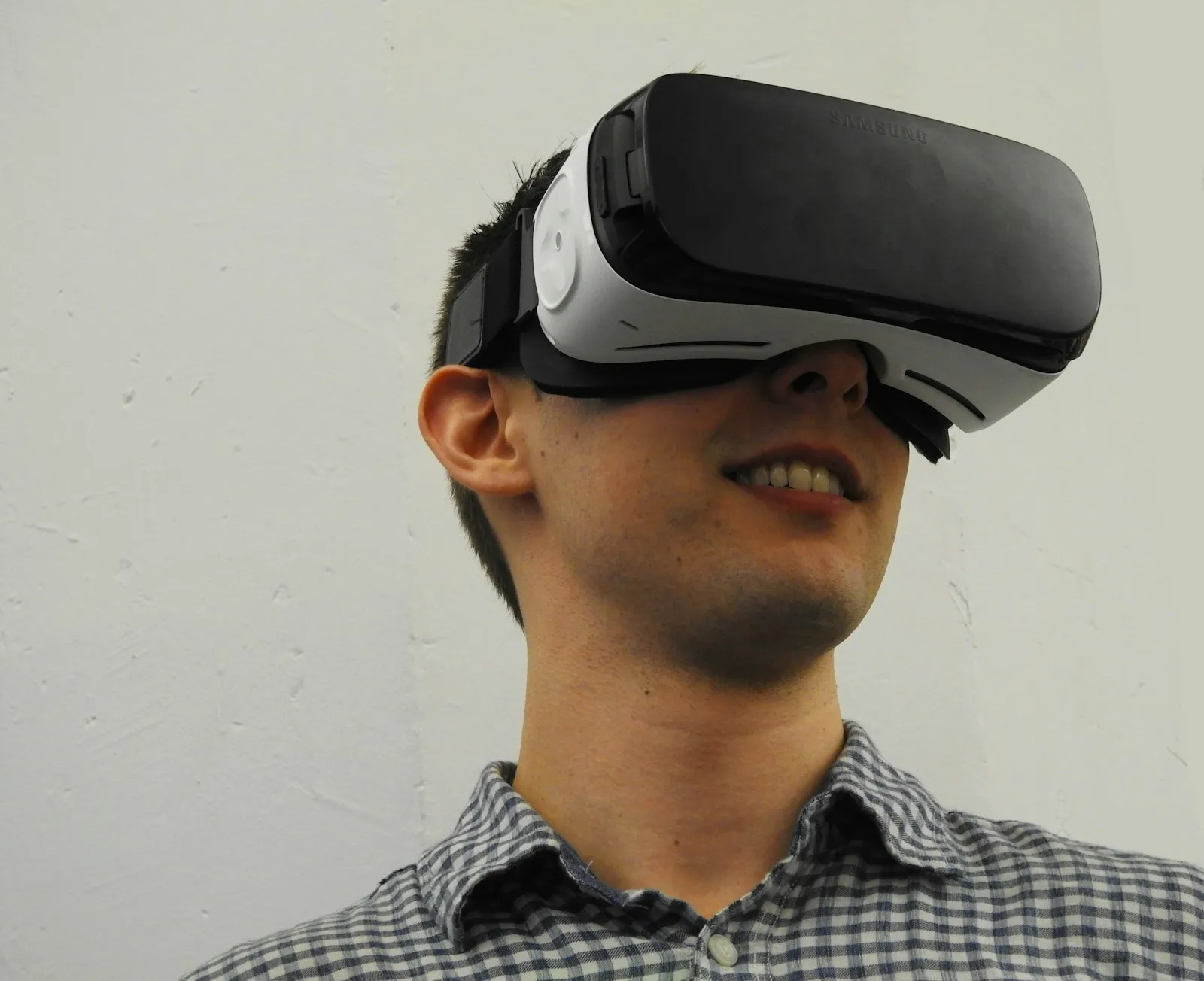 Caption: Sandbox VR focuses on premium, cinematic co-op experiences for groups.
Sandbox VR is Ottawa’s most cinematic VR option. The venue sits at 45 Rideau Street, Ottawa, ON K1N 5W8, above the CIBC Bank and next to the former Chapters building at the Rideau and Sussex intersection in ByWard Market. It is a walkable downtown location, making it a natural choice for date nights and group plans tied to dinner or drinks in the Market.
Inside, Sandbox uses full-body tracking and haptic feedback. Players wear a VR headset, wrist and ankle sensors, and a haptic vest. Motion capture cameras track your body in real time, so your group sees each other in-game. Experiences are built around big-name franchises and cinematic pacing, so it feels like stepping into a film set rather than an arcade. Ottawa’s location includes four private rooms, and each session is designed for up to six participants.
Sandbox VR’s Ottawa location opened December 19, 2025, and it is part of a fast-growing global expansion that targets roughly 80 additional venues by the end of 2026 (about 140 total worldwide).
Session Flow and Atmosphere
Sandbox feels more like a small theatre than a typical arcade. The rooms are dark, the motion-capture cameras sit overhead, and the gear hums quietly while staff walk you through the setup. The moment the headset goes on, the world snaps into place with full-body tracking, which is why people describe it as cinematic rather than game-like. There is a short calibration sequence so the system can map your body, then a quick practice round to make sure everyone is comfortable with the controls. After that, the experience runs like a scripted show, with clear beats and a beginning-to-end arc.
The immersive details are what make this venue stand out. The haptic vest thumps when you take a hit, your virtual hands line up with your real gestures, and the team dynamic feels tight because you can see your friends in the same space. Sessions also tend to end with a highlight reel, which is why this venue shows up in birthday plans and group nights where people want a shareable recap.
Who It Is Best For (and Who Should Skip)
Sandbox is best for groups of 2–6 people who want a single shared story and are comfortable wearing full gear for 30–40 minutes. It is a strong fit for date nights, birthdays, and team outings because everyone is together and the experience is structured. If someone in your group is extremely claustrophobic, very motion sensitive, or does not like loud soundscapes, start with shorter rides at Funhaven or VR Adventures Zone first. The full-body gear is safe and well-run, but it feels more intense than an arcade pod.
People who like teamwork and communication will get the most from this venue. The microphones are on, so groups that call out targets, coordinate objectives, and laugh through mistakes usually leave happier than groups who stay silent. If your crew prefers competitive score chasing over narrative, Zero Latency might be a better fit.
Hours, Planning, and Downtown Add-Ons
Reported hours are typically around 11:00 AM–10:00 PM on weekdays, with later times on weekends, but always check the booking page for the most current schedule. Rideau Station is about a 2-minute walk to the entrance, depending on which exit you use, which makes this the easiest premium venue to reach by transit. Paid parking in the downtown core is available near the CIBC lot at roughly $3 per hour.
Because you are already downtown, it is easy to pair Sandbox with a meal. If your group wants a sit-down dinner after the session, start with guides like Korean food in Ottawa, Greek food in Ottawa, or vegan restaurants in Ottawa and then pick the neighbourhood that fits your budget and timing.
The flow is smooth and structured. You check in, get fitted for gear, and run through a short calibration so the system can map your body. The staff then walks your group through the controls before the session begins. Because the mics are always on, friends can coach each other through scenes or call out targets, which is a big part of why Sandbox feels social instead of solo.
Top games locals mention most: Squid Game for high-stakes challenges, Stranger Things for nostalgic horror teamwork, and Phobia for zombie-heavy intensity. The games play best with a group that likes talking, coordinating, and laughing through mistakes. It is best for groups of 2–6 friends or colleagues aged roughly 12+, but people who are highly claustrophobic or prone to rapid-turn motion sickness may want to start with a shorter ride at Funhaven or VR Adventures Zone first.
First-timer tips: eat lightly, ask for a quick practice round, and set boundaries (jump scares, intensity) before you start. The haptic gear can be snug, so arrive early if someone in your group needs extra time to adjust fit.
The sensory detail is what separates Sandbox from most other VR in Ottawa. The haptic vest is tuned to vibrate in the exact moment you take a hit or brush past a wall. Your ankles and wrists are tracked, so your in-game body looks like you are actually moving, not gliding. It is the closest thing in the city to a “live-action movie” feel, which is why couples often pick it for a date night and friend groups choose it for a birthday centerpiece.
Gear Fit and Comfort Tips
Full-body tracking works best when the gear fits well, so do not rush this step. The headset should sit snug without pinching, the straps should be tight enough to keep the image steady, and the haptic vest should feel secure without restricting breathing. If someone in your group wears glasses, ask for a foam insert or a spacing adjustment before the session begins. These small tweaks make a big difference over a 30–40 minute session.
Clothing also matters more here than at arcade pods. Fitted tops and closed-toe shoes keep sensors from snagging, and lighter fabrics keep you comfortable if the game gets active. If you are in a larger group, remind everyone to empty pockets and remove bulky jewelry so the sensors stay aligned. The smoother the gear fit, the more natural the experience feels once you are inside the game.
Choosing the Right Game for Your Group
Sandbox’s most popular titles lean toward cinematic action, but the best pick depends on who is in your group. If you want a competitive, less-horror option, Squid Game is the safe choice. If your group loves jump scares and big sound design, Stranger Things or Phobia will deliver that intensity. If you are mixing first-timers with experienced gamers, start with a lighter title and save the most intense game for a second visit.
One overlooked tip is to pick the game first, then decide on timing. Some titles are more physically demanding than others, and the difference is noticeable if you are playing late at night or after a long day. If you want the most energy, book earlier in the evening. If you want a calmer session, choose a lower-intensity game and a quieter time slot.
If your group includes people who do not love horror, choose a lighter title up front. Stranger Things and Phobia are popular, but the sound design and jump scares can be intense. Squid Game feels more competitive and less scary, which is why it often works for mixed groups. The staff can usually guide you toward the right intensity level if you explain what you want.
Group dynamics matter more here than at any other venue. The sessions feel best when everyone commits to talking, calling out targets, and sharing tasks. If you have a larger group, split into teams of six and plan a short break in between so each squad gets a fresh experience. It keeps the energy high and avoids the “spectator slump” that can happen when too many people watch for too long.
Planning for Larger Groups and Celebrations
Sandbox is built around private rooms, which means larger groups need a little planning. With four rooms on site, the venue can run multiple sessions in parallel, but the smoothest experience for a big party is usually two waves of six rather than one oversized booking. That way, everyone still gets the full-body experience without a packed room, and the waiting group can watch highlights or take a short break instead of standing around.
If you are planning a birthday or team night, assign a point person to manage the booking and the timing. Premium sessions run on a tight schedule, so small delays can cut into play time. It also helps to ask the group ahead of time about comfort levels. If half the team wants horror and the other half wants a lighter experience, split the wave accordingly so everyone gets a game that fits their energy.
For mixed-experience groups, pick a co-op title first. It reduces pressure on newcomers and makes the session feel more like a shared story than a competitive match. The best sessions are the ones where everyone is laughing and communicating rather than silently trying to rack up points. If you have a competitive crew, schedule the second wave for a more intense game so you can build momentum over the night.
Because you are in ByWard Market, it is easy to stretch the evening into a full outing. Some groups treat Sandbox as the centrepiece and book dinner after, while others do a quick pre-session snack and then head out for a longer meal. Either way, planning a buffer window around your booking makes the night feel relaxed rather than rushed.
Team Nights and Corporate Groups
Sandbox is a strong fit for team nights because everyone shares the same space and goal. It is easier to create a team experience here than at an arcade-style venue because everyone starts and finishes together. If you are planning for colleagues, build in a brief pre-briefing to decide who does what inside the game. The extra coordination makes the session feel organized and helps newer players feel comfortable.
If your team includes a mix of gamers and first-timers, choose a game that rewards communication rather than twitch reflexes. Co-op titles keep the vibe collaborative, while horror-heavy titles can split the group between people who love jump scares and people who do not. The easiest way to keep the session enjoyable is to agree on the intensity level before you arrive.
Another reason companies pick Sandbox is the shared highlight reel at the end. Those clips make it easy to recap the night and give the team a fun, low-stakes memory. If your group is celebrating a milestone or onboarding new staff, that shared media moment tends to make the experience feel more cohesive than a standard night out.
Because the venue sits in ByWard Market, it is easy to plan a full evening around it. Many groups grab a quick bite nearby, then head upstairs for their session. If your group is juggling multiple plans, this is the most convenient location to squeeze a premium session into a busy night.
If you are budgeting, remember that Sandbox runs on room-based sessions. With four private rooms available, the venue can handle multiple groups at once, but peak times still fill quickly. For birthdays, it is common to book two back-to-back rooms and let the first group watch the second. That keeps the energy high without leaving half the group waiting for too long.
Sandbox is also the least “arcade-like” option in Ottawa. The lighting, the gear, and the pacing are built to feel like a cinematic event. If your group wants a casual drop-in, VR Adventures Zone or Funhaven will feel easier. If your group wants a structured, premium session with a clear beginning and end, Sandbox is the right call.
Corporate groups often choose Sandbox because it keeps everyone together in the same room and creates a shared highlight reel afterward. If anyone in your group has strong motion sensitivity, build in a longer break between sessions or pick less intense titles to keep the experience enjoyable.
- Typical session length: 30–40 minutes
- Price range: about $60 per person
- Booking: online reservations are the norm; walk-ins are not reliable
- Age/height: 10+ with a minimum height of about 4’8”; some experiences are 18+
Many sessions end with a short highlight reel or recap clip, which is why groups who love sharing highlights tend to pick Sandbox over shorter arcade rides.
For budgeting, a full six-person session typically lands around $360 total. That makes it pricier than arcade-based VR, but the quality and full-body tracking are the trade-offs that most groups accept for special occasions.
Local feedback:
- Reddit r/ottawa: “Squid Game had me screaming—felt the pushes! Worth every penny but book early.”
- Reddit r/ottawaVR: “Blew my mind how seamless the motion capture is—you’re actually inside Squid Game, sweating and yelling with friends.”
- Google review: “Eerie realism, broke a sweat battling zombies.”
- Google review: “Stranger Things session had us screaming; highlight reel is gold for TikTok.”
- TripAdvisor: “Phobia’s zombies had realistic tongues—terrifying but addictive for groups.”
Local tip: book morning or early afternoon slots if you want a quieter experience and more staff attention during setup. This is the most premium option in Ottawa, so it is also the most likely to sell out on weekends.
Zero Latency Ottawa: Free-Roam Arena Play
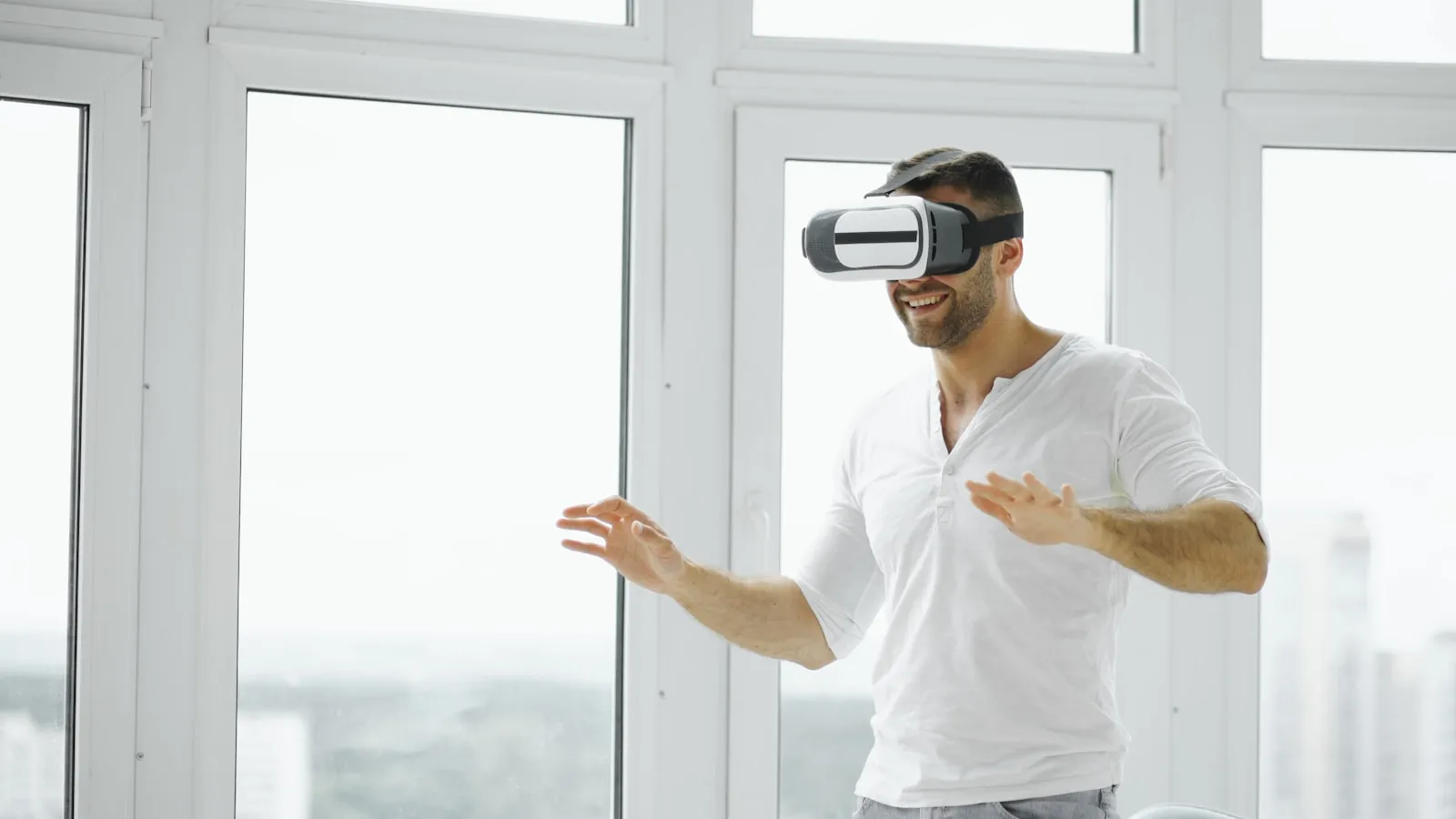 Caption: Free-roam VR gives you real walking space, not a stationary platform.
Zero Latency is Ottawa’s flagship free-roam arena experience, and it feels different from standard headset play because you are physically moving through a larger space. It is located at 2723 Lancaster Road, Unit 107, Ottawa, ON K1B 0B1. The arena is designed for multiplayer sessions where your group can walk, pivot, and coordinate like a real team.
Free-roam VR means no cables. You can move, crouch, and pivot across the arena (often described as around 4 m x 10 m of play space), and the best sessions feel like a team sport. Groups can run up to eight players, so it works especially well for larger friend groups, work teams, or competitive families that want full-body movement rather than standing in place.
Recommended game styles depend on your group: Outbreak is a good intro for first-timers, Singularity is for sci-fi tacticians, and Engineerium is puzzle-heavy for groups that like building together. If you want a smooth session, book 1–2 weeks ahead for weekend slots and arrive 15 minutes early for calibration. The sweet spot is 4–6 players per session; it keeps the arena feeling full without turning the space into a traffic jam.
The biggest advantage here is true movement. You are not stuck in a small rectangle, so your brain buys into the illusion faster. It feels closer to a team sport than a video game, which is why people leave sweaty and energized. If you want to make the most of it, assign simple roles before the session starts: one person calls targets, one focuses on objectives, and everyone else covers space. Even basic role assignment makes a huge difference in how coordinated your team feels.
Free-roam does come with trade-offs. If your group has very motion-sensitive players, the fast turns and constant movement can be more intense than seated VR. It is also a more physical experience, so wear shoes with good grip and keep your pace controlled, especially if the arena is busy. That said, most players find the freedom worth it once they settle in.
How Free-Roam Feels in Practice
Free-roam is the biggest shift from home VR or arcade pods. The gear is wireless, so you are not thinking about cords or boundaries; you are thinking about real movement. The floor space is large enough that you can change position, angle, and posture, which makes the experience feel closer to laser tag than console gaming. The illusion works because your steps, turns, and crouches map directly to what you see in the headset. That is why newcomers often describe the first five minutes as disorienting and the next twenty as completely immersive.
The physical pacing is also different. In a home headset you might stand in place; in a free-roam arena you are walking, pivoting, and occasionally jogging. If your group includes athletes or people who enjoy active games, that is a plus. If someone is recovering from an injury or prefers seated play, choose a slower-paced game or a different venue. Zero Latency is still manageable for most people, but it is the most active VR option in Ottawa.
Teamwork and Comms Matter Here
Because everyone moves in the same space, communication is the entire game. Call out targets, keep your lanes, and avoid crossing in front of teammates at the last second. The best groups are the ones who treat the session like a co-op mission instead of a solo run. Even a simple pre-briefing helps: decide who leads, who watches the back, and who focuses on objectives. If you have a competitive crew, agree on a shared goal before you start so you do not split into separate priorities mid-session.
If you have a mixed-skill group, choose a title with clear objectives and a moderate pace. Outbreak is a common first pick because it is straightforward and gives everyone a role. Singularity pushes more teamwork and timing, while Engineerium is a slower, puzzle-heavy option for groups that like building and collaboration over shooting.
Booking, Arrival, and Wave Strategy
Zero Latency sessions run on fixed time slots, so the best experience comes from arriving early, using the full calibration time, and starting together. For weekend evenings, booking one to two weeks ahead is the safe play. If your group is larger than eight, split into waves and treat it as a mini tournament: the first wave plays while the second watches and plans, then swap and compare scores. That format keeps the energy high and prevents the arena from feeling crowded.
If you are planning a corporate or team event, the $400–$500 package range for eight players is often the easiest way to budget. It is more predictable than buying individual tickets, and it keeps your group on the same schedule. The main tip is to plan a buffer between waves for water and debriefs; people are usually out of breath after a full free-roam session.
If you are the planner, build a simple pre-session briefing: remind everyone to keep their heads up, call out directions, and avoid sprinting in tight spaces. That small bit of structure reduces the “panic run” moments that cause collisions and makes the experience feel smoother for new players.
Zero Latency is also a strong option for competitive groups who like score chasing. The cooperative format still allows a bit of friendly rivalry because teams compare accuracy, objectives, and survivability. If your group is into esports or tactical shooters, this is the Ottawa venue that feels closest to that energy.
Plan for a little exertion. The arena format encourages real movement, so comfortable shoes and light clothing help. If anyone has knee or ankle issues, keep their pace steady and avoid sudden sprints.
For beginners, choose a game with clear objectives and slower pacing, then increase intensity in future visits. The staff can usually recommend which titles are best for new groups versus seasoned players.
Safety and Space Awareness
Free-roam works best when everyone treats the arena like a shared sports court. Keep your head up, avoid sudden sprints, and give teammates space when they are turning. Most collisions in free-roam come from people rushing objectives instead of pacing themselves. If you move with intent rather than speed, the session feels smoother and safer.
Another small tip is to use voice callouts early. Simple phrases like “left,” “behind you,” or “stack on me” keep the team from bunching up. It also helps newer players feel less lost because they can follow a clear voice instead of guessing where to go.
When to Choose Zero Latency Over Other Options
Pick Zero Latency if your group wants the most active experience and likes the idea of moving together in the same room. It feels closest to a team sport and usually leaves people energized. If your group wants a narrative story, lower intensity, or shorter play time, Sandbox or Funhaven might feel easier. Zero Latency is the best choice when you want free movement, teamwork, and physical energy in one session.
- Hours:
- Monday: by appointment
- Tuesday: 11:00 AM–9:00 PM
- Wednesday: 11:00 AM–9:00 PM
- Thursday: 11:00 AM–9:00 PM
- Friday: 11:00 AM–10:30 PM
- Saturday: 12:00 PM–10:30 PM
- Sunday: 12:00 PM–9:00 PM
- Price range: $50–65 per person
- Session length: 30–45 minutes
- Booking: online booking required; walk-ins are rare
- Age/height: 13+ with a minimum height of about 4’6”; minors require waivers
Zero Latency is best for team building and larger groups who want to move together in a shared arena. Sessions can be physically intense, so it suits groups that want a more active, tactical feel compared to stationary VR. Corporate and party packages typically land around $400–$500 for eight players, which is competitive for a full group experience.
For group planning or rescheduling, the venue lists (613) 949-8802 and info@zerolatencyottawa.ca as direct contact options.
If you are bringing a larger group, plan on two back-to-back waves instead of trying to pack everyone into one session. It keeps the arena from feeling crowded and gives each team the space to move freely. The wait time between waves is often short enough to grab water and compare scores.
What a Session Feels Like
Zero Latency sessions begin with a safety briefing, a headset fitting, and a quick calibration. The staff will explain the boundaries and remind everyone to keep their head up and avoid sprinting. The arena is large enough to move freely, but the best sessions come from controlled movement rather than running. Think of it like indoor paintball without the sprinting; you want to move with purpose, not speed.
Once the game starts, the atmosphere changes quickly. The soundscape is loud and immersive, and the team communication becomes the focus. Groups that call out directions and maintain spacing have a smoother experience than groups that try to play solo. If you are new to free-roam, assign a simple formation: two players forward, two covering the back. It sounds basic, but it makes the session feel organized instead of chaotic.
If your group includes different fitness levels, choose a title with slower pacing and clear objectives. Zero Latency is still active, but it does not need to feel like a workout if you keep your movement controlled. The staff are used to first-timers and can recommend a game that prioritizes teamwork over sprinting.
Local feedback:
- Das Lokal Ottawa: “Headfirst into free-roam—blasting zombies with squad felt more real than any VR.”
- TripAdvisor: “Untethered freedom blew my mind!”
- Yelp: “Free-roam changes everything—no cords, just run and gun with buddies.”
- Reddit r/ottawa: “Team comms make or break it; hilarious when noobs panic-fire.”
- Google review: “Singularity’s zero latency had zero motion sickness for me—pure adrenaline.”
If you like this style of group play, also consider pairing your day with laser tag in Ottawa or bowling in Ottawa for another team-friendly activity.
VR Adventures Zone: Budget-Friendly Variety in Merivale Mall
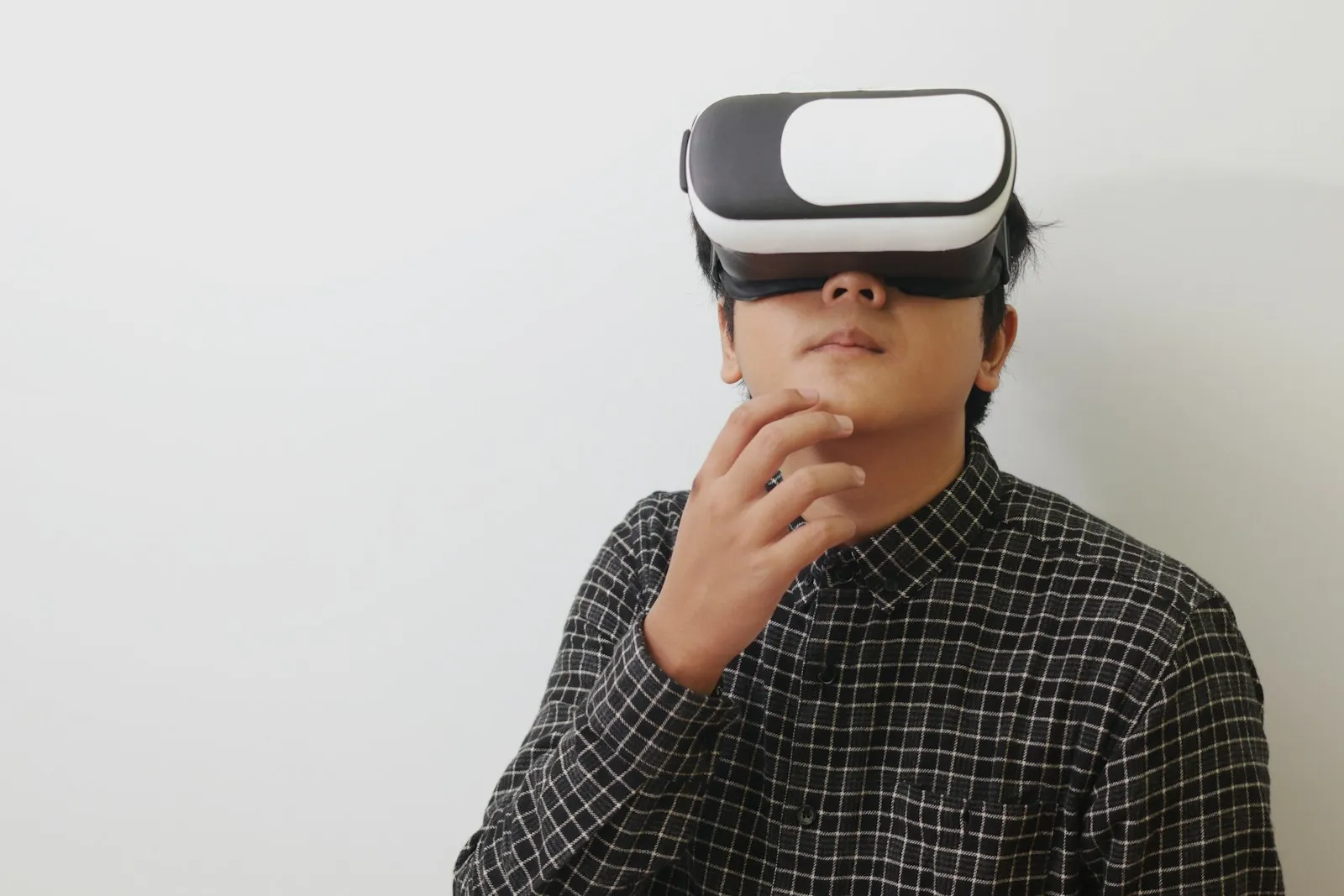 Caption: VR Adventures Zone blends solo stations with free-roam bays for groups.
VR Adventures Zone lives inside Merivale Mall at 1642 Merivale Rd Unit 300, Nepean, ON K2G 6P4. The setting is more casual and flexible than the premium venues, which is why it is one of Ottawa’s best value picks. It blends arcade-style VR stations with free-roam bays and story-driven VR escape rooms, so families and mixed-age groups can find something everyone can handle.
The mix is the key advantage. The arcade pods are quick, 5–10 minute seated games that work well for kids and first-timers, while the free-roam bays are better for teens who want a longer, more physical session. Families often start with the pod games (racing and rhythm titles are popular), then upgrade to a free-roam session if everyone feels comfortable. Lobby kiosks typically show age icons and intensity meters, so it is easy to choose lower-intensity options for younger players.
Value tips matter here. Locals mention bundle passes around $25 per hour and note that midweek afternoons can cut wait times by roughly 50% compared to weekend peaks. For birthday parties, the flexibility of mixing pods and free-roam makes it easier to keep different age groups happy without splitting into multiple venues.
How to Choose Games in the Space
This venue works best if you treat it like a menu instead of a single booking. Start with a low-intensity pod game so everyone understands the headset fit and controls, then decide whether the group wants to upgrade. Kids aged 7–12 usually gravitate to the seated pods because they are short and feel more controlled. Teens and adults often want the free-roam bays or escape-style games because they feel like a shared mission. If you are unsure, ask staff for a starter mix that builds from low to medium intensity.
The escape-style options are an underrated choice here. They slow the pace down and reward communication, which makes them easier for mixed-skill groups than fast shooters. Families with younger kids can do a pod game, then watch older siblings or teens take a free-roam slot. That rotation keeps everyone busy without long waits.
Party Flow and Group Strategy
For birthday groups, the most common rhythm is pods first, free-roam second. It lets kids burn off initial excitement and gives parents time to see who is comfortable with movement-heavy VR. Because the venue is in a mall, it is easy to take a break between sessions without leaving the building. That matters for groups with shorter attention spans or people who need a quick reset between experiences.
If your group is large, split into two sub-groups and rotate. One group plays while the other watches, then swap. It keeps the energy up and prevents anyone from feeling like they are waiting too long. The venue is also walk-in friendly, so you can extend your visit if everyone wants another round.
Making the Most of a Time Block
VR Adventures Zone works best when you plan how long you want to stay rather than locking into one game. A 60-minute block can include two pod games, a short break, and one free-roam session. That variety keeps energy high and lets people opt out of higher-intensity games without ending the visit. If you only have 30 minutes, pick one pod game and one short free-roam experience so everyone gets a taste.
This venue is also one of the easiest in Ottawa for school groups and youth teams. The mix of short and long formats makes it easier to keep kids moving without long lines. If you are coordinating a group, ask staff to stagger the start times so that everyone is either playing or watching, not waiting. The overall experience feels better when the rotation is clear.
The atmosphere is closer to a modern arcade than a cinematic theatre. That is good if you want movement and flexibility rather than a single intense story. Kids often start with seated shooters or rhythm titles, then graduate to free-roam once they see how the space works. Teens usually prefer the escape-room style experiences because they feel more like a group challenge than a single-player game. If you are unsure what to book, ask staff for their “first-time mix” and choose lower intensity titles first.
This venue is also one of the easiest for school trips and birthday groups because the mix of pods and arenas keeps kids moving without long waiting periods. If your group is large, it can be smarter to split into pods and free-roam sessions running in parallel so no one is stuck waiting for too long.
If you are traveling with mixed ages, set a simple rotation: younger kids start in the pods, teens try free-roam, and adults bounce between the two. That structure keeps everyone active while still letting each person choose the intensity that fits them.
For motion-sensitive visitors, the pod games are usually the easiest entry because the seat and limited movement reduce nausea. Free-roam sessions are still possible, but it helps to choose puzzle-heavy or slower-paced titles first.
The escape-style sessions are also good for groups who want a shared goal without the chaos of fast shooters. They reward communication and teamwork, which makes them a strong pick for family groups or mixed-skill friends.
If you are unsure whether free-roam is right, watch one round first. The pods are visible, so you can see how fast people move and how intense the motion looks. That quick observation often makes the decision clear for parents or cautious first-timers. If the free-roam session looks too intense, stick to pods and escape-style games; you will still get a full VR experience without the extra motion.
Because VR Adventures Zone sits inside a mall, it is easy to pair the visit with other errands or a casual meal. That makes it a practical choice for parents who want a contained activity that does not require a full-night commitment. It is also one of the few Ottawa venues where you can choose your experience on the spot rather than deciding days in advance.
If your group wants a bigger meal after VR, the Merivale corridor is easy for casual food runs. For ideas, see our wings in Ottawa guide or fried chicken in Ottawa guide and pick something close to your budget and timing.
- Hours: daily 11:00 AM–10:00 PM, with 11:00 PM on weekends
- Price range: $25–40 per person
- Session length: 20–60 minutes depending on the format
- Booking: walk-ins are OK; reserve ahead for groups
- Age/height: 7+ with parental waiver; no strict height minimum
This is the place to bring kids or teens who are excited about VR but might not want the intensity of a premium arena. The variety is also the big advantage: arcade-style rhythm games, short adventures, and longer escape-style experiences in one location. It is a good bridge between a traditional arcade and a full VR venue.
Local feedback:
- r/ottawa: “Merivale gem—scuba VR felt real, great for teens!”
- TripAdvisor: “Brings people together positively.”
- Ottawa Mommy Club: “Kids obsessed with arcade pods—easy drop-in fun without full commitment.”
- Google review: “Free-roam for teens is Ottawa’s best; beats home VR.”
- TripAdvisor: “Great value for parties—pizza + VR keeps everyone happy.”
Local tips: free mall parking makes arrival easy, and taking OC Transpo Route 97 to Merivale Road is a simple transit option. If you want a quieter session, go on weekdays after 3 PM to avoid the after-school rush.
For parties, this is one of the most flexible venues. The reported $200–$300 package range makes it easier to budget compared to premium sessions, and the mix of pods and free-roam helps keep kids and adults in the same space without forcing everyone into the exact same experience.
Crazy Bear VR Games & Rides: Late-Night Arcade Energy
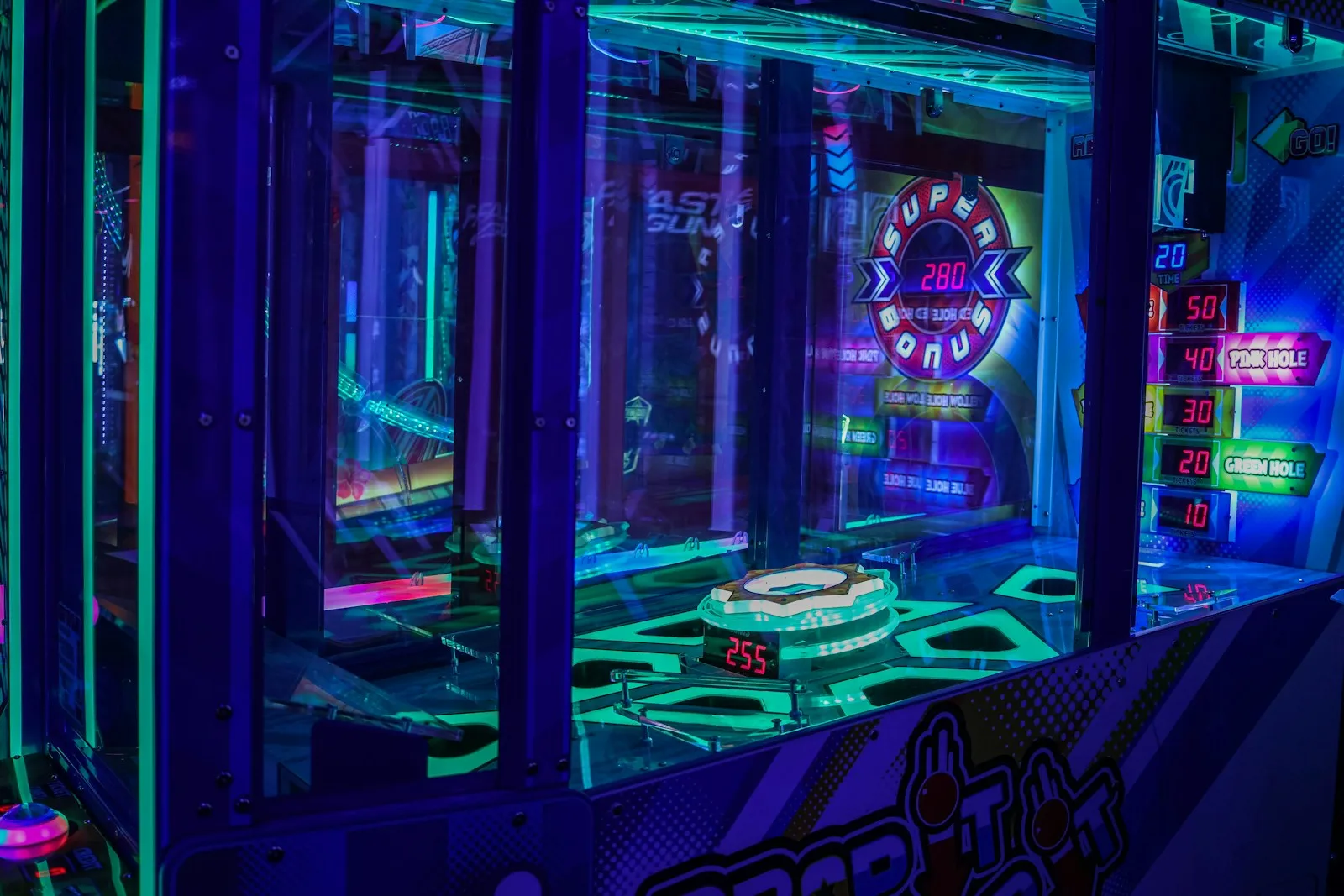 Caption: Crazy Bear pairs VR rides with a large arcade lineup.
Crazy Bear is an arcade-first venue with a dedicated VR Games & Rides section. It sits at 1516 Merivale Rd, Nepean, ON K2G 3J6, making it an easy add-on if you are already in the Merivale area. The vibe is louder and more arcade-driven than the pure VR locations, which makes it a good stop for mixed groups that want classic arcade play alongside VR.
- Hours:
- Monday–Thursday: 11:00 AM–10:00 PM
- Friday: 11:00 AM–12:00 AM
- Saturday: 10:00 AM–12:00 AM
- Sunday: 10:00 AM–11:00 PM
- VR + arcade mix: over 90 arcade games plus VR experiences
- Promos: 1 stamp per $50 spent, 10 stamps for a free $50 play card package
- VIP membership: $29.99, includes 10% off in-store purchases and a $20 coupon
Crazy Bear’s VR pods work best as short, 10-minute bursts inside a bigger arcade night. Think of it as the VR centerpiece between claw machines, air hockey, and classic cabinets. The best approach is to treat VR as a highlight, not the whole evening. That is why it works well for mixed groups where some people want VR and others want classic arcade play.
The experience feels more casual than Sandbox or Zero Latency. You can walk in, play a ride, and move on quickly, which is ideal if your group wants variety. The downside is that the environment can be loud and visually busy, so motion-sensitive visitors should pace themselves and avoid stacking multiple VR rides in a row without a break.
How to Pace an Arcade-First VR Night
Because Crazy Bear is primarily an arcade, the smartest approach is to spread VR out. Start with one VR ride early, play a few classic games, then return for a second VR pod later. This pacing keeps motion fatigue low and makes the night feel longer. It is also a good fit for groups that include non-VR players, because everyone can keep moving without waiting on a single long session.
The stamp program and VIP membership make the most sense if you plan to return. The stamp card (1 stamp per $50, 10 stamps for a free $50 play card) rewards repeat visits, while the $29.99 VIP membership gives a 10% discount plus a $20 coupon. If your family or friend group visits a few times per season, those perks usually pay for themselves.
It is also one of the easiest places to combine VR with another indoor activity in the same corridor, which is why locals often pair it with bowling.
For party bookings, the venue lists (613) 221-9888 and info@crazybear.ca.
Timing tip: go between 5–7 PM on weekdays if you want a family-friendly crowd and shorter lines. After 9 PM on Fridays and Saturdays, the energy shifts to more adult groups and louder arcade traffic. A small warning from reviews: the lighting can be intense for motion-sensitive visitors, and the pods can get warm after back-to-back sessions, so bringing wipes is a smart move.
If your group is sensitive to noise or flashing lights, plan an earlier visit and build in a short break after each VR ride. The arcade energy is part of the appeal, but it can feel overwhelming for some people, especially after a high-intensity VR session.
If you are a regular, the stamp card and VIP membership can pay off quickly. The stamp system rewards repeat visits, while the membership discount is handy if your group plans to return for multiple arcade nights in the same season.
Because Crazy Bear leans on arcade play, it is best as a supplemental VR stop, not the core of your evening. If your group wants a longer immersive story, head to Sandbox or Zero Latency. If you want a quick dose of VR between air hockey and claw machines, Crazy Bear is a strong choice.
Who This Venue Fits Best
Crazy Bear is ideal for groups that want variety over depth. It works well for teenagers, mixed-age families, and groups who want to keep moving through different games rather than commit to a single long session. It is also a good stop for late-night energy, because the arcade atmosphere stays lively later than most premium VR venues.
If your group includes someone who only wants a quick taste of VR, this is the easiest place to do that. Ten minutes in a pod is enough to feel the thrill without committing to a full session, and then you can switch back to the arcade floor if anyone wants a breather.
Because the venue leans on arcade play, think of VR here as a bonus attraction rather than the main plan. That mindset makes the night feel smoother. If the pods are busy, you can jump into another game and circle back later instead of waiting in one line. For mixed groups, that flexibility keeps everyone engaged.
Funhaven VR Games & Rides: Ottawa’s Family Mega-Arcade
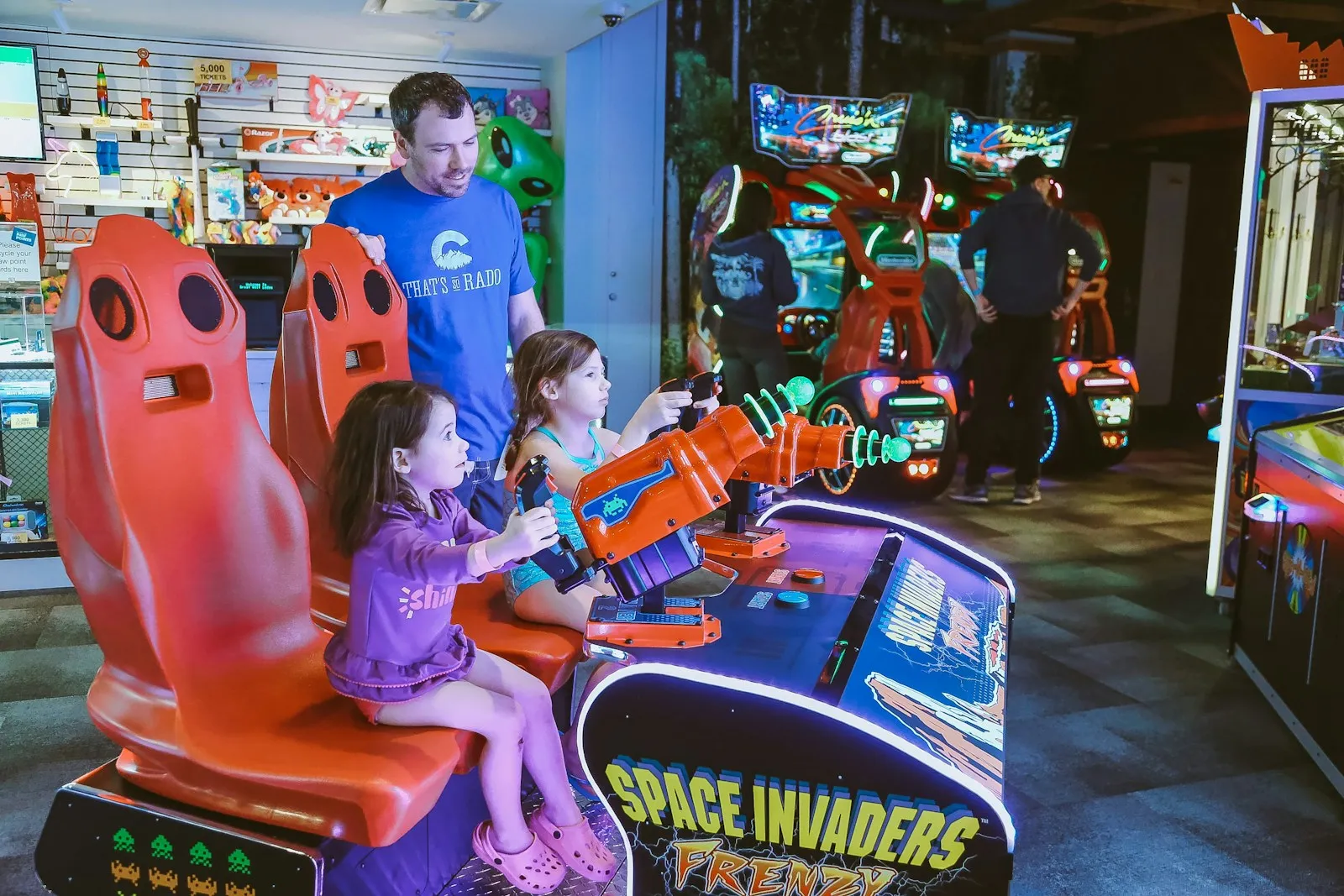 Caption: Funhaven’s VR area is part of a bigger family entertainment centre.
Funhaven is a full-scale family entertainment centre at 1050 Baxter Road, Ottawa, ON K2C 3P1. If you are planning a longer day out, this is the most flexible location because it combines VR rides with laser tag, roller coaster rides, and classic arcade games. It is also the most walk-in friendly VR option in the city.
- Hours:
- Monday: 4:00 PM–10:00 PM
- Tuesday: 4:00 PM–10:00 PM
- Wednesday: 4:00 PM–9:00 PM
- Thursday: 4:00 PM–9:00 PM
- Friday: 12:00 PM–12:00 AM
- Saturday: 10:00 AM–12:00 AM
- Sunday: 10:00 AM–9:00 PM
- Booking: walk-in friendly; no reservation required for casual play
- Session length: most VR rides run 5–10 minutes
- Operations note: some attractions (including Hurricane) close 15 minutes before posted closing time
Funhaven is ideal for families and mixed groups because you can rotate through several short VR rides without committing to a premium session. It is common for families to stack two or three rides in a row, which can create about 45 minutes of VR time without the pressure of a single long session. If your group has non-VR players, they can still fill time with other attractions.
Comfort tips that locals repeat: start with seated rides like SpongeBob, then move to stand-up or more intense rides like Hyperdeck. Tie long hair back so headsets do not slip, and ask staff to tighten straps if the visor feels loose. Many families keep a full VR block under $40 per kid by mixing shorter rides instead of booking premium sessions. Funhaven also notes that headsets are cleaned after each use, and staff guide first-timers through the basics.
Building a Family-Friendly Visit
The easiest way to plan Funhaven is to treat it like a multi-attraction loop. Start with a seated VR ride to see how everyone feels, take a short break, then add a second VR ride or a different attraction like laser tag or classic arcade games. This pacing keeps younger kids engaged and gives adults a chance to manage motion sensitivity. If your group includes someone who wants to opt out, there is enough going on nearby that they will not feel left out.
Because most rides are short, the venue works well for families with different attention spans. Younger kids can stick to two gentler rides, while teens might add Hyperdeck or Hurricane once they see how the motion feels. The staff are used to first-timers and will adjust headset straps, show you how to grip the controllers, and walk you through the safety basics before each ride. That extra guidance is one of the reasons families choose Funhaven as their first VR stop.
Because Funhaven is a full entertainment centre, it also works as a fallback plan when weather turns. Families often rotate between VR rides and lower-intensity attractions so kids can reset between sessions. If your group is visiting with different age levels, this is the easiest place to keep everyone entertained without splitting the group.
Why It Works for Mixed Groups
Funhaven is the most forgiving venue for groups with different energy levels. Someone can opt for a gentle ride while another person picks a faster one, and you can still regroup in the same space. That flexibility is why it is a frequent choice for family gatherings, youth teams, and multi-age birthday parties. The rides are short enough that no one gets stuck in a long session if they are unsure about VR.
If you are planning for a group, a simple schedule works best: one seated ride, a short break, then one more ride. That rhythm gives people time to reset and keeps the night fun instead of exhausting. It also makes it easy to swap in a non-VR activity if someone decides to sit out.
For shorter waits, avoid Saturday afternoons and aim for weekday evenings or Sunday mornings. The VR rides are walk-in friendly, but peak times can create short lines for the most popular attractions like Hurricane and Hyperdeck.
For group bookings, Funhaven lists (613) 828-4386 and services@funhaven.com.
The venue also emphasizes that multiple VR simulators keep waits shorter than you might expect on busy days. If your group is new to VR, the staff will usually suggest a simple first ride and walk you through headset fit and motion comfort before you start.
Funhaven is also the most forgiving option if someone in your group decides to opt out. There are plenty of non-VR attractions nearby, which makes it easier to keep everyone in the same space without feeling like anyone missed out.
If you are planning food before or after, keep it simple. A quick meal makes it easier to jump back into rides without a long wait. For ideas, the sandwiches in Ottawa guide is a useful starting point for low-fuss options.
Funhaven’s Standout VR Rides and What Each Feels Like
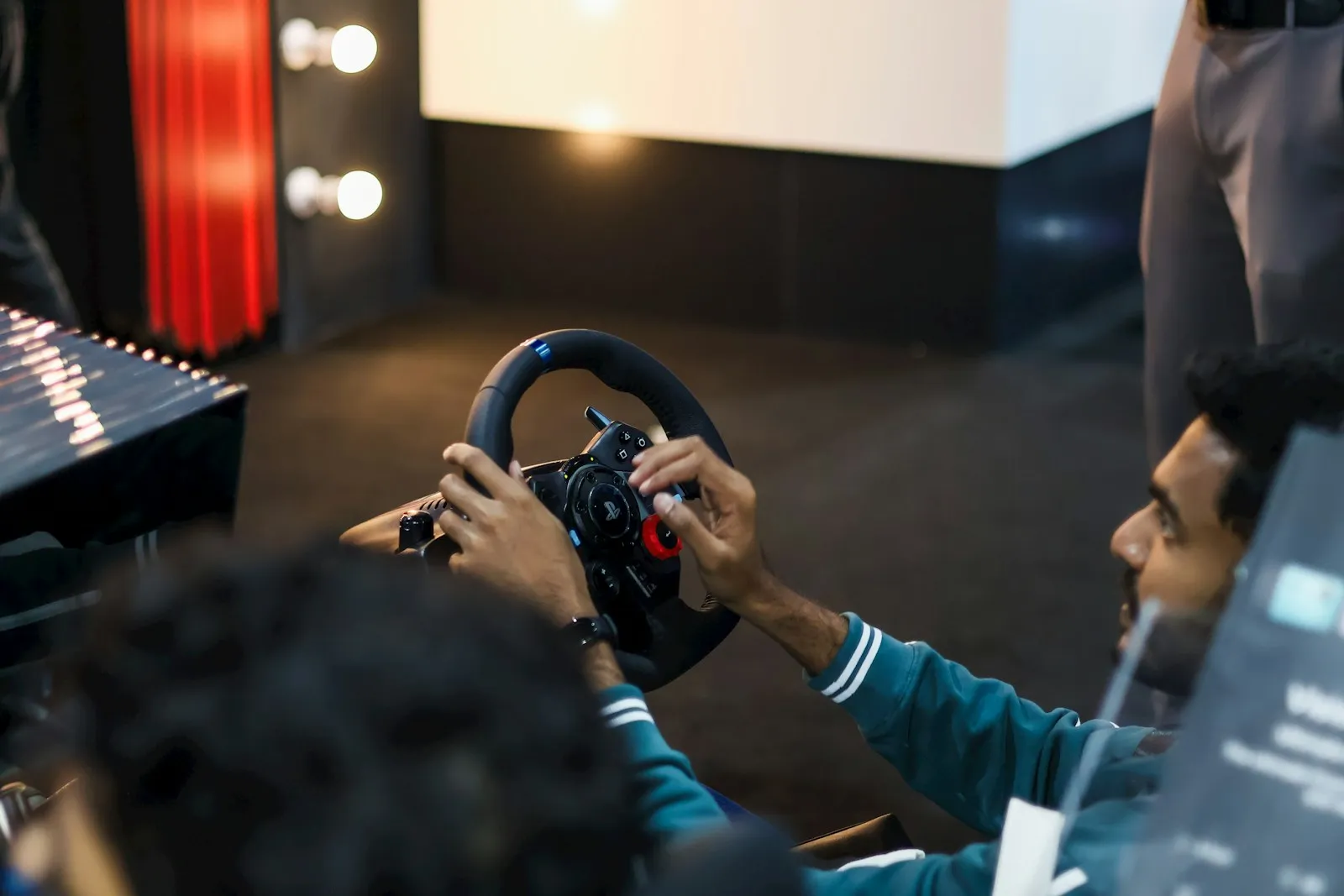 Caption: Funhaven’s VR lineup covers thrill rides, co-op adventures, and motion shooters.
Funhaven’s VR rides are short, intense, and easy to stack in one visit. Each has a different feel, which is why this venue works well for families and first-timers.
How to Choose the Right Ride Order
The easiest strategy is to start gentle and build up. SpongeBob and Virtual Rabbids are the safest openers because they are playful and less intense. Hurricane and Hyperdeck are the rides most likely to trigger motion sensitivity, so they are better after your group has already tested how they feel in VR. Dark Ride sits in the middle: it feels exciting but does not require a headset.
If you are visiting with a mixed group, let the most cautious person choose the first ride. Once they are comfortable, it is easier to move everyone up a level. This simple approach keeps the night positive and avoids the situation where one person wants to stop early because the first ride was too intense.
Hurricane: 360° VR Roller Coaster
Hurricane combines full-motion seats, barrel rolls, tilting tracks, and synchronized sound and wind effects. It is a compact theme-park coaster feel without leaving Ottawa, and it is one of the best options for thrill seekers who want a quick adrenaline hit. Fans describe the dives as feeling like 50 km/h drops, which is why it is better for teens and adults than very young kids.
If you want the most intense ride at Funhaven, this is usually the answer. The motion profile is fast and sudden, which makes it exciting but also the most likely to trigger motion sensitivity. Build in a short break afterward if anyone in your group feels dizzy.
Hyperdeck: 4D VR with Moving Floors
Hyperdeck is one of Ottawa’s most advanced VR simulators, pairing a moving platform with heat blasts, wind effects, and interactive scoring. The fan-favourite mission is H.A.I.R., a robot-filled rock-and-roll showdown that is fast and competitive. It is often the most physical of the Funhaven VR rides, so it fits best after you warm up with a seated option.
The best way to enjoy Hyperdeck is to treat it like a competitive mini-game. Compare scores, swap roles, and run it again if the group wants a rematch. It is less about story and more about reaction time, so it works well for teens and adults who want something active.
SpongeBob Dynamic Duo
This is a two-player co-op adventure through Bikini Bottom. One player navigates the world while the other fires Krabby Patties in a turret-style shooter. It is a strong pick for siblings or first-time VR players who want something playful rather than intense.
Because the pace is gentler, SpongeBob is a good first ride for younger kids or anyone nervous about VR. The co-op structure also means older siblings can help younger players feel confident.
Virtual Rabbids
Virtual Rabbids runs across six different worlds, from snowy mountains to outer space. It is bright, chaotic, and family-friendly, which is why it is often the most popular ride for kids.
The humour and fast scene changes keep attention spans high. If your group has younger kids who want to try VR but are not ready for a heavy shooter, Rabbids is the safest bet.
Dark Ride (6D Motion Shooter)
Dark Ride is not traditional VR, but the immersion is similar. It uses motion seats, surround sound, 3D visuals, and interactive blasters, letting you shoot your way through zombies, robots, or monster scenes. The seats rumble with score feedback, which makes it feel competitive even in a short run. It is one of the most talked-about attractions at Funhaven because it blends a shooter with full ride-style motion.
Dark Ride is the best option if your group wants a shooter-style experience without a headset. Because everyone sits in the same vehicle, it is also one of the most comfortable rides for mixed ages.
If your group includes kids and adults, a smart sequence is SpongeBob → Virtual Rabbids → Hurricane, then finish with Hyperdeck or Dark Ride once everyone is comfortable. The calmer rides keep younger players engaged without overwhelming them, and the more intense rides feel like a reward once the group is warmed up.
For teens who want more challenge, lead with Hyperdeck or Dark Ride and end with Hurricane. For younger kids, stick to SpongeBob and Virtual Rabbids, then add one thrill ride if they are asking for more intensity.
If anyone in your group gets motion sick, give them a full ride cycle break between the intense options. Hyperdeck and Hurricane are the most demanding, while SpongeBob and Rabbids are usually the safest first choices.
Picking the Right VR Experience in Ottawa
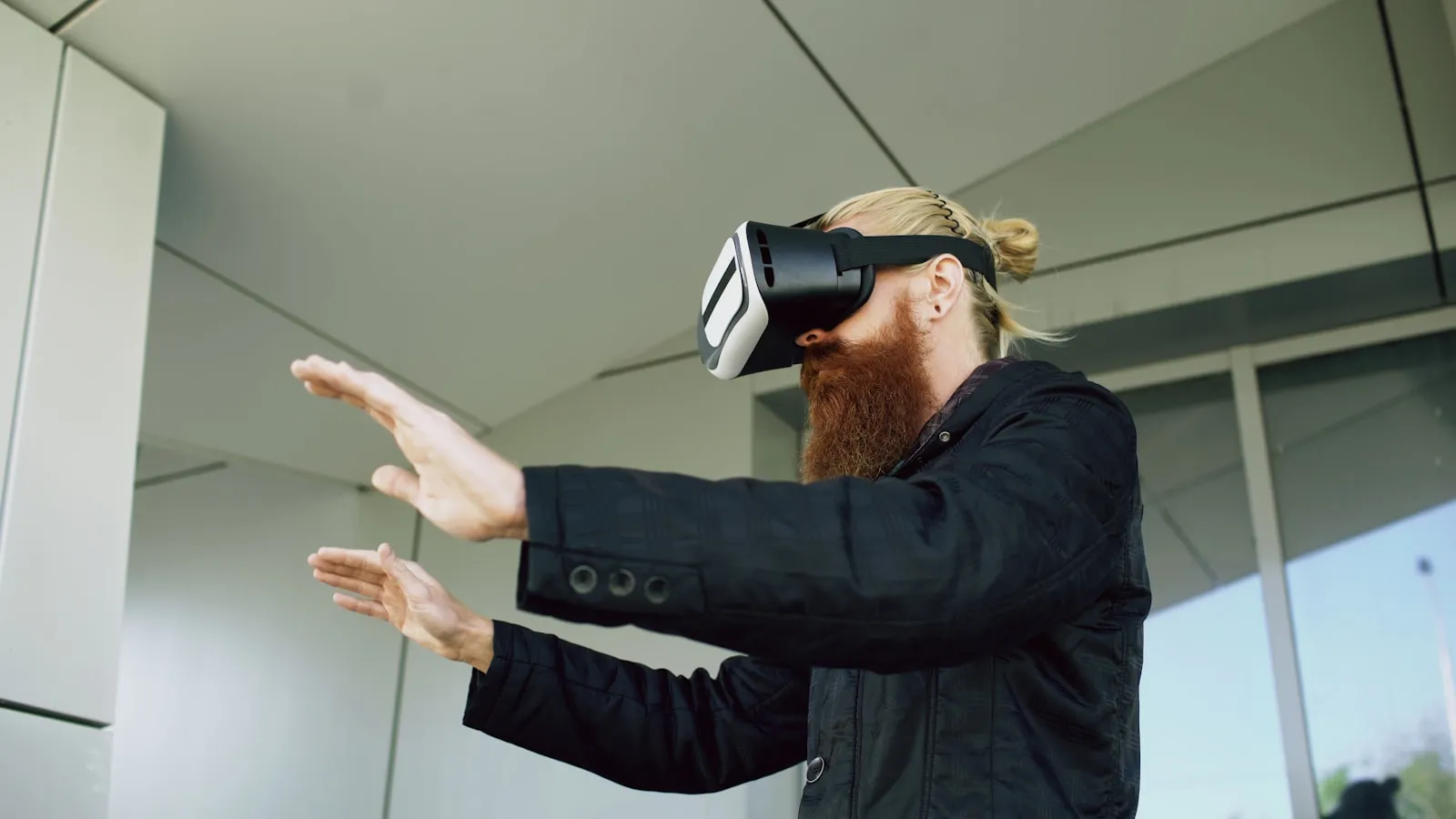 Caption: Premium sessions and short rides feel very different in practice.
The easiest way to choose is to decide how long you want to play and how physical you want the experience to feel. Premium venues (Sandbox and Zero Latency) are 30–45 minute sessions with stronger immersion and more setup. Arcade-style VR (VR Adventures Zone, Crazy Bear, Funhaven) is faster and more flexible, but it trades depth for variety.
Use this quick comparison if your group is unsure:
| Experience type | Typical duration | Intensity | Best for | Cost range (per person) |
|---|---|---|---|---|
| Premium full-body (Sandbox) | 30–45 min | High (haptics, sweat) | Groups 12+ | $45–60 |
| Free-roam arena (Zero Latency) | 30–45 min | Very high (running) | Team play | $40–50 |
| Arcade + free-roam mix (VR Zone) | 5–20 min | Medium | Kids and teens | $15–30 per hour |
| Ride-based VR (Funhaven) | 5–10 min | Variable | Families | $8–12 per ride |
If your group includes first-timers or kids, start with seated rides or pod-based games. If everyone is comfortable and wants a shared narrative, move to a premium session. The most common mistake is booking a high-intensity free-roam session for a group that is not ready for running and quick turns.
Another decision point is story versus score. Sandbox VR is story-heavy and cinematic, while Funhaven and Crazy Bear are more about quick thrills and score chasing. Zero Latency sits in the middle: it is fast-paced and tactical, but still narrative enough to feel like a complete experience. If someone in your group loves puzzles more than shooting, pick a session that highlights team objectives rather than pure action.
Finally, think about energy and recovery. A 40-minute premium session can leave people tired, which makes it a better fit before dinner rather than after. Short rides are easier to sprinkle throughout a night, which is why families tend to choose Funhaven or VR Adventures Zone for flexible schedules.
Quick scenario guide:
- Date night: Sandbox VR for a premium, shared story, then dinner in ByWard Market.
- Family afternoon: Funhaven for short rides and breaks between games.
- Team-building: Zero Latency for a full arena session with clear group roles.
- Budget-friendly night: VR Adventures Zone followed by arcade games or a meal in the Merivale corridor.
If you are planning for a mixed group, choose the venue that keeps your options open. VR Adventures Zone and Funhaven let you scale intensity up or down mid-visit, which is helpful if you are unsure how everyone will react to VR. Premium venues are more fixed, so they work best when the whole group agrees on the level of intensity and time commitment.
A Simple Intensity Ladder
If you want a fast decision, think in three levels:
- Low intensity: seated rides and arcade pods (Funhaven, VR Adventures Zone). Best for kids, first-timers, and anyone unsure about motion sickness.
- Medium intensity: longer arcade sessions and puzzle-heavy games. Good for mixed groups that want teamwork without heavy running.
- High intensity: full-body co-op and free-roam arenas (Sandbox, Zero Latency). Best for active groups who want a single immersive highlight.
Most groups enjoy VR more when they build up rather than jump straight into the most intense option. That is why families often start at Funhaven or VR Adventures Zone and then book a premium session for a later visit.
What to Choose for Different Groups
Couples: Sandbox VR gives a memorable, shared story. The highlight reel and downtown location make it feel like a special outing.
Friend groups (4–6): Zero Latency is ideal if everyone wants movement and competition.
Families with younger kids: Funhaven or VR Adventures Zone, with shorter rides and easy breaks.
Mixed ages: VR Adventures Zone works well because you can mix pods and free-roam within the same visit.
The practical takeaway is that flexibility beats intensity if you are uncertain. A shorter ride that keeps everyone happy is better than a long session that leaves someone uncomfortable.
Another decision point is seated versus standing. Seated rides and pods keep movement limited, which reduces motion sickness for many people. Free-roam sessions are more immersive, but they demand more physical movement and awareness of space. If anyone in your group is unsure, start seated, then move to standing or free-roam on a later visit once you know how everyone reacts.
Best Value, Best Premium, and Group Picks
 Caption: Use this table to decide between premium sessions and shorter rides.
If you want to compare price and session length quickly, this table will get you to the right choice fast.
| Venue | Price per person | Typical session length | Best for |
|---|---|---|---|
| Sandbox VR Ottawa | $45–60 | 30–40 min | Couples, cinematic co-op |
| Zero Latency Ottawa | $40–65 | 30–45 min | Team building, large groups |
| VR Adventures Zone | $15–40 | 20–60 min | Families, budget value |
| Crazy Bear VR | Varies | Short rides | Late-night arcade mix |
| Funhaven VR Rides | $8–12 per ride | 5–10 min | Families, first-timers |
If you are planning a night for four people, the difference is meaningful. Sandbox or Zero Latency will feel like a single premium event, while VR Adventures Zone and Funhaven can stretch the same budget across multiple shorter rides. That is why families often choose the arcade-style venues and leave premium sessions for special occasions.
If your group is large, look for bundle pricing or party packages. Premium venues often discount groups of six or more, while arcade-style venues make it easier to buy time blocks rather than individual sessions. That flexibility can save money if your group wants to sample several different games in one visit.
Sample budgets:
- A couple at Sandbox VR should expect roughly $120 for a full session.
- A group of six at Sandbox or Zero Latency lands around $300–$360 depending on time slot and discounts.
- A family of four at Funhaven can keep costs lower by choosing two short rides each, often $64–$96 total depending on pricing.
- A mixed group at VR Adventures Zone can often split a time bundle and keep spending under $30 per person.
When Premium Is Worth It
Premium sessions are worth the price when your group wants a single shared memory rather than a string of short rides. A 30–45 minute session feels like a full story arc, which is why Sandbox and Zero Latency are strong choices for date nights, birthdays, and team events. If the group wants a one-and-done highlight, premium is the best use of time.
On the other hand, if your group is still testing whether they like VR, shorter rides are a safer investment. Two or three short rides can feel just as satisfying as a long session, especially for first-timers. The biggest mistake is booking premium for a group that has never tried VR, because you lose flexibility if someone feels uncomfortable.
How to Stretch a Budget
If budget is tight, pick a venue where you can mix formats. VR Adventures Zone lets you split a time bundle, and Funhaven lets you stack two or three rides instead of buying a single premium slot. That mix keeps the night lively and gives everyone a choice about how intense they want the experience to feel.
Another way to stretch cost is to plan for smaller groups. Premium prices are per person, but the experience still feels full with four to six players. If you are organizing a bigger party, splitting into waves keeps the per-person cost predictable while still giving everyone the premium experience.
If you are flexible on timing, ask about off-peak slots. Midweek afternoons are often cheaper or easier to book, and you can usually secure your preferred game without a long wait. That small timing shift can save money and keep the session feeling less rushed.
If budget is your main concern, choose shorter rides plus variety. Two rides at Funhaven or a time bundle at VR Adventures Zone can feel like a longer evening because you can rotate through different styles. Premium sessions are still worth it for special occasions, but they are less flexible if your group is unsure about VR.
Best value under $30: VR Adventures Zone (entry-level sessions start around $25).
Best premium experience: Sandbox VR for full-body cinematic play, or Zero Latency if you want true free-roam movement.
Best for parties: Zero Latency or VR Adventures Zone packages, depending on your group size and budget.
If you are undecided, a good compromise is to start with a shorter ride at Funhaven or VR Adventures Zone, then book a premium session for a future date if the group loves it. That keeps the first visit low-risk and still leaves room to upgrade later.
Where Discounts Actually Show Up
Most Ottawa venues reward group size rather than repeat visits. Sandbox VR and Zero Latency often advertise around 10% off for groups of six or more, while VR Adventures Zone party bundles commonly land around $20 per person when booked in advance. If you are booking for a workplace team, ask about weekday pricing and block discounts; it is usually easier to get a better rate on Tuesday or Wednesday than on a Friday night.
For families, the most practical savings come from stacking short rides instead of paying for a single premium session. Two $8–$12 rides at Funhaven can keep kids happy for the cost of one premium session elsewhere, and you can always upgrade later if everyone wants a longer experience.
Ottawa VR by Neighbourhood
 Caption: Ottawa’s VR venues cluster in ByWard Market, Merivale, and the east end.
- ByWard Market: Sandbox VR is the downtown premium option, perfect for date nights paired with ByWard Market food stops.
- Merivale/Nepean: VR Adventures Zone and Crazy Bear are both in the Merivale corridor, making this the easiest area for a back-to-back arcade and VR night.
- Baxter Road area: Funhaven is a full family entertainment centre, good for long afternoons.
- East end (Lancaster Road): Zero Latency is the free-roam arena option, great for corporate groups and competitive teams.
Timing notes: downtown waits are often shorter Tuesday–Thursday after 2 PM, sometimes around a 20-minute turnaround; Merivale is quieter on Wednesday afternoons; Funhaven peaks on Saturday at noon; Zero Latency is calmer after 7 PM on weeknights.
If you are planning more than one stop, use neighbourhood clusters. ByWard Market works best for a full downtown night, Merivale is ideal for an arcade-focused evening, and Baxter Road is easiest for families who want parking and a longer time window without changing locations.
For a winter day, many locals plan a downtown block: coffee, Sandbox VR, then a warm meal nearby. For Merivale, the playbook is usually VR Adventures Zone first, then Crazy Bear or a casual dinner. Baxter Road is the most flexible because Funhaven can easily stretch to a half-day visit.
Downtown is the best choice if you want to walk between plans. The Rideau area is compact, so you can stack a premium VR session with a short walk to food or a second activity. The Merivale corridor is more driving-oriented, but the upside is free parking and the ability to bounce between two venues without crossing town. Baxter Road is the easiest for families because the parking lot, attraction mix, and short rides remove a lot of scheduling pressure.
If you are choosing purely for convenience, pick the venue closest to your group. VR works best when people are not stressed about travel time. Downtown is ideal for groups already meeting in the core. Merivale is the practical choice for west-end residents who want short drives and easy parking. Lancaster Road is a good pick for east-end groups, especially if you want the free-roam experience without crossing the city.
Booking, Transit, and Parking Tips
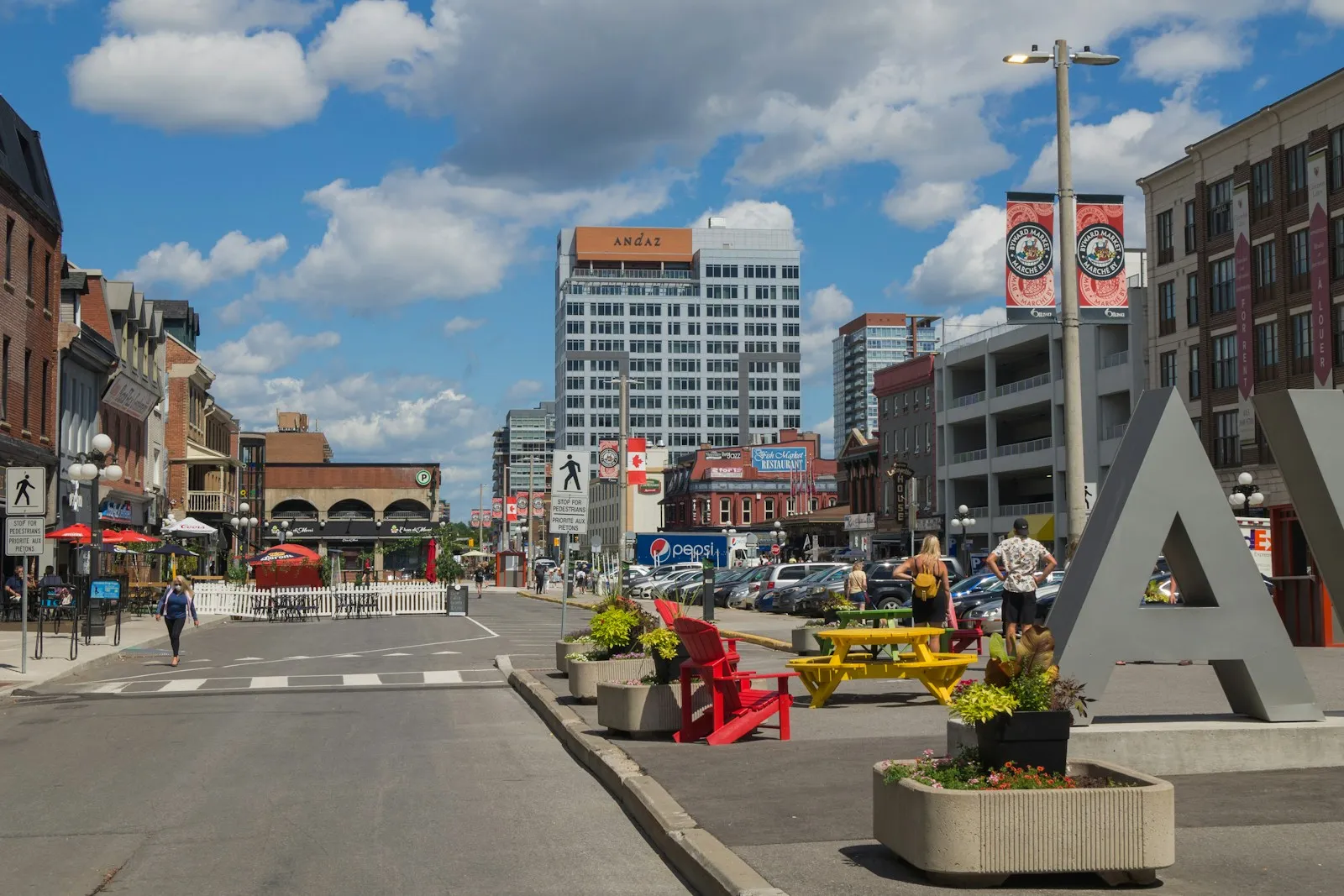 Caption: Booking timing and transit choices change the feel of a VR night out.
- Booking: Sandbox VR and Zero Latency should be booked in advance, especially Friday and Saturday nights. VR Adventures Zone is more flexible, and Funhaven is walk-in friendly.
- Parking: Mall parking is free at VR Adventures Zone and Crazy Bear, and free street parking is often available on weekdays along the Merivale corridor. Funhaven has on-site parking at Baxter Road. Downtown Sandbox VR is easier by transit or a short walk, and paid parking near the CIBC lot is typically around $3 per hour.
- Transit: Rideau Station LRT is about a 2–5 minute walk to Sandbox VR depending on the exit you use. OC Transpo Route 97 from Tunney’s Pasture stops near Merivale Road for VR Adventures Zone. Funhaven is easiest by car but can be reached by Route 62 on the west end.
Quick Logistics by Venue
Sandbox VR (ByWard Market): Transit is the simplest option, especially on busy weekends. Rideau Station puts you within a short walk, and the Market area has plenty of food options nearby. If you drive, use paid parking and build in a few extra minutes for downtown traffic.
Zero Latency (Lancaster Road): The east-end location is easier by car. Arrive early so the group can settle in without rushing, and plan a short break after the session because free-roam sessions are more physical.
VR Adventures Zone + Crazy Bear (Merivale): This corridor is designed for quick car trips, with free mall parking and easy access. If you are on transit, Route 97 is the most direct, but allow extra time because buses can vary.
Funhaven (Baxter Road): Most groups drive, park, and stay for a longer block. If you are arriving on the weekend, aim for a little earlier than your target time to reduce waits at the most popular rides.
If you are building a multi-stop night, combine VR with Ottawa nightlife spots or an early visit to escape rooms before you switch into VR mode. Keep the total plan realistic so the group is not rushing between bookings.
Weather, Timing, and Ride-Share Tips
Ottawa’s winter weather changes the logistics more than people expect. Snowy sidewalks make downtown walks slower, so leave extra time if you are heading to Sandbox VR from Rideau Station. If you are driving to Merivale or Baxter Road during heavy snow, plan a little extra for parking and consider wearing shoes with traction so you are not slipping on icy lots.
Ride-share is an easy option for downtown sessions because it drops you close to the entrance without hunting for parking. For Merivale and Lancaster Road, driving is still the simplest choice, but ride-share works if your group wants to split costs or avoid parking altogether. If you are splitting into multiple cars, set a clear meeting point so the group can check in together.
For premium bookings, the best times for smooth entry are usually midweek afternoons. Staff have more time, calibration feels less rushed, and you are less likely to lose session time due to late arrivals. Weekend evenings are lively but can be hectic if your group is large.
For premium venues, plan to arrive 10–15 minutes early so your group can get fitted and calibrated without cutting into the session. That buffer also helps if anyone needs extra help with gear or motion settings.
Most premium venues also require waivers for minors, so if you are bringing kids or teens, build in time for paperwork and ID checks. If you arrive late, you may lose part of your session, which is another reason to plan a buffer and keep your group together on arrival.
Quick Arrival Checklist
If you are organizing a group, a short checklist keeps everything smooth: confirm the booking time, remind everyone to arrive early, and make sure minors have waivers ready. Ask the group to wear closed-toe shoes and avoid bulky bags so gear fitting is faster. These small steps save time and keep the session on track.
If you are taking transit, build in a small cushion because VR sessions are booked in fixed windows. Missing a slot can mean waiting for the next opening, especially on weekends. Driving is easier for Merivale and Baxter Road stops, while downtown Sandbox VR is often faster on foot or transit during peak traffic.
For larger groups, book in waves and assign a timekeeper. That keeps the schedule from drifting and prevents the “half the group is still getting fitted” problem that can cut into play time.
If you are combining VR with dinner, plan VR first for premium sessions. It is easier to eat after a 30–45 minute game than to rush back to a booking window.
Even walk-in venues can feel busy during school holidays and weekend evenings. If you want minimal waits, go earlier in the day or during midweek afternoons. If you want a louder, more social atmosphere, late Friday and Saturday nights are usually the liveliest.
Corporate groups often choose midweek afternoons because venues have more flexibility and staff can give extra setup time. It is also easier to secure multiple back-to-back slots without rushing.
What to Wear and How to Prepare
 Caption: A little prep makes VR far more comfortable for first-timers.
VR sessions feel more comfortable when you plan for movement and headset fit. These are the most common tips local players share:
- Wear fitted, athletic clothing so nothing snags on sensors or straps. Avoid loose hoodies or long scarves.
- Use closed-toe shoes for arena floors and quicker pivots.
- Tie long hair back and remove jewelry so the headset sits flat.
- Secure glasses with a strap or foam insert if you wear them.
- Hydrate and eat light about two hours before longer sessions.
- Use ginger chews or motion bands if you are prone to motion sickness.
- Skip intense sessions if you are hungover or already feeling off.
If you are unsure, start with a short ride at Funhaven or a pod game at VR Adventures Zone, then step up to free-roam or full-body sessions later in the evening.
If you feel dizzy during play, pause, drink water, and focus on a fixed horizon before you jump back in. It helps more than most people expect.
If you wear glasses, let staff know before your session. Most venues can provide inserts or adjust the headset spacing so the visor sits comfortably without pressing on frames. For free-roam sessions, shoes with solid grip matter more than you think, especially during quick turns.
If you are sensitive to headset pressure, bring a small microfiber cloth so you can adjust without smudging the lenses. It is a tiny detail, but it can make the difference between a comfortable session and a frustrating one.
Another simple prep step is empty pockets and secure your phone before the session. Most venues have a shelf or locker area, and it is easier to move when you are not thinking about loose items. If you are bringing a group, pick someone to hold small items so no one is scrambling mid-briefing.
If you are new to VR, take a minute to check the headset fit before the game starts. A snug but comfortable fit reduces motion issues because the image stays steady. If the headset feels loose, ask staff to tighten the straps or add a foam insert.
If you are planning a premium session, dress as if you are doing a light workout. Breathable fabric helps because the haptic vest and headset can trap heat. Avoid heavy jackets or layered scarves, and keep water nearby so you can cool down after a long session. A quick break to reset your body temperature makes the second half of the night feel better.
If you wear makeup or have long hair, bring a hair tie and a small cloth. The headset padding can press against your forehead, and it is easier to adjust if you have something clean to wipe or re-seat the visor. Hats and bulky hair clips usually get in the way, so leave them in your bag. These are small details, but they make a long session more comfortable.
Safety, Comfort, and Accessibility
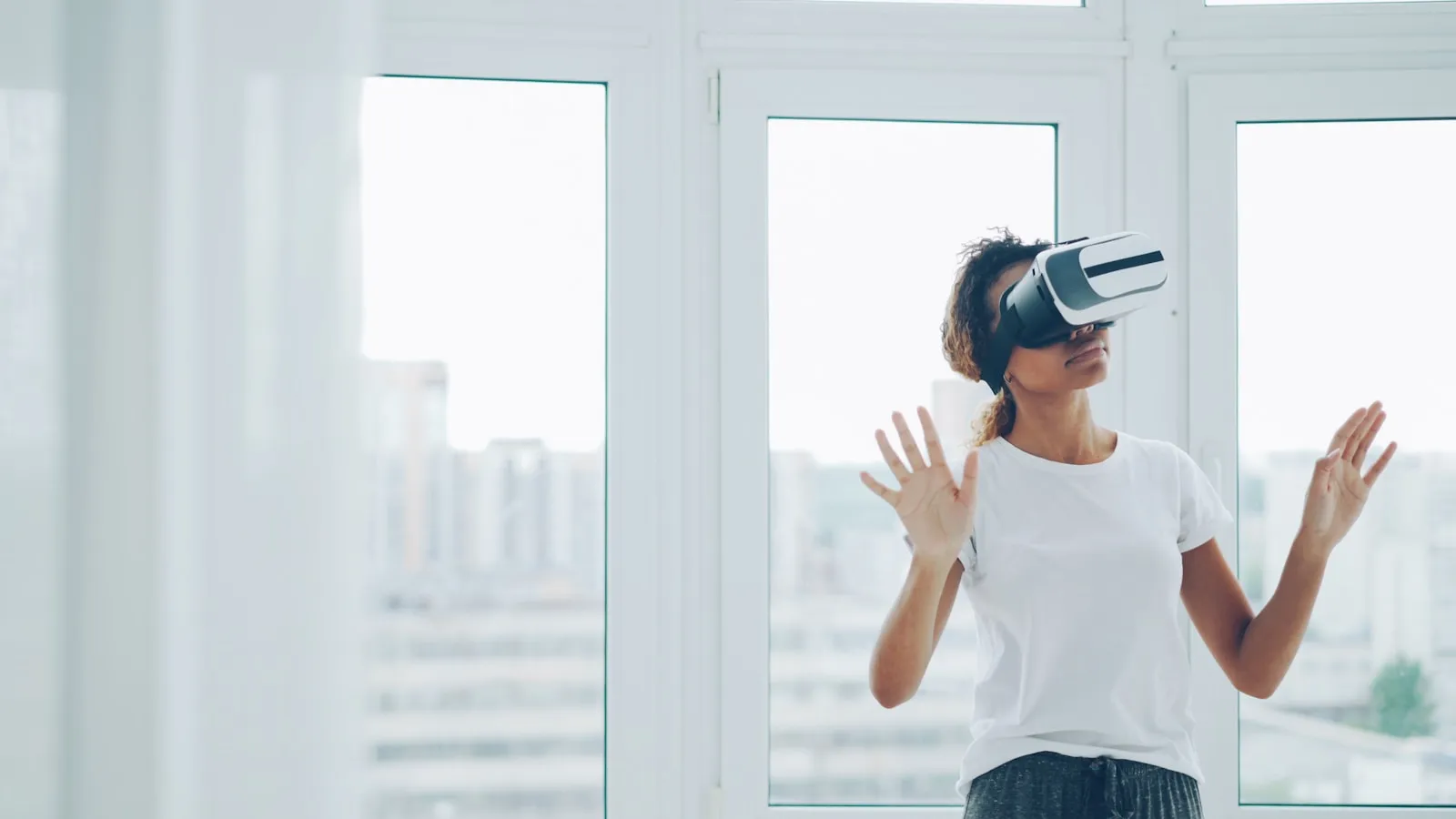 Caption: Short breaks and good fit make VR sessions much more comfortable.
VR can feel intense, especially in shooter-style experiences. A few quick tips help most people avoid discomfort:
- Take short breaks between sessions if you are new to VR or prone to motion sickness.
- Pick milder experiences for your first session (Funhaven rides or VR Adventures Zone arcade-style games).
- Hydrate and eat lightly before longer sessions.
- Wear comfortable clothing and flat shoes to reduce fatigue during free-roam play.
- Know your limits: free-roam sessions involve more movement, while ride-based VR keeps you seated.
Staff can assist with setup and adjustments, and most venues will guide motion-sensitive players to calmer games when asked. Reviews often suggest that around 80% of players report no issues, with free-roam being the toughest on motion-sensitive visitors. If you need accessibility support, call ahead: venues typically have ramps, and most can recommend seated or lower-intensity options. Some games also include colour-blind settings or simpler difficulty modes, which can help mixed-ability groups.
For kids under 10, the safest approach is to stick with shorter, seated experiences and double-check height requirements (many rides start around 1.2 m). If your group includes anyone with balance issues or sensitivity to flashing lights, the arcade-style venues are usually easier to adapt because you can pause and switch games quickly.
After intense sessions, take five minutes to cool down. A short break outside the arena, a glass of water, and a quick stretch helps prevent the “post-VR wobble” that some first-timers feel.
If you know your group includes a motion-sensitive player, consider splitting the night: start with Funhaven or VR Adventures Zone, then move to a premium session only if everyone is still feeling good. That approach keeps the night fun without risking a single long session that leaves someone feeling unwell.
Some players swear by motion bands or ginger chews, while others simply take more frequent pauses. The simplest approach is to keep the first session short and build up from there.
Free-roam sessions also have fewer seated options, so if anyone in your group needs to stay seated, a ride-based venue is usually a better fit. If you plan to try free-roam anyway, let staff know in advance so they can suggest a slower-paced game or a position that minimizes sudden turns.
If you are prone to motion sickness, some people use over-the-counter motion-sickness tablets before higher-intensity sessions. Always follow packaging directions and start with a short ride to see how you feel before committing to a full 30–45 minute experience.
If anyone in your group has balance issues or a history of motion sensitivity, choose a short seated ride first and treat it as a test run. Most people feel fine after a few minutes, but it is better to discover limits in a 5–10 minute ride than in a full 40-minute session. If a player starts to feel uncomfortable, pausing and stepping out for a few minutes usually fixes it.
For younger players, the most useful safety tip is to keep the first ride short. Kids usually want to jump straight into the most exciting option, but a gentle first ride makes it easier to tell whether they are comfortable. For teens, remind them that fast turns and sudden sprints feel fun but can cause dizziness, especially in free-roam. Slow, controlled movement almost always leads to a better experience.
If you are supervising a group, set a simple rule: anyone can pause at any time. That keeps the pressure low and avoids the “push through it” mindset that causes discomfort. The best VR nights are the ones where everyone feels in control of the pacing.
VR Glossary: Common Terms You Will See
 Caption: These terms show up in Ottawa VR listings and booking pages.
Free-roam: Walk large areas untethered with full-body tracking.
6DoF: Six degrees of freedom, meaning you can move and rotate freely in VR space.
Room-scale: Position-tracked play in a bounded area, usually a small physical zone.
If a venue lists “free-roam,” expect higher intensity and more movement. “Room-scale” usually means a smaller play zone where you stay in one area and pivot in place. These labels are helpful for motion-sensitive players because they hint at how much movement the experience requires.
In practical terms, 6DoF is the difference between leaning to look around a corner and feeling like you are on rails. Premium venues and free-roam arenas use 6DoF tracking, while some older rides may feel more fixed. If you see “room-scale,” expect a smaller footprint and less running, which can be more comfortable for first-timers.
Frequently Asked Questions About VR Adventures in Ottawa
 Caption: Quick answers to the most common Ottawa VR questions.
Q: What is the best premium VR experience in Ottawa?
Sandbox VR is the top premium choice for cinematic co-op play, with full-body tracking and haptic vests that make the experience feel like a movie set. Zero Latency is the premium alternative if you want true free-roam walking space and larger team sessions. Both are best booked in advance and work best with groups of four to six. If your group wants a highlight reel and a structured story, Sandbox feels the most like an event.
Q: What is the cheapest VR option in Ottawa?
VR Adventures Zone is the best value in the city, with entry-level sessions around $25 and a wide mix of arcade-style and free-roam options. Funhaven can also be affordable if you want short, 5–10 minute rides rather than a full session, especially if you plan to mix VR with other arcade attractions. The cheapest path is usually two short rides rather than one long session.
Q: Which Ottawa VR venues are best for families with kids?
VR Adventures Zone is the most flexible for kids because it allows ages 7+ and has lighter games with clear intensity ratings. Funhaven is also very family-friendly thanks to short rides like SpongeBob Dynamic Duo and Virtual Rabbids, which are easier for younger kids to handle. For younger kids, look for height minimums around 1.2 m and start with seated rides.
Q: How long do most VR sessions last?
Premium venues like Sandbox VR and Zero Latency run 30–45 minute sessions, while Funhaven rides are typically 5–10 minutes. VR Adventures Zone ranges from 20–60 minutes depending on the experience you book, so it can work for both quick drop-ins and longer group sessions. Always add time for check-in and fitting, which is why premium visits often take 60–90 minutes total.
Q: Do I need to book in advance?
For Sandbox VR and Zero Latency, yes. Both are typically booked in advance for evenings and weekends. VR Adventures Zone and Funhaven are more flexible with walk-in play, especially on weekdays. If you want prime Friday or Saturday slots, booking one to two weeks ahead is the safest plan.
Q: Which Ottawa VR venues allow walk-ins?
VR Adventures Zone, Funhaven, and Crazy Bear are the easiest walk-in options. Sandbox VR and Zero Latency are usually booked in fixed time slots and are less reliable for spontaneous visits. On school holidays or weekend evenings, even walk-in venues can have short lines, so go early if you want minimal waits.
Q: How far in advance should I book premium VR?
For Friday and Saturday evenings, aim for one to two weeks ahead if you want prime time slots. Weekday afternoons are often easier to book on shorter notice, which is why locals recommend Tuesday–Thursday for spontaneous plans.
Q: Is VR safe if I get motion sick?
Most venues can guide you toward milder games and shorter sessions. Take breaks, stay hydrated, and skip intense shooter experiences if you are sensitive to motion. Reviews suggest most players do fine, but free-roam is the toughest for motion-sensitive visitors.
Q: Should I avoid VR if I am claustrophobic?
If you are very claustrophobic, start with a short seated ride instead of a full-body session. Sandbox VR in particular can feel intense because of the full gear and enclosed game worlds, so build up gradually if you are unsure. Arcade pods are usually the gentlest entry point.
Q: What should I expect when I arrive for a premium session?
Plan for a short check-in, a gear fitting, and a calibration round before the game starts. Arriving 15 minutes early helps your group settle in and keeps the session on time, especially at Zero Latency. If minors are in the group, expect waivers and additional time for setup.
Q: Which VR games are best for first-timers?
For premium venues, start with a cooperative title that emphasizes teamwork rather than jump scares. At Funhaven and VR Adventures Zone, pick slower-paced rides or pod games first, then move to faster or more intense options once everyone is comfortable. A calm first session makes the rest of the night more enjoyable.
Q: How physical are Ottawa VR sessions?
Premium and free-roam sessions can be surprisingly physical because you are moving and dodging for 30–45 minutes. Ride-based venues are less demanding and are better if you want a short, seated experience. If you want a workout-style session, free-roam is the most active choice.
Q: Is there free-roam VR in Ottawa?
Yes. Zero Latency is Ottawa’s main free-roam arena experience, and VR Adventures Zone has free-roam bays in a more casual arcade setting. The Zero Latency arena is larger and more immersive, while VR Adventures Zone is more flexible for drop-ins.
Q: Which VR spot is best for corporate events?
Zero Latency is the best fit for corporate events because of its large arena and group packages. VR Adventures Zone is a strong budget alternative for teams that want variety. Book midweek if you want the most flexible scheduling and extra staff attention.
Q: Is VR safe for kids under 10?
Generally yes at family-focused venues like Funhaven and VR Adventures Zone, but check the specific height and age rules. Many rides are better once kids are around 1.2 m tall, and staff can recommend kid modes or lighter experiences.
Q: Are there group discounts in Ottawa VR venues?
It depends on the venue, but many offer group bundles or party pricing. Sandbox VR and Zero Latency often give around 10% off for groups of six or more, while VR Adventures Zone advertises party bundles around $20 per person when booked in advance. Midweek sessions tend to have the best availability for discounts.
Q: Can I play if I wear glasses?
Yes. Most venues can fit headsets over glasses or provide foam inserts. A strap helps keep glasses stable during movement-heavy sessions.
Q: Are food and drinks allowed during VR sessions?
No. Food and drinks are kept out of the arena or ride area for safety and headset hygiene. Most venues have food options after your session, including pizza at family-focused spots like Funhaven and VR Adventures Zone, and they often accommodate vegan or gluten-free requests. Water breaks between rides are the safest way to stay comfortable.
Q: What accessibility options are available?
Most venues offer ramps and can recommend seated or lower-intensity options. Call ahead if you need extra time for fittings, or if your group needs specific accommodations.
Q: What happens if I need to cancel?
Policies vary, but many venues allow changes or credits with 24-hour notice, especially for group bookings. Always check the booking confirmation details so you know the cutoff time.
Q: Can I play solo?
Solo play works best at arcade-style venues like VR Adventures Zone. Premium venues usually fill sessions with groups, so you may need to book a time slot or join others. If you want a guaranteed slot alone, a ride-based venue is the safest bet.
Q: Are there VR escape rooms in Ottawa?
Yes. VR Adventures Zone includes escape-style experiences alongside arcade pods and free-roam bays. They are a good middle option if your group wants puzzles without the full premium price.
Q: How long should I plan for a full visit?
For premium venues, plan at least 60–90 minutes for arrival, setup, and the session itself. For arcade-style venues, you can keep it short (30–60 minutes) or stretch it into a full evening by stacking multiple rides. Families often plan a longer visit at Funhaven because it is easy to add other attractions.
Q: Do I need to be a gamer to enjoy VR?
No. Many of Ottawa’s VR experiences are designed for first-timers and casual players. Arcade-style rides at Funhaven and VR Adventures Zone are especially beginner-friendly because they are short and easy to learn. Staff are used to coaching newcomers, so you do not need gaming experience.
Q: Is VR suitable for seniors or low-mobility visitors?
Yes, if you choose the right format. Seated rides at Funhaven or shorter pod games at VR Adventures Zone are the most comfortable options. Call ahead if you need extra time for fitting or accessibility support, and avoid free-roam sessions if balance or quick turns are a concern.
Q: Can I bring my own headset or controllers?
No. Ottawa venues provide their own calibrated gear, and the games are built around their specific setups. Personal headsets are not typically accepted because of hygiene, safety, and tracking compatibility.
Q: What if someone in my group wants to watch instead of play?
That is common, especially with first-timers. Premium venues usually have a waiting area where friends can watch highlights or take turns, and arcade-style venues make it easy to rotate without anyone feeling left out.
Q: Is VR a good option for birthdays?
Yes. Sandbox VR and Zero Latency work well for adult birthdays or team nights, while VR Adventures Zone and Funhaven are easier for kids parties because they allow shorter sessions and mixed ages in one space. If you want the easiest logistics, book a party package and let staff handle the flow.
Q: Is VR a good winter activity in Ottawa?
Absolutely. All of these venues are indoors, which makes them reliable when weather is cold or unpredictable. Many locals use VR as a backup plan when outdoor activities are cancelled.
Q: Can I combine VR with other indoor activities?
Yes. Funhaven and Crazy Bear both pair VR with arcade games. Downtown Sandbox VR also pairs easily with ByWard Market restaurants, and you can combine any venue with indoor activities in Ottawa or bowling.
Final Summary
 Caption: Ottawa’s VR options are strong in both premium and family categories.
Ottawa’s VR scene in 2026 is small but strong, with clear choices for every budget. Sandbox VR is the premium cinematic pick in ByWard Market, Zero Latency is the best free-roam arena, and VR Adventures Zone is the value choice with flexible options for families. Crazy Bear and Funhaven round out the list by adding short, walk-in VR rides to a full arcade night. Pick a premium session if you want 30–45 minutes of cinematic immersion, and pick the ride-based venues if you want to stack several shorter thrills into a single evening.
If you only have time for one stop, decide whether you want depth (Sandbox or Zero Latency) or variety (Funhaven, Crazy Bear, or VR Adventures Zone). Either way, Ottawa now has enough VR options to match your budget, your group size, and your comfort level.
A fast decision rule: if your group wants a shared story and is willing to book ahead, choose Sandbox or Zero Latency. If you want drop-in flexibility, stick with the arcade-style venues. That simple choice will guide the rest of your planning and prevent last-minute frustration.
For first-time groups, a quick ride at Funhaven or VR Adventures Zone is the easiest way to test comfort levels before committing to a premium session.
If you want a simple one-line plan: start with a short ride, then upgrade to a premium session later. That approach keeps the first visit low-risk and helps you learn what your group actually enjoys. Ottawa’s VR scene is not huge, but it is well-rounded, and the best experience comes from matching the venue to your group size, energy level, and comfort with motion.
The good news is that there is no wrong choice if you pick based on your group’s style. High-energy groups will love free-roam. Families will appreciate shorter rides and flexibility. Couples and close friends tend to enjoy the premium story-driven sessions. Use that lens, and the rest of the planning becomes simple.
Sources
 Caption: Sources and official pages used to confirm hours, prices, and locations.
- https://sandboxvr.com/ottawa?lang=en
- https://www.immersivetechlab.com/sandbox-vr-opens-first-ottawa-location-in-canadas-capital/
- https://zerolatencyottawa.ca/contact/
- https://www.vradventures.zone/new-booking
- https://thecrazybear.ca/vr-games-rides/
- https://thecrazybear.ca/pricing/
- https://www.funhaven.com/attractions/vr-games-rides/
- https://www.funhaven.com/hours-contact/